
A SaaS company SOC confirms that an attacker tricked a developer into authorizing a malicious OAuth application in cloud identity logs. After resetting the developer's password, what must the analyst also ensure to stop ongoing access?
Select an answer to reveal the explanation.
Short Explanation
Changing your house locks does not stop someone who already holds a working valet key to the garage. A password reset alone can leave OAuth grants active, so you must revoke those tokens and trace what they accessed.
Full Explanation
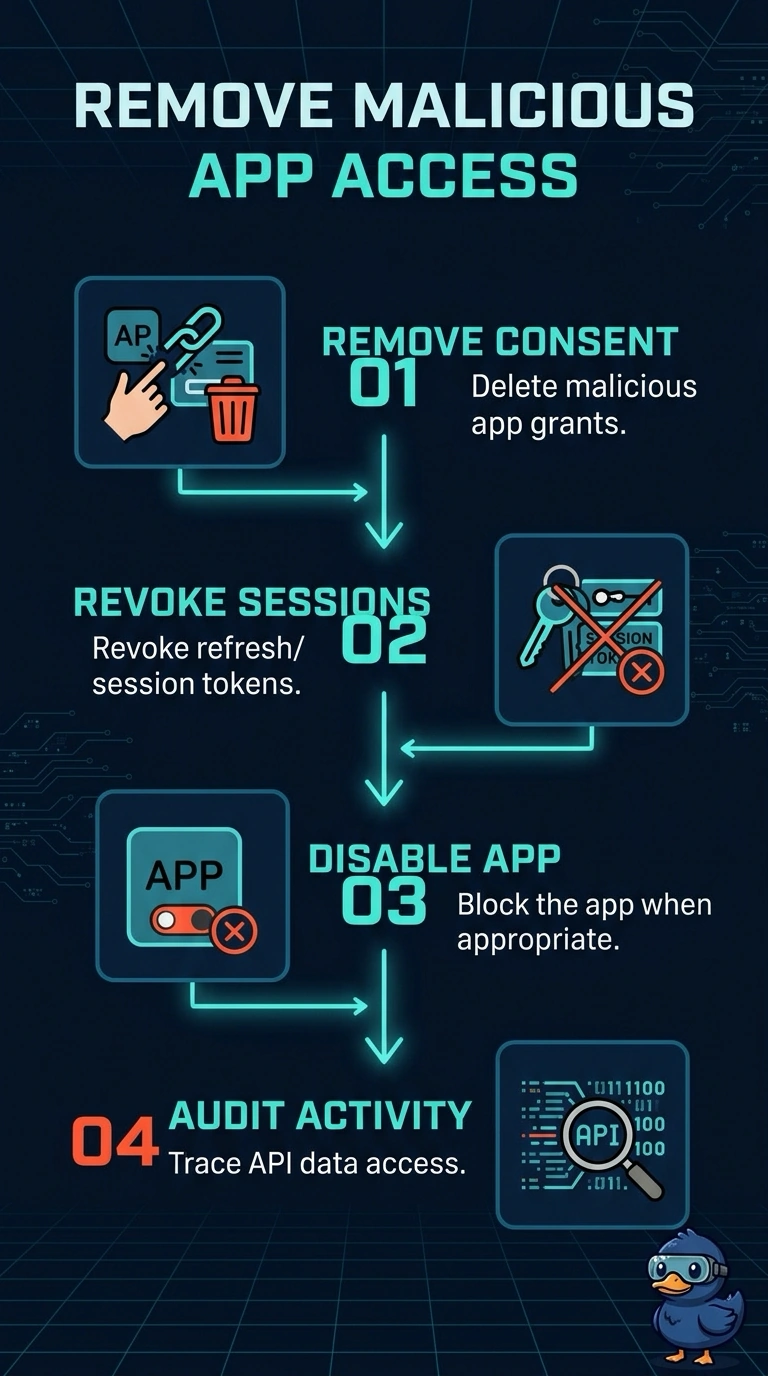
Modern cloud intrusions often persist through granted tokens rather than passwords, making Remove the malicious app consent/grants, revoke supported refresh/session tokens, disable the app as appropriate, and audit its activity the essential action because active OAuth refresh or access tokens can continue accessing cloud resources independently of a password change. Existing access tokens or app-managed sessions can remain usable until expiry or resource-side revocation; verify the provider's controls rather than promise immediate universal token invalidation. Choosing Assume the password reset automatically invalidates every third-party OAuth grant is a dangerous misconception that leaves attacker access intact. Selecting Monitor only endpoint process launches on the developer laptop for the next week misses cloud-to-cloud API activity that never touches the local endpoint. Choosing Delete the developer's local browser history and close the investigation immediately neither removes persistent cloud grants nor scopes potential data exposure. As a caveat, attackers may also create secondary inbox rules or API keys while the token was valid, so check for follow-on persistence. For an operational check, query cloud identity and application audit logs for all API calls, data reads, and configuration changes linked to the revoked application ID.
Prefer to study offline? Printable PDF study book + test engine ($7.50, unofficial). These questions stay free here.