
A financial firm SOC analyst investigates a suspicious login from an unfamiliar city for a payroll administrator account and sees an existing Falcon Fusion SOAR workflow that disables user accounts. What should the analyst verify before running it?
Select an answer to reveal the explanation.
Short Explanation
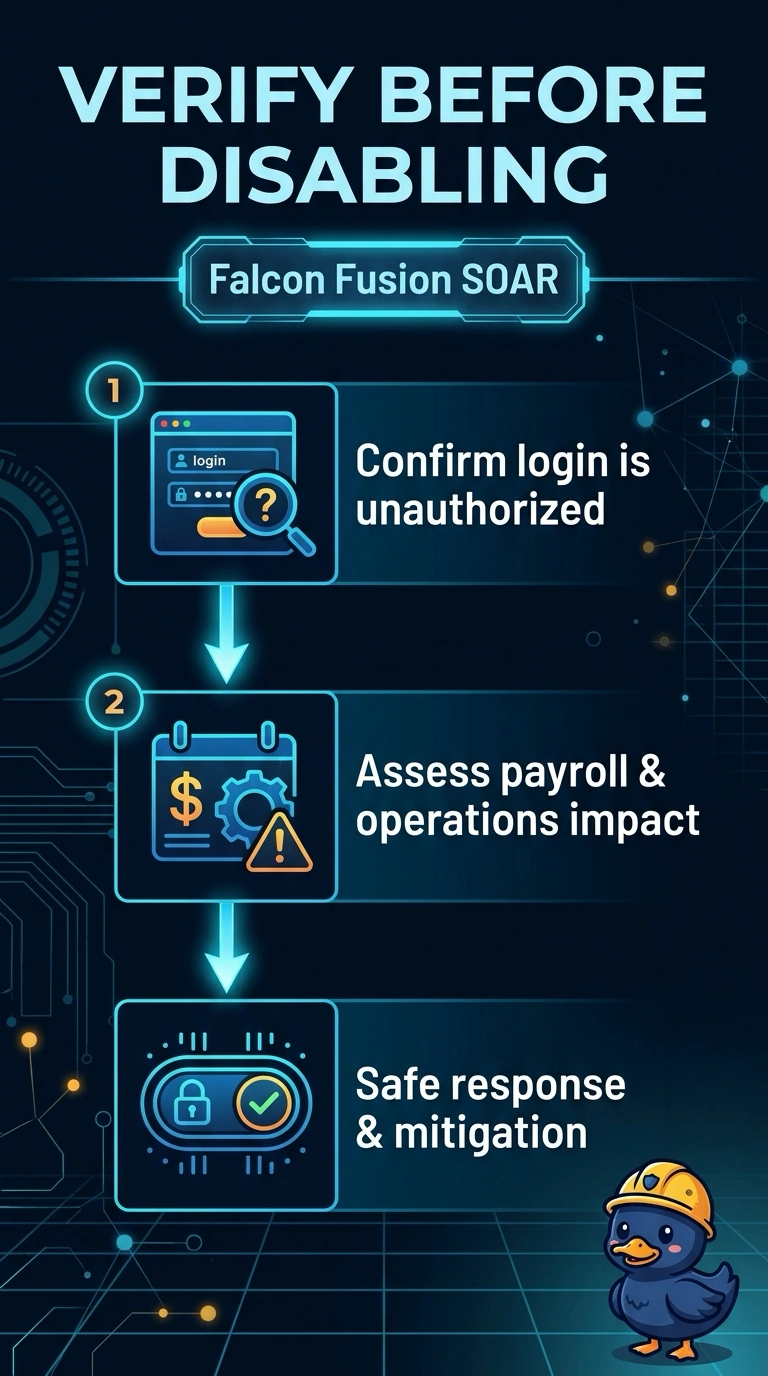
Automated containment is like a fire sprinkler—effective against real flames, but messy if triggered on steam from a kettle. Before you disable a privileged account via SOAR, confirm the login is truly unauthorized and weigh the business impact. The trap is firing automation without validating context.
Full Explanation
Before executing an automated account-disable action, you should Confirm the login is unauthorized and assess whether disabling the account disrupts payroll operations. Checking travel notices, multi-factor authentication details, and recent user behavior prevents self-inflicted outages caused by legitimate remote work while preparing backup coverage if containment is genuinely needed. Choosing to Run the workflow immediately on every administrator account in the same department to prevent lateral movement causes widespread operational disruption without evidence of broader compromise. Deciding to Modify the correlation rule threshold so future logins from unfamiliar cities are silently suppressed blinds the SOC to real account takeovers instead of resolving the current alert. Opting to Export raw authentication records to a local spreadsheet before checking whether the user is traveling adds unnecessary manual delay and moves sensitive logs outside governed SIEM tools. As a caveat, if active malicious session activity is confirmed, coordinate containment promptly with identity owners to minimize exposure. As an operational check, review identity sign-in context and active session status before triggering the SOAR workflow.
Prefer to study offline? Printable PDF study book + test engine ($7.50, unofficial). These questions stay free here.