
A school district SOC analyst confirms malware persistence on a payroll workstation and IT wants to reimage the machine immediately. What should the analyst ensure before reimaging?
Select an answer to reveal the explanation.
Short Explanation
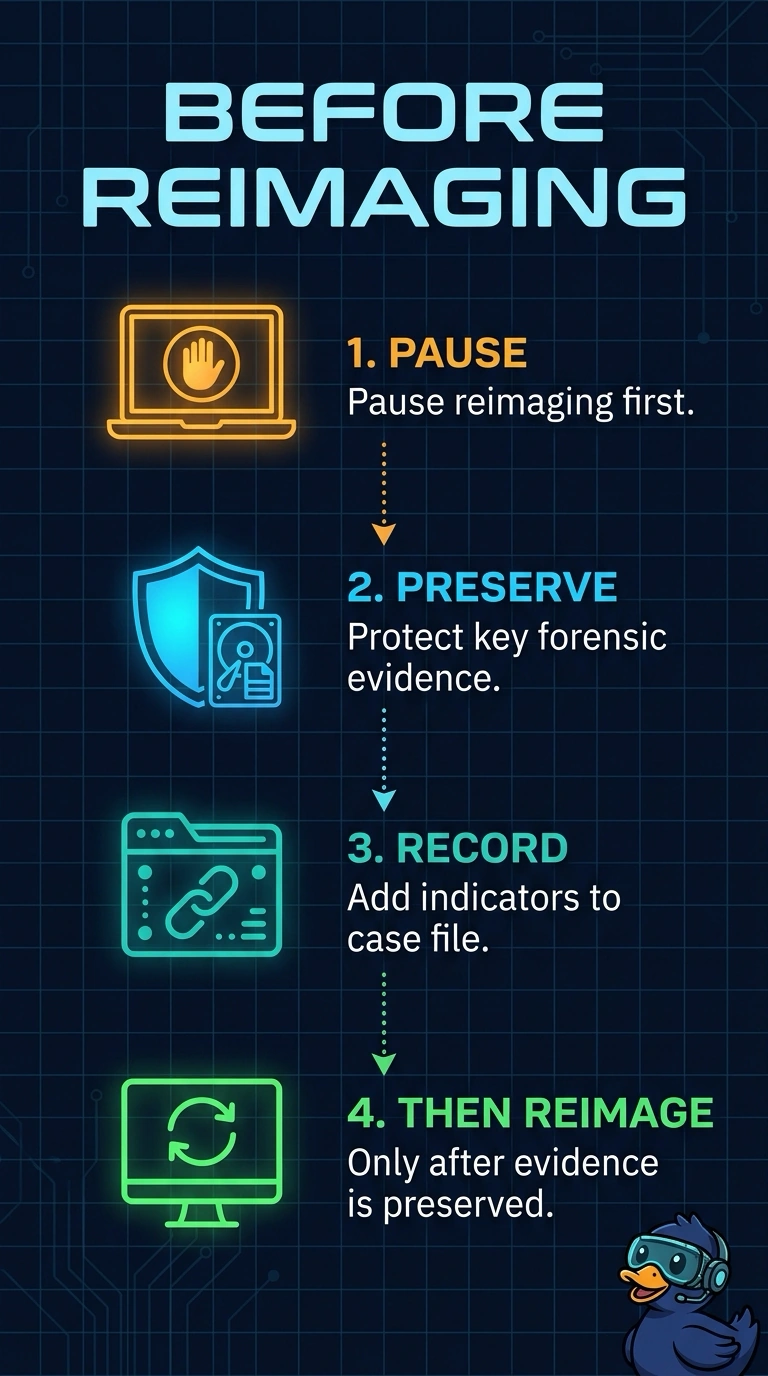
Think of reimaging as painting over a crime scene: it cleans the workstation but can erase clues about how the intruder got in. Preserve forensic evidence and record indicators in the case file first, so you can still scope the incident.
Full Explanation
Reimaging restores a workstation to a known-good state, but it can permanently erase local artifacts, unforwarded logs, and persistence details needed for scoping and root-cause analysis. Preserve key forensic evidence and record indicators in the case file first, including file hashes, persistence paths, and network observables, so the investigation retains these details before the disk is wiped. Waiting thirty days for log retention to rotate before collecting host artifacts leaves the infected system at risk and allows telemetry to age out instead of protecting evidence. Disabling endpoint telemetry collection before starting the reimage removes final visibility during containment rather than safeguarding investigative records. Closing the security case as resolved before containment steps are verified prematurely ends tracking while the compromised host remains active and unscoped. As an exam caveat, preserving evidence does not mean delaying action when an active threat requires urgent containment. Before authorizing the reimage, confirm that the host’s key process, file, and network observables are documented and linked in the case.
Prefer to study offline? Printable PDF study book + test engine ($7.50, unofficial). These questions stay free here.