
A biotech lab SOC analyst confirms that an attacker compromised a shared backup service account on one lab server. What should the analyst do to determine the full scope of compromise?
Select an answer to reveal the explanation.
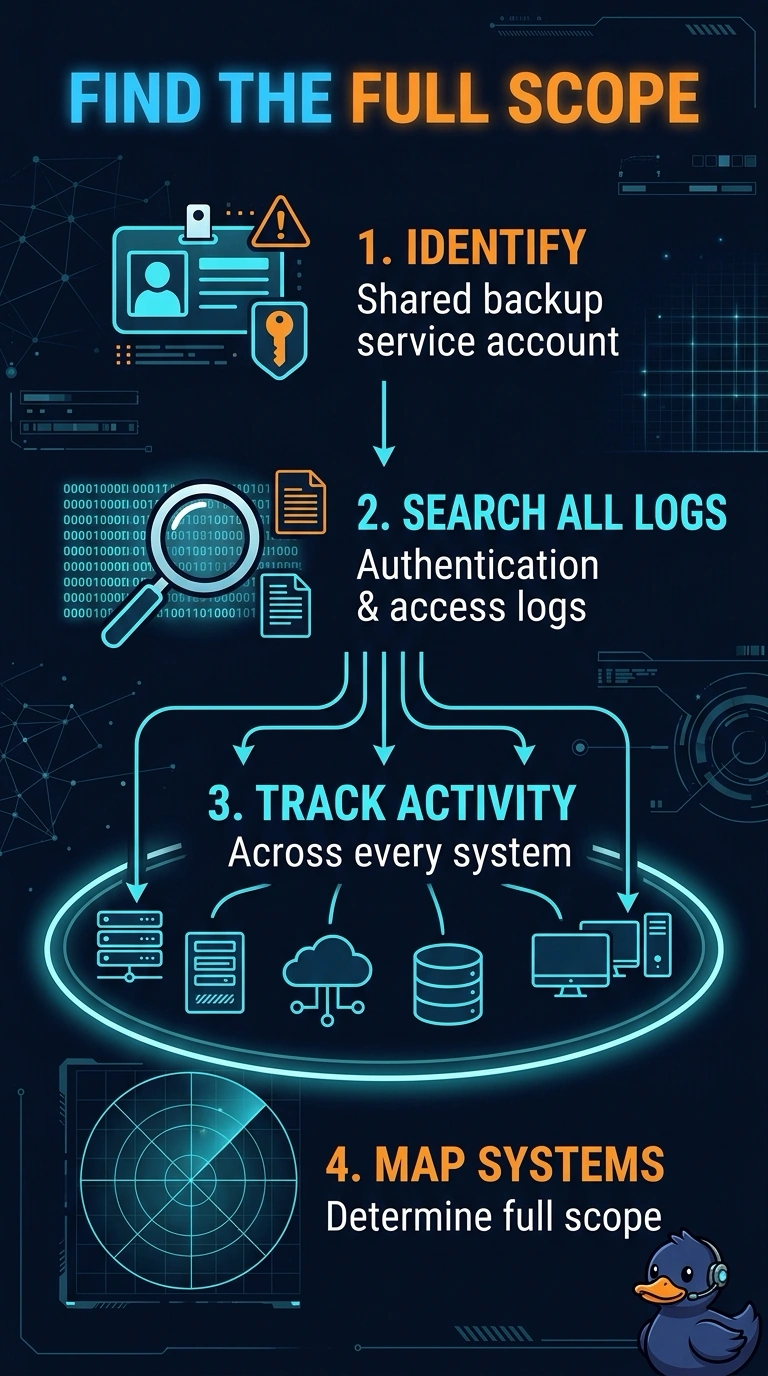
Short Explanation
A compromised service account is like a master key that fits doors across the whole building—checking only the first room leaves the rest of the floor exposed. The trap is stopping your investigation at the initial host instead of pivoting on the shared credential.
Full Explanation
Shared service accounts often hold privileges across multiple servers, storage targets, and cloud resources, meaning compromise on one host frequently enables lateral movement elsewhere. You should Search authentication and access logs across all systems for activity by that account to identify every host, service, and session touched during the exposure window. Choosing to Isolate only the initial lab server and close the investigation once malware is removed leaves any other systems accessed by the stolen credential uninvestigated and exposed. Choosing to Reset the local administrator password on the initial server without reviewing other logs fails to address the compromised service account or reveal where else it was used. Choosing to Block the backup software vendor domain at the perimeter firewall for all lab subnets disrupts legitimate updates without tracing internal credential abuse. As a caveat, service accounts generate high-volume routine traffic, so filter by unusual source hosts, times, or target systems. For an operational check, pivot on the service account identifier in CQL across identity, endpoint, and network datasets to list all distinct destination hosts.
Prefer to study offline? Printable PDF study book + test engine ($7.50, unofficial). These questions stay free here.