
An e-commerce SOC analyst sees a low-confidence threat-intelligence match on an IP address contacted by a checkout web server, and finds the IP belongs to a major content delivery network. What should the analyst do before treating the match as an active compromise?
Select an answer to reveal the explanation.
Short Explanation
An IP match on a shared CDN is like seeing a suspect's car parked at a crowded airport—you need more than the address to prove wrongdoing. Always verify indicator recency and host behavior first, because the trap is either overreacting with a broad block or dismissing the alert blind.
Full Explanation
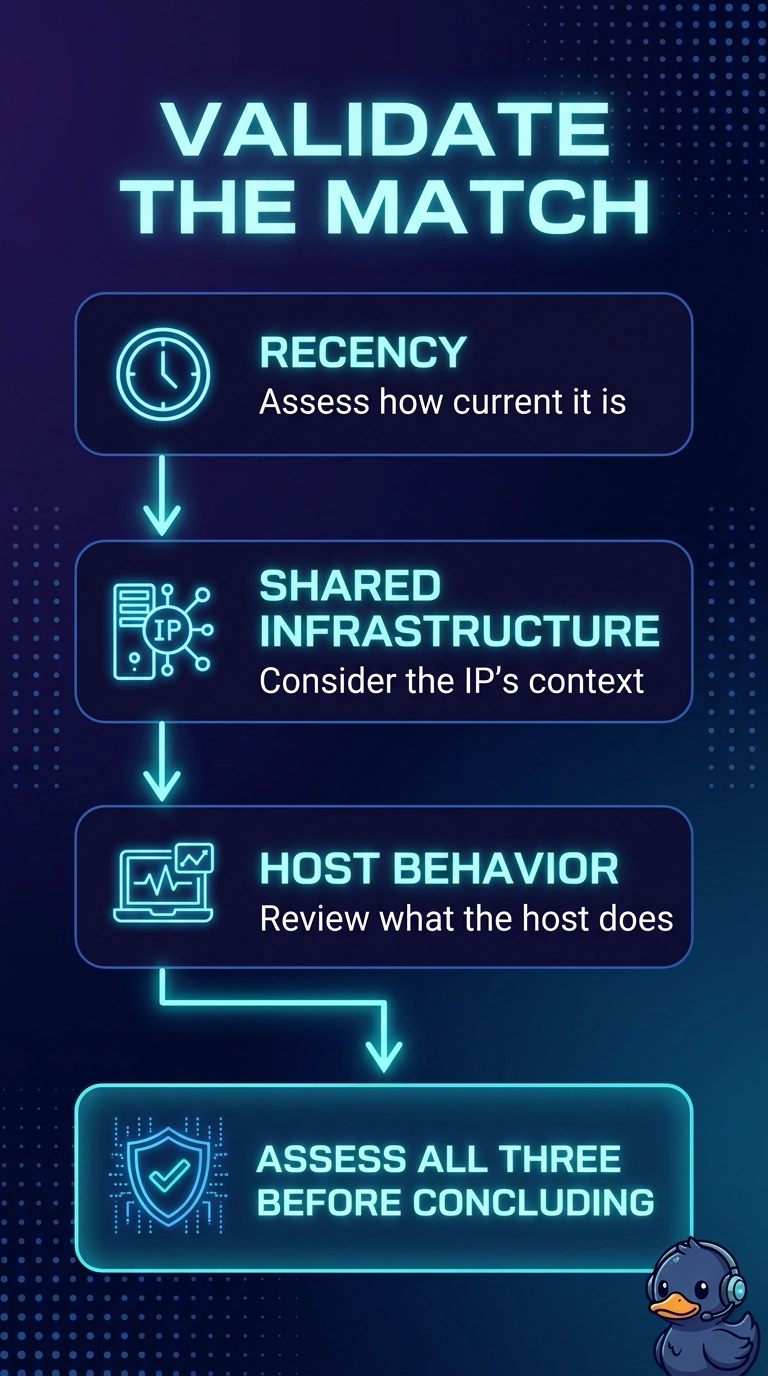
Shared cloud and CDN IP addresses host thousands of legitimate services alongside occasional malicious infrastructure, so you must Assess indicator recency, shared infrastructure context, and host behavior before declaring an active compromise. Checking whether the IOC is stale, why the web server initiated the connection, and what process made the request separates routine traffic from real intrusion. Choosing to Immediately isolate the checkout web server and block the entire CDN range now risks a major customer outage over a weak, shared indicator. Deciding to Delete the threat-intelligence feed entry so future alerts stop firing blinds the team to genuine hits on that feed later. Opting to Close the alert as confirmed benign without checking any server process logs leaves a potential compromise unverified if an attacker actually abused that CDN. Caveat: adversaries sometimes hide command-and-control behind legitimate CDNs, so shared hosting reduces indicator specificity but never guarantees safety. Operational check: pivot from the destination IP to the initiating process, request path, and timing on the web server before deciding on containment.
Prefer to study offline? Printable PDF study book + test engine ($7.50, unofficial). These questions stay free here.