
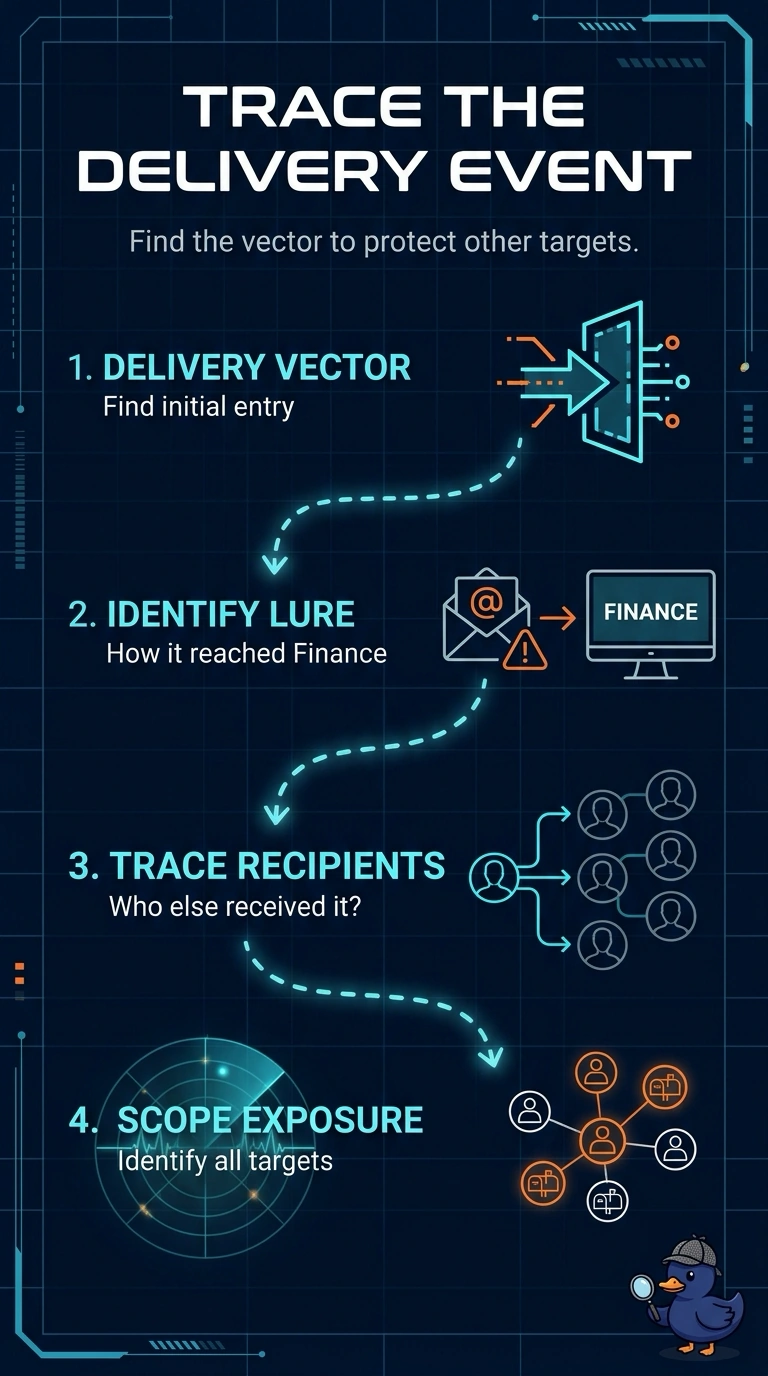
A manufacturing SOC analyst investigates a phishing alert where a finance user opened an attachment, followed by a script launch and an outbound network connection. Why should the analyst trace backward to the initial delivery event rather than stopping at the outbound connection?
Select an answer to reveal the explanation.
Short Explanation
Stopping at one infected machine is like pulling a single weed while leaving the rest of the roots in the garden. If you trace back to the email or delivery source, you can see everyone else who got the same lure. The trap is treating single-host containment as full incident scoping.
Full Explanation
Full scope determination requires looking upstream because Identifying the initial delivery vector reveals whether other recipients received the same lure and need scoping. Tracing back to the sender, subject, or attachment hash in email and proxy logs shows whether the phishing message reached additional mailboxes or endpoints that have not yet triggered execution alerts. Assuming Blocking the external destination IP automatically removes any malicious attachments from other employee mailboxes is incorrect because network controls do not purge delivered messages from mail servers. Claiming that Historical endpoint detections cannot be linked to email logs unless a correlation rule was active beforehand misunderstands SIEM investigation, since analysts can pivot retroactively in CQL across retained datasets. Thinking that Tracing backward is unnecessary once the single workstation executing the suspicious script has been isolated leaves other targeted employees exposed to delayed execution. As a caveat, verify retention windows for email and proxy logs if the delivery occurred days earlier. As an operational check, pivot on the sender address, message identifier, or attachment hash across email telemetry to list every recipient.
Prefer to study offline? Printable PDF study book + test engine ($7.50, unofficial). These questions stay free here.