
A hospital SOC analyst receives an alert on a critical clinical database server and considers triggering an existing Falcon Fusion SOAR isolation workflow. What should the analyst verify before executing containment?
Select an answer to reveal the explanation.
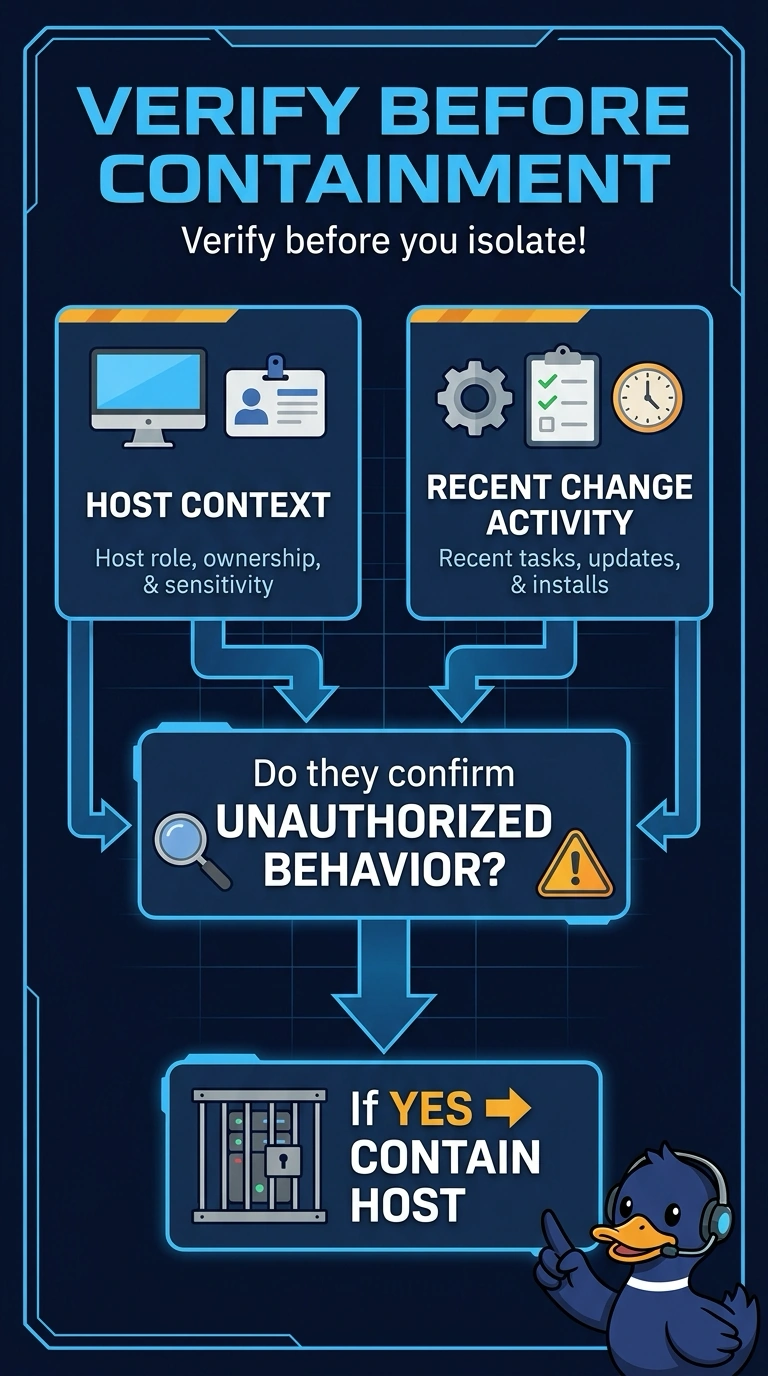
Short Explanation
Isolating a live hospital database server is not a button you want to press on a hunch. Confirm host context and authorized change activity first, because the trap is triggering SOAR isolation blindly or relying on a label alone.
Full Explanation
Automated containment protects the environment, but on a critical clinical system you must first confirm Whether host context and recent change activity confirm unauthorized behavior before launching a Falcon Fusion SOAR isolation workflow. Verifying the initiating user, process lineage, and scheduled maintenance prevents a false positive from taking essential patient-care systems offline. Checking Whether the server can be removed from all SIEM logging to reduce alert volume would blind defenders instead of resolving a threat. Relying on Whether the alert has a MITRE ATT&CK label attached before checking any host logs mistakes framework tagging for confirmed maliciousness. Asking Whether a CQL groupBy query can isolate the database server automatically confuses a query aggregation function with an orchestration response action. Caveat: when clear evidence shows active ransomware or lateral movement on a critical server, rapid containment is essential—just base it on verified host evidence and escalation procedures. Operational check: review active maintenance windows, process details, and case notes with the system owner or senior responder before triggering host isolation.
Prefer to study offline? Printable PDF study book + test engine ($7.50, unofficial). These questions stay free here.