
A hospital SOC analyst confirms that a workstation executed a suspicious binary and contacted an external domain. How should the analyst determine whether other clinical systems are affected?
Select an answer to reveal the explanation.
Short Explanation
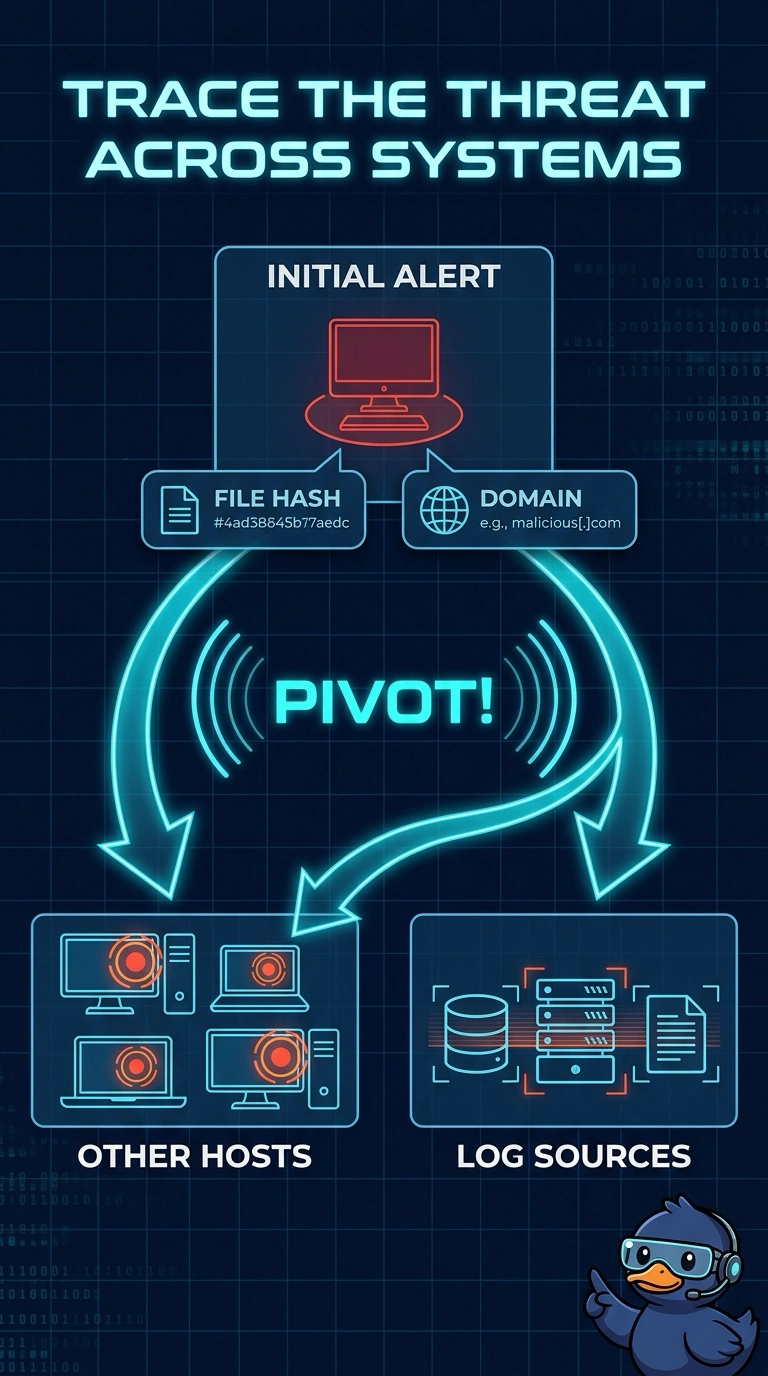
Finding malware on one machine is rarely the end of the story—it is usually just the first thread you pull. Waiting for more alerts or staring at the same host leaves the rest of the network unchecked. Pivot on the hash and domain across your logs so you can see everywhere that threat touched.
Full Explanation
Scoping an incident requires an analyst to "Pivot on the file hash and domain across other hosts and log sources" to uncover whether the same binary or command-and-control infrastructure appeared elsewhere in the environment. Searching observables across endpoint, DNS, and proxy telemetry reveals patient zero, additional compromised hosts, and lateral spread. Choosing to "Review only the alerts generated on the original clinical workstation" limits visibility to a single endpoint and misses silent or unalerted activity on neighboring systems. Choosing to "Wait for users on other workstations to report system slowness tickets" relies on manual symptom reporting while an adversary continues operating. Meanwhile, choosing to "Change the severity label on the original alert from medium to critical" only updates metadata on one alert without expanding the investigation. As a caveat, remember that zero hits on a pivot can reflect a missing log source or time-window mismatch rather than guaranteed absence of activity. For an operational check, query both the executable hash and the external domain across all available endpoint and network datasets over a broad enough time window to cover initial delivery.
Prefer to study offline? Printable PDF study book + test engine ($7.50, unofficial). These questions stay free here.