
A university SOC writes a correlation rule with a four-hour join window that links campus VPN authentications with outbound firewall blocks using only the client IP address on a DHCP-managed wireless network. Why can this rule generate false-positive correlations?
Select an answer to reveal the explanation.
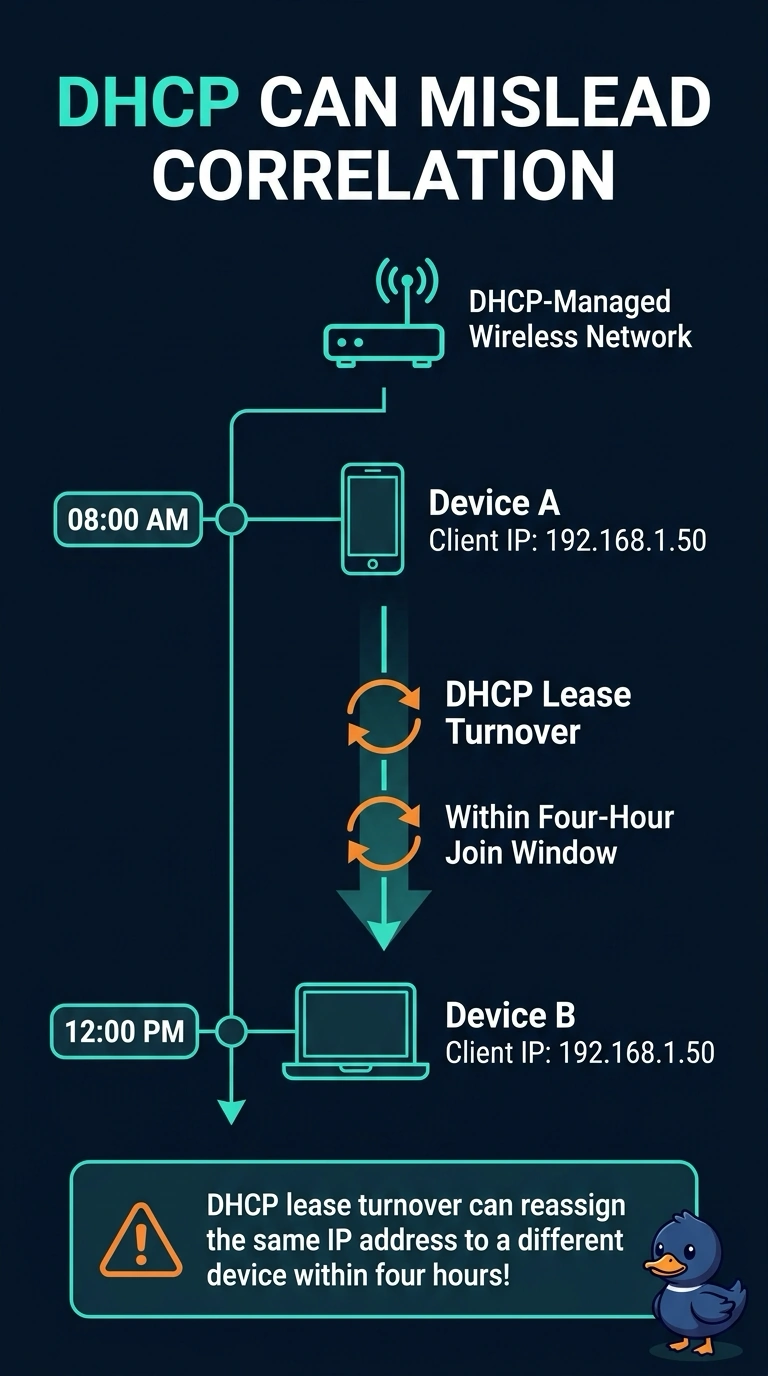
Short Explanation
Joining four hours of logs solely on a wireless DHCP address is like assuming the person sitting at a coffee shop table at noon is the same person who sat there at nine. You need a persistent host or user identifier, or your correlation rule will blame the wrong student.
Full Explanation
Dynamic addressing breaks long-window IP joins because DHCP lease turnover can reassign the same IP address to a different device within four hours. On a busy campus wireless network, one user can disconnect and release an IP address, and a completely different device can receive that same IP minutes later, causing the rule to link an earlier VPN authentication with an unrelated host's outbound firewall block. Claiming that Campus firewalls strip source IP addresses from outbound logs whenever a VPN session is active fails because firewalls rely on source and destination IP headers to route and log traffic. Stating that Correlation rules in Falcon Next-Gen SIEM cannot join firewall events with identity authentication logs fails because multi-source correlation across identity and network telemetry is a core SIEM capability when valid join keys exist. Asserting that Four-hour join windows automatically convert all matched events into third-party passthrough alerts fails because custom correlation rules always generate correlation-rule detections regardless of window length. As a caveat, even shorter join windows can misfire in high-churn guest networks if DHCP leases expire rapidly. As an operational check, tighten the correlation window and join on a persistent normalized entity such as username or device identifier, or corroborate with DHCP lease records.
Prefer to study offline? Printable PDF study book + test engine ($7.50, unofficial). These questions stay free here.