
A financial services SOC builds a correlation rule to detect brute-force logins across branch offices, but accidentally configures the rule's entity grouping field to use the log forwarder's IP address instead of the normalized source IP. What problem does this cause?
Select an answer to reveal the explanation.
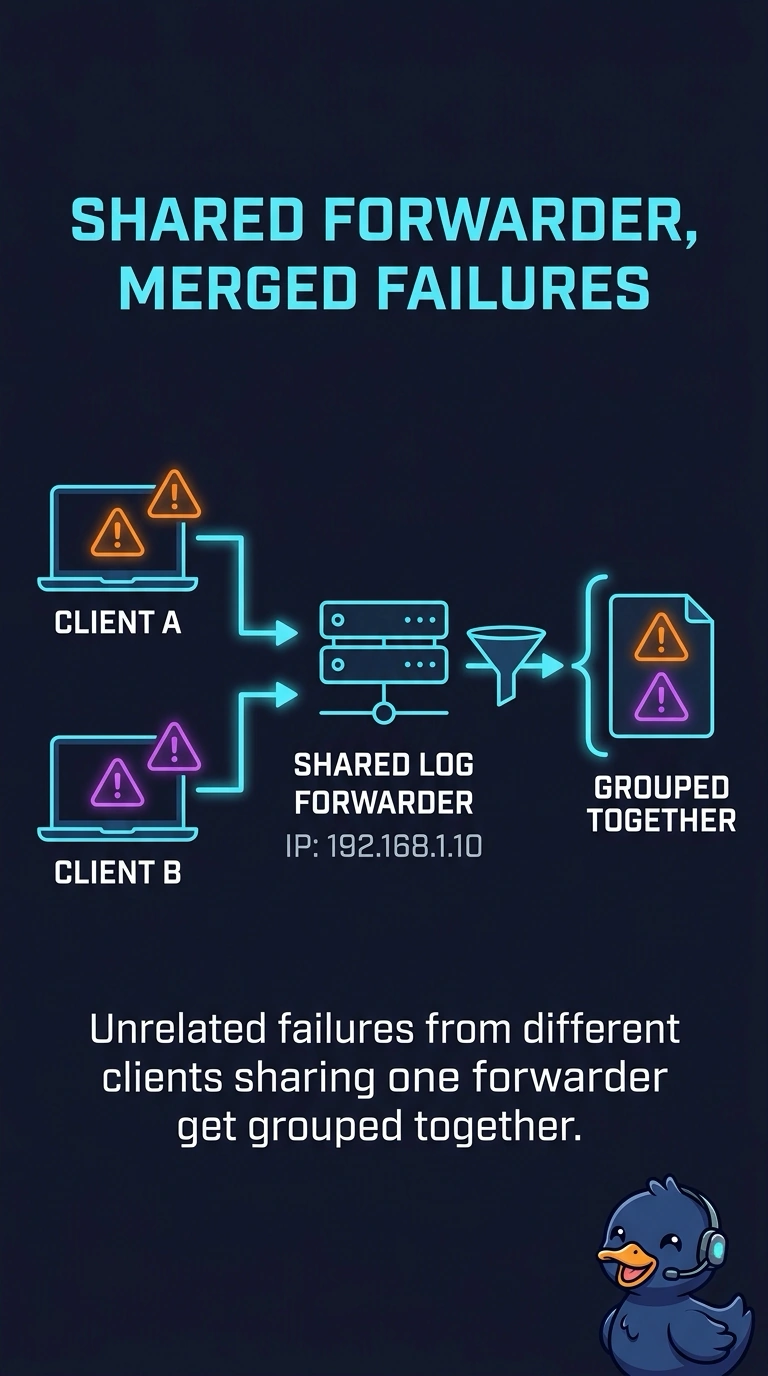
Short Explanation
Grouping brute-force events by the log forwarder's IP is like blaming the mail carrier for every angry letter in the neighborhood. If you do not group by the actual source IP, normal typos from dozens of branch users will pile up into false alarms.
Full Explanation
Using the wrong grouping entity skews threshold logic because Unrelated failures from different clients sharing one forwarder get grouped together. When many branch employees route logs through a single collector or forwarder, routine failed logins from distinct client IPs all share that forwarder's IP, quickly crossing the brute-force threshold and firing noisy false positives while masking which client actually attacked. Claiming that The correlation rule stops receiving events from branch offices until the log forwarder is rebooted fails because grouping configuration affects alert evaluation logic, not log ingestion transport. Asserting that Every brute-force alert is automatically downgraded to an informational third-party passthrough fails because custom correlation rules retain their configured origin and severity regardless of the grouping key. Stating that Falcon Fusion SOAR immediately isolates the log forwarder whenever a single user mistypes a password fails because SOAR containment only executes if an automated workflow is explicitly configured and triggered. As a caveat, even when grouping by the normalized source IP, behind-NAT branch traffic can still share one egress IP, requiring username correlation as well. As an operational check, inspect sample parsed authentication events to confirm the normalized source IP field holds the client address rather than the collector IP.
Prefer to study offline? Printable PDF study book + test engine ($7.50, unofficial). These questions stay free here.