
A university SOC team imports a built-in correlation-rule template for suspicious archive creation and plans to attach an automated host-isolation SOAR workflow immediately. What should the analyst do before enabling automated containment?
Select an answer to reveal the explanation.
Short Explanation
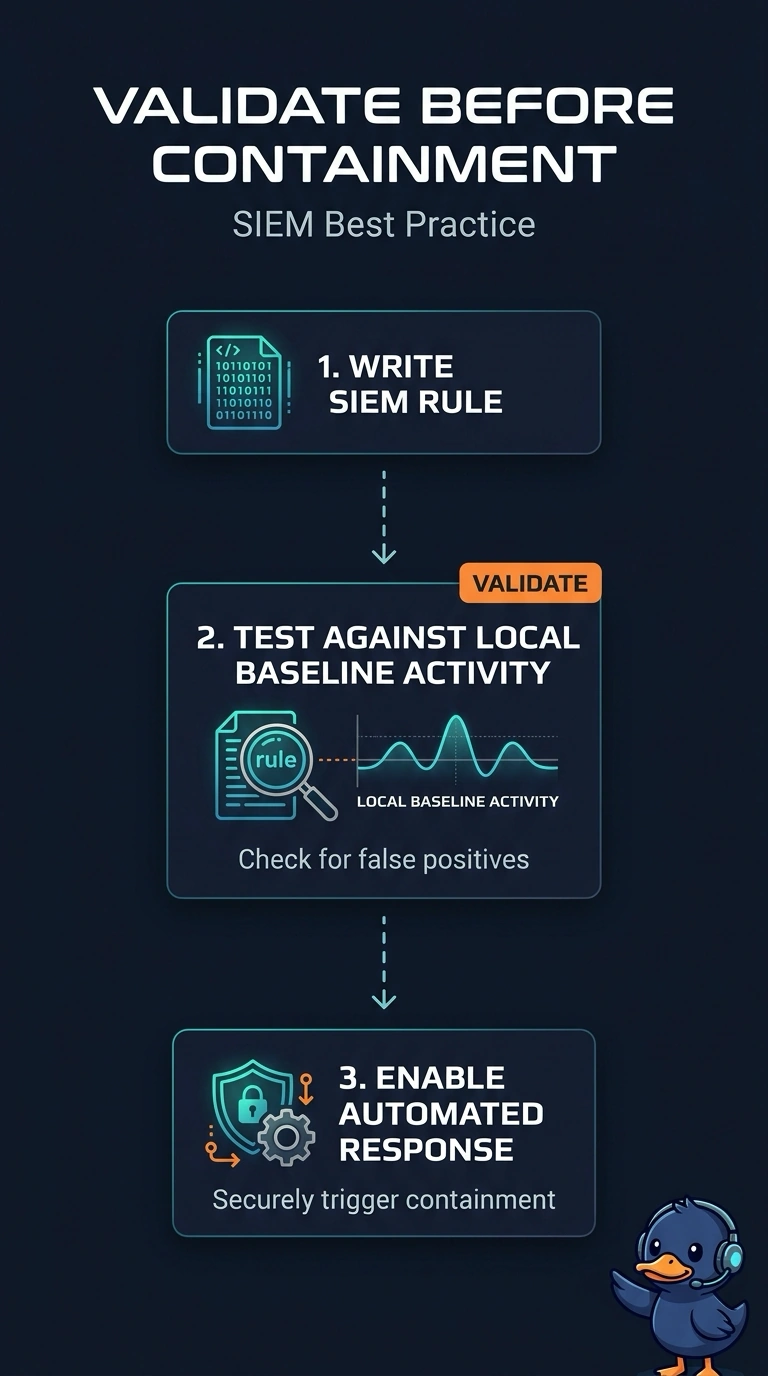
Turning on automated host isolation without testing the rule first is like wiring a hair-trigger sprinkler system over your server rack! The trap is assuming a vendor template fits your environment out of the box without checking for benign local scripts.
Full Explanation
Test the rule against local baseline activity before enabling automated response is essential because correlation-rule templates provide starting detection logic that may match legitimate university backup jobs, software packaging, or research workflows. Validating the rule in alert-only mode or against historical logs lets you tune exclusions safely before any host is isolated. Raise the template severity to critical so every match triggers an immediate page only amplifies potential false-positive noise and disrupts analysts without verifying rule accuracy. Disable all third-party passthrough detections so only the new rule fires on hosts creates dangerous visibility blind spots across network and identity controls. Remove the MITRE ATT&CK tags from the rule metadata to reduce analyst alert fatigue strips helpful investigative context without changing how often the rule triggers. As an exam caveat, built-in correlation-rule templates accelerate deployment, but they never replace environment-specific tuning before automated SOAR actions run. As an operational check, run the template query over recent historical telemetry and verify that any matching archive commands belong to authorized processes before linking a containment workflow.
Prefer to study offline? Printable PDF study book + test engine ($7.50, unofficial). These questions stay free here.