
A hospital network SOC enables a correlation rule designed to detect widespread internal SMB scanning across clinical subnets by alerting when 50 SMB connection attempts occur within five minutes. However, a single malfunctioning printer triggers the rule every hour. What should the analyst check in the rule logic?
Select an answer to reveal the explanation.
Short Explanation
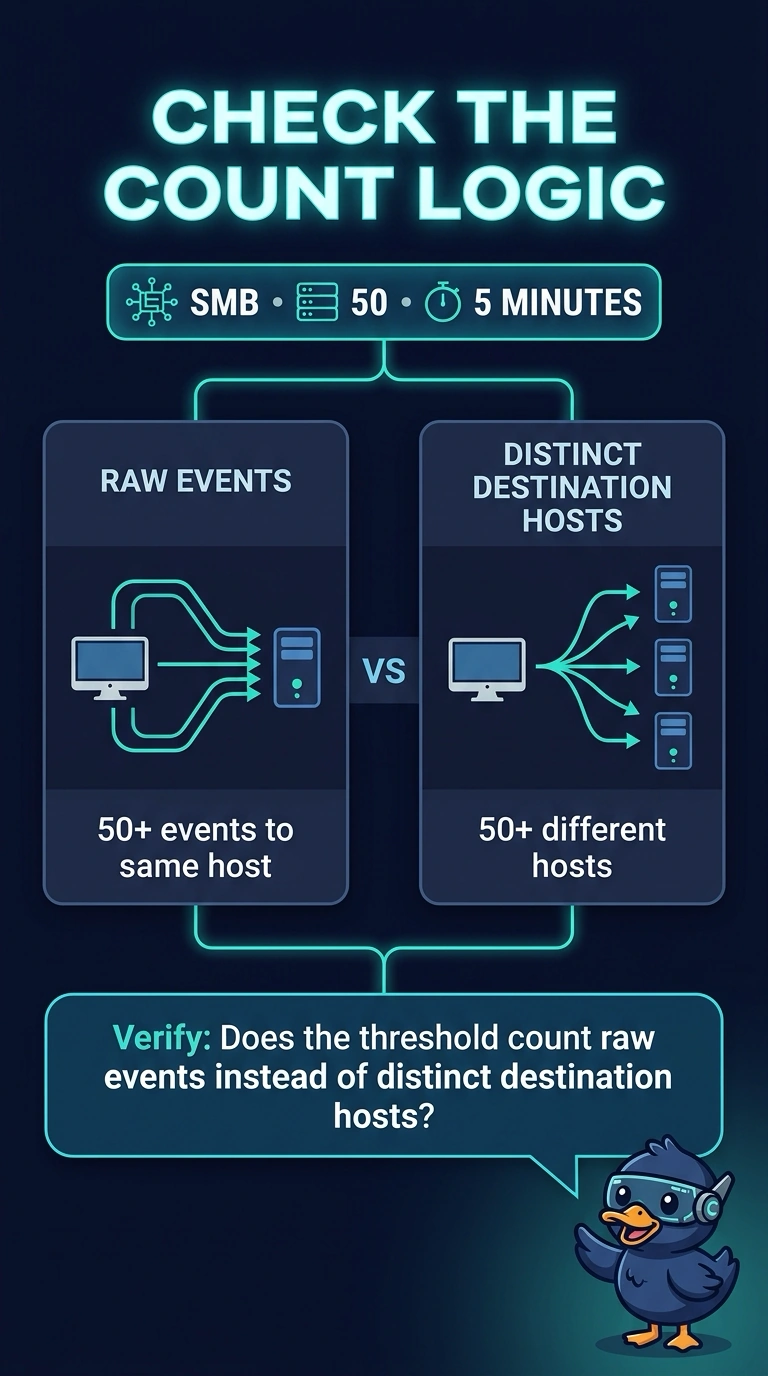
A rule meant to catch a burglar checking 50 doors shouldn't fire when a stuck printer knocks on the same door 50 times. Checking whether your threshold counts raw events or distinct targets stops single-host chatter from crying wolf.
Full Explanation
When a single malfunctioning device repeatedly trips a rule intended to spot broad lateral movement, the analyst should inspect Whether the threshold counts raw events instead of distinct destination hosts. Counting raw connection attempts allows one noisy endpoint retrying the same server 50 times to satisfy the threshold, whereas requiring a minimum number of distinct target hosts ensures the alert reflects genuine multi-host scanning. Checking Whether the rule severity is set too high for internal clinical subnets only changes alert priority labels without fixing the flawed detection condition. Checking Whether Falcon Fusion SOAR should auto-isolate every printer on the VLAN is dangerous and premature before fixing the underlying false-positive rule logic. Checking Whether all SMB telemetry should be excluded from SIEM ingestion permanently would create a massive blind spot and prevent analysts from investigating real lateral movement. As a caveat, legitimate vulnerability scanners can also hit many distinct targets, so pair distinct-target thresholds with authorized scanner context. As an operational check, review the contributing events in the printer's alert to verify whether all 50 attempts targeted the same destination.
Prefer to study offline? Printable PDF study book + test engine ($7.50, unofficial). These questions stay free here.