
A manufacturing SOC analyst opens a newly triggered high-severity detection on a plant workstation and wants to know whether automated containment has already been applied before initiating manual isolation. What should the analyst check first?
Select an answer to reveal the explanation.
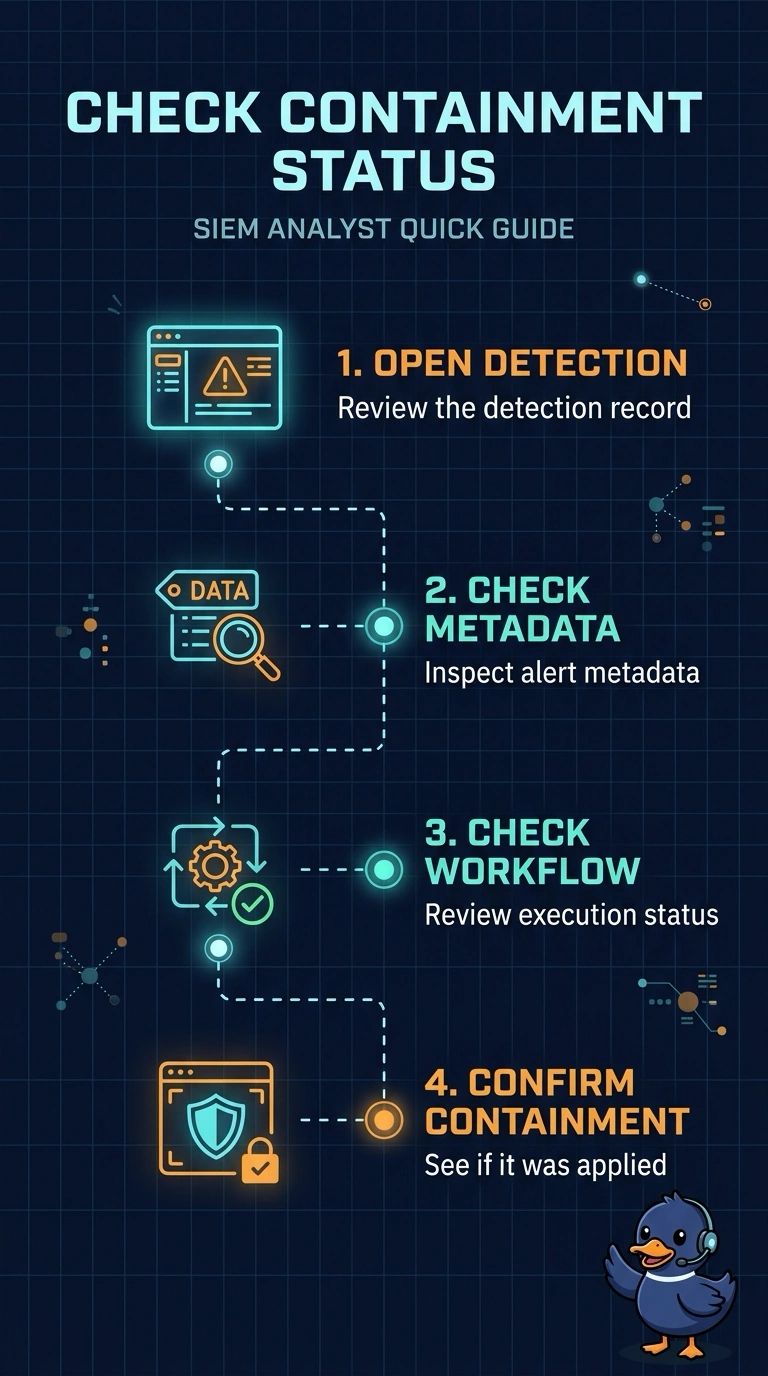
Short Explanation
Jumping straight into manual containment without checking what your automation already did is like calling a second tow truck before looking out the window. Verify the detection's current status first so you do not duplicate or disrupt active response.
Full Explanation
Follow the associated workflow execution record/log and verify the endpoint's current containment state; an alert trigger alone is not evidence of successful isolation. Checking alert metadata and workflow execution status in the detection record tells you whether an automated workflow already isolated the host, succeeded, or failed and still needs manual intervention. Reviewing the MITRE ATT&CK tactic label assigned to the correlation rule describes the adversary objective associated with the rule rather than whether any containment action ran on the endpoint. Inspecting the workstation's local firewall log exported three days earlier is outdated and cannot reflect containment actions triggered by a newly fired detection. Consulting a historical groupBy dashboard of all plant alerts from the past month aggregates past alert volume rather than showing the live remediation state of this specific workstation. Caveat: an automated workflow marked as triggered may still be in progress or fail if the endpoint is offline, so confirm completion rather than assuming success from the trigger alone. Operational check: verify both the workflow completion status in the detection record and the host's current isolation state before running manual containment.
Prefer to study offline? Printable PDF study book + test engine ($7.50, unofficial). These questions stay free here.