
A financial firm SOC notices a custom correlation rule for unusual PowerShell downloads triggers dozens of false positives between 09:00 and 17:00, and an analyst proposes suppressing the rule during business hours. Why should the team avoid this approach?
Select an answer to reveal the explanation.
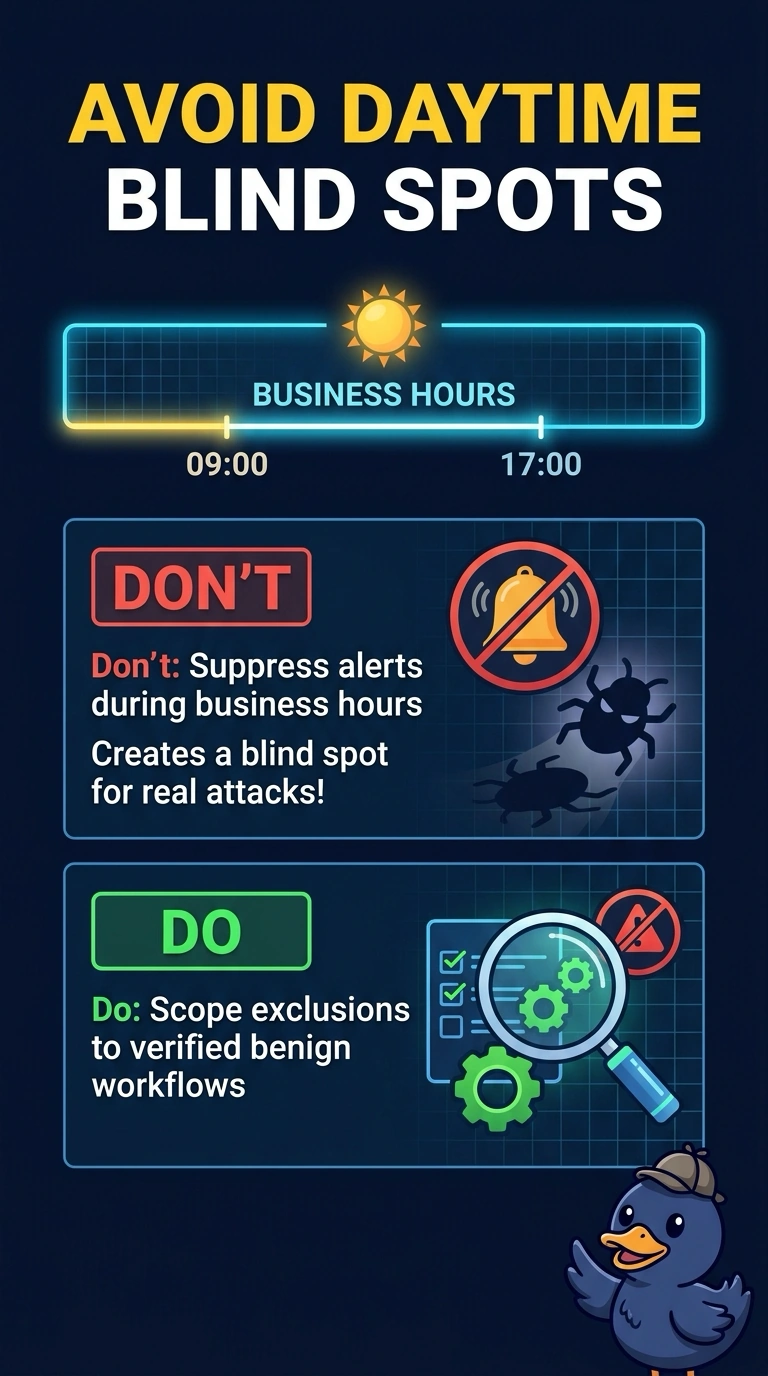
Short Explanation
Locking the store alarm during business hours just because delivery trucks trigger it invites shoplifters in broad daylight. The trap is silencing an entire time window instead of excluding the specific benign workflow causing your noise.
Full Explanation
Adversaries frequently operate during normal business hours to blend in with legitimate user and administrative activity. Selecting Suppressing alerts during business hours creates a blind spot for real daytime attacks instead of scoping exclusions to verified benign workflows identifies the core risk: a blanket time suppression blinds the SOC to daytime intrusions rather than filtering the specific benign workflow causing noise. A blanket time condition in detection/response logic can create a daytime blind spot; tune verified benign activity instead. The question does not depend on an undocumented suppression UI. In contrast, Disabling CPS during business hours preserves the same detection coverage is incorrect because pausing protection reduces coverage when activity is highest. Choosing Business-hours alerts automatically escalate to critical severity compared to overnight activity is incorrect because severity is defined by rule configuration and metadata, not time of day. Meanwhile, Turning off daytime alerting permanently deletes historical detections from the case database is false because stopping new alerts does not erase previously recorded detections. As a caveat, even scoped exclusions should be documented and reviewed periodically. As an operational check, inspect daytime false positives in CQL to identify the parent process or signer and exclude only that verified pattern.
Prefer to study offline? Printable PDF study book + test engine ($7.50, unofficial). These questions stay free here.