
A hospital SOC deploys a correlation rule to link suspicious cloud identity sign-ins with subsequent endpoint process launches by joining on the normalized username field, yet verified tests fail to trigger because cloud logs record full email addresses while endpoint logs record short usernames. How should the analyst resolve this?
Select an answer to reveal the explanation.
Short Explanation
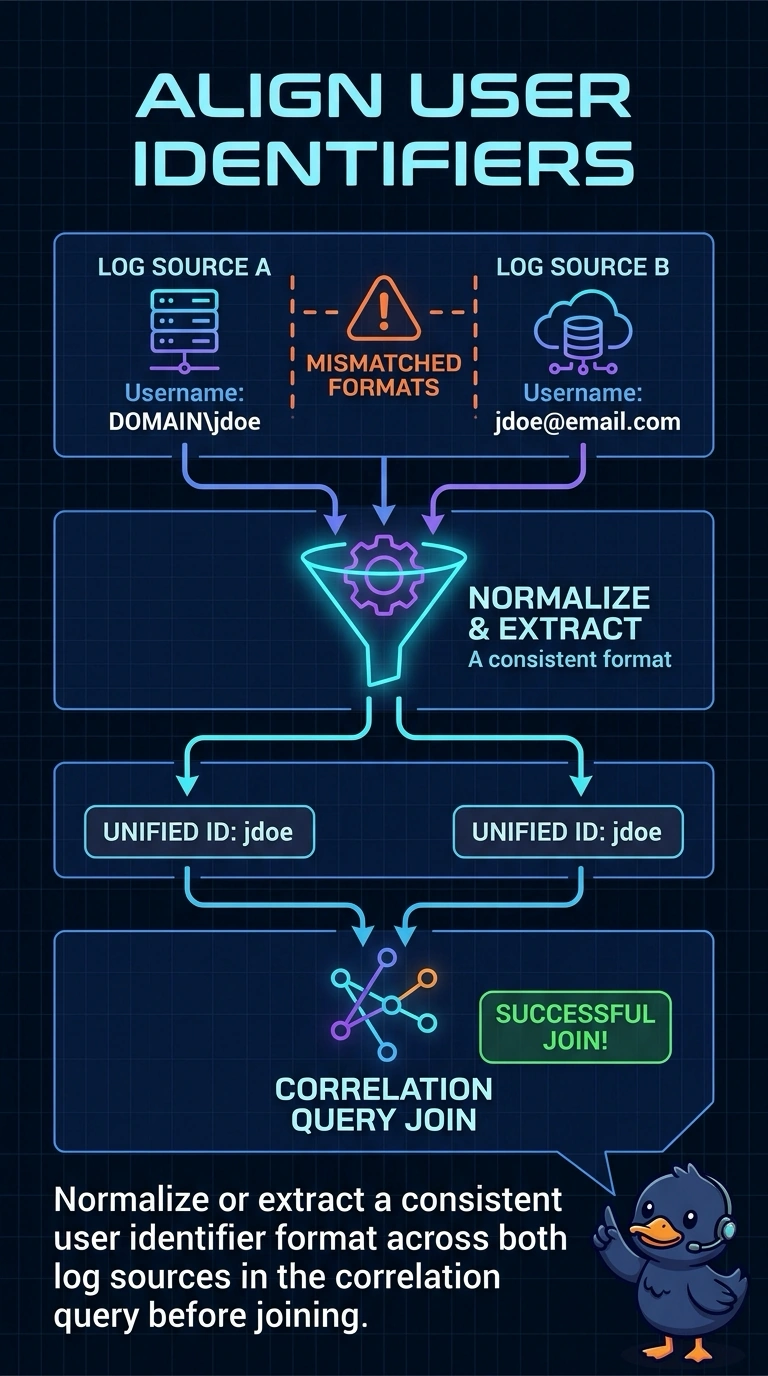
Joining two log sources on mismatched username formats is like trying to match a phone book of full names against a list of nicknames. You need to standardize the identifier format in your rule logic so the SIEM can actually connect the dots.
Full Explanation
The correct fix is to Normalize or extract a consistent user identifier format across both log sources in the correlation query before joining. Stripping the domain suffix from the email-style identity or mapping both sources to a shared CPS user field ensures identical join keys so multi-stage activity correlates reliably. Choosing to Raise the correlation rule severity to critical so partial matches still escalate to tier-1 analysts does not make a failing join condition match; the rule will still miss the events. Choosing to Replace the user join key with the corporate VPN gateway IP address shared by all remote clinicians introduces severe false positives by linking unrelated clinicians who happen to share the same egress IP. Choosing to Disable the endpoint log source in the correlation rule and alert solely on single cloud sign-in events defeats the purpose of cross-source correlation and floods analysts with isolated identity alerts. As a caveat, stripping email domains can cause collisions if two distinct users share the same short username across different domains. For an operational check, test the updated query against historical cloud and endpoint events from a known test user to verify that both sides join cleanly.
Prefer to study offline? Printable PDF study book + test engine ($7.50, unofficial). These questions stay free here.