
A retail SOC team creates several new custom correlation rules for low-confidence informational events in Falcon Next-Gen SIEM and sets every rule's severity to critical so analysts notice them. Within a week, analysts begin overlooking critical alerts during busy shifts. Why should the team adjust these rule severities?
Select an answer to reveal the explanation.
Short Explanation
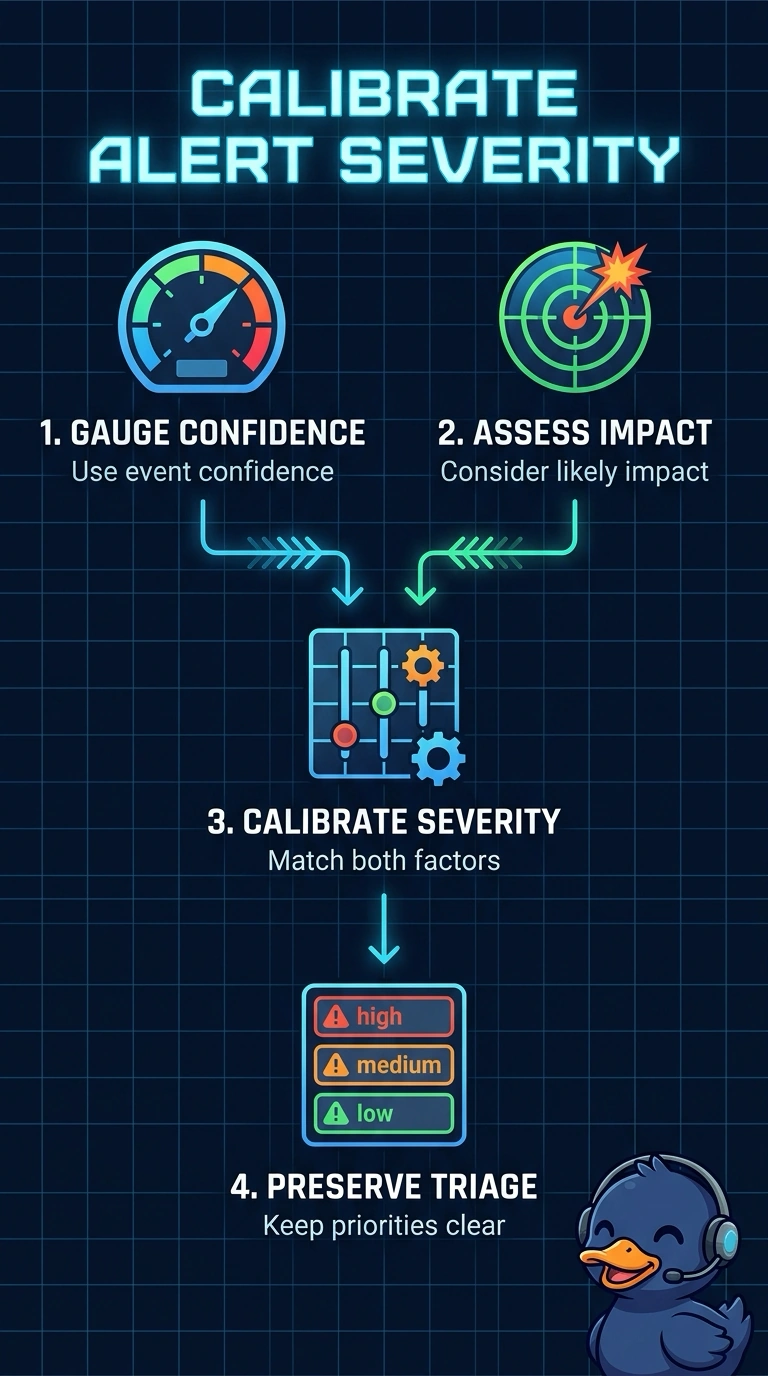
When every alert screams emergency, your analysts quickly tune out the noise like a car alarm that never stops ringing. The trap is marking low-confidence rules critical just to get eyeballs on them. You keep triage sharp by matching severity to real confidence and business impact.
Full Explanation
Queue prioritization depends on meaningful distinctions between urgent threats and routine signals, so Calibrating severity to confidence and impact preserves triage prioritization and prevents analysts from becoming desensitized to true emergencies. Assuming that High-severity labels automatically trigger Falcon Fusion SOAR host isolation workflows confuses alert metadata with automated response playbooks, which only execute when explicitly configured and triggered. Claiming that Falcon Next-Gen SIEM suppresses all medium and low alerts when critical alerts exist is inaccurate, because lower-severity detections remain visible in the queue rather than disappearing. Likewise, believing that Correlation rules marked critical bypass CPS field normalization during ingestion misunderstands how parsing works, since CPS normalization occurs on ingested events regardless of rule severity. Note the caveat that low-severity alerts on high-value assets still warrant review rather than blind dismissal. As an operational check, review recent closed alerts by rule severity and confirm critical rules show a high true-positive rate.
Prefer to study offline? Printable PDF study book + test engine ($7.50, unofficial). These questions stay free here.