
A distributed office SOC receives third-party passthrough detections from a cloud proxy, and an analyst proposes creating a custom correlation rule that triggers on the exact same single proxy alert condition. Why is this redundant?
Select an answer to reveal the explanation.
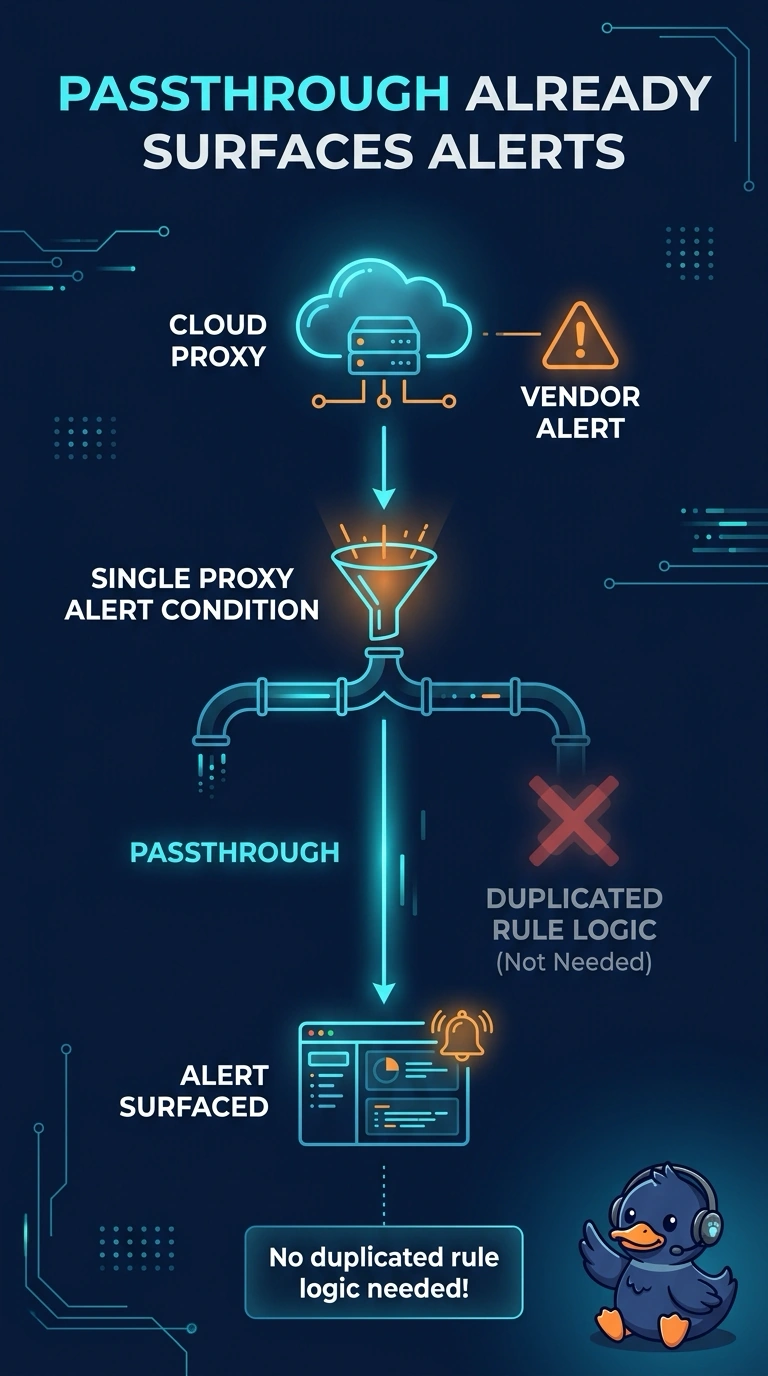
Short Explanation
Creating a correlation rule to echo a single passthrough alert is like setting a second alarm clock for the exact same minute. You already have the vendor's signal, so save correlation rules for linking multiple events or adding context.
Full Explanation
Because Falcon Next-Gen SIEM ingests third-party passthrough detections directly, "The passthrough detection already surfaces the vendor alert without duplicating rule logic" when no extra correlation is added. Mirroring a single-event vendor trigger creates duplicate alerts for analysts to triage without improving signal quality. Claiming "Custom correlation rules cannot read third-party proxy fields even when normalized by CPS" is incorrect, as normalized third-party telemetry is specifically designed for cross-source correlation. Stating "Falcon Next-Gen SIEM blocks custom correlation rules whenever third-party passthrough alerts exist" is false because both detection origins coexist and can even reinforce each other. Assuming "Third-party passthrough detections automatically isolate endpoints, making correlation unnecessary" confuses alert ingestion with automated response, since containment requires explicit workflows such as Falcon Fusion SOAR. As a caveat, a custom correlation rule is genuinely valuable when it links that proxy signal with endpoint process launches or identity logins. Operationally, review existing passthrough detections before authoring new rules, and focus custom correlation on multi-source sequences.
Prefer to study offline? Printable PDF study book + test engine ($7.50, unofficial). These questions stay free here.