
A software company SOC analyst adds a temporary exclusion to a correlation rule so a two-week data-migration script does not flood the alert queue. What practice prevents this exclusion from becoming a permanent detection blind spot?
Select an answer to reveal the explanation.
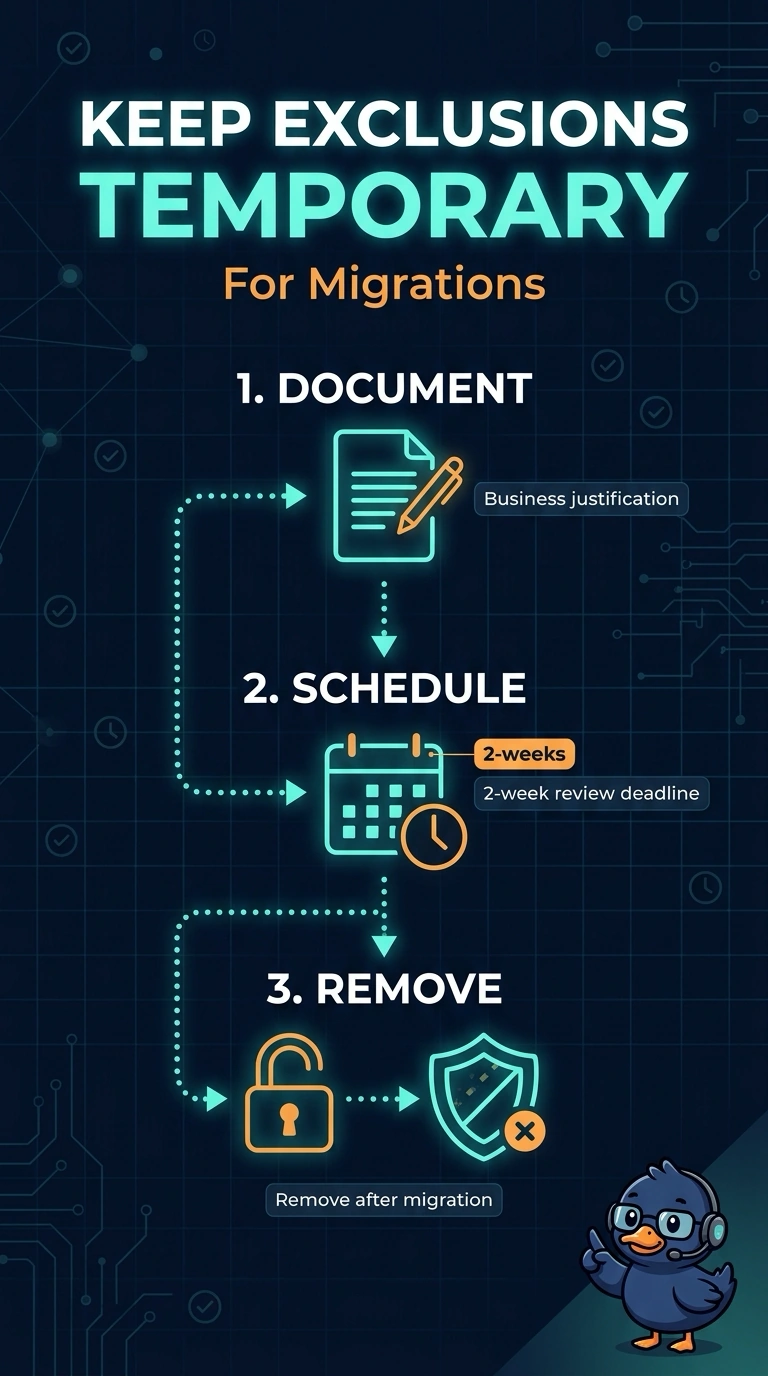
Short Explanation
Temporary exceptions have a sneaky habit of turning into permanent furniture if nobody tracks them. The trap is adding an exclusion for a short project and forgetting it once the noise stops, leaving your defenses open later. Write down why you added it and set a clear review date so you can close the gap on schedule.
Full Explanation
Correlation-rule exclusions reduce operational noise during authorized changes, but unmonitored exceptions create lasting blind spots that attackers can exploit. You should Document the business justification and schedule a review to remove the exclusion after migration, ensuring the rule returns to full coverage as soon as the approved project ends. Choosing to Disable the entire correlation rule permanently so the migration team is never interrupted blinds the SOC to real threats across every host in the environment. Choosing to Leave the exclusion active indefinitely without notes in case the team runs another migration later leaves future analysts unaware of why the filter exists or whether the activity is still authorized. Deciding to Lower the rule severity to informational for all hosts across the organization permanently weakens triage prioritization for legitimate detections everywhere. As a caveat, even a time-bound exclusion should be scoped tightly to the specific migration host, user, or script path rather than broad wildcards. As an operational check, link the exclusion entry to the approved change ticket and verify after the migration window that the exception is removed and the rule still fires on test events.
Prefer to study offline? Printable PDF study book + test engine ($7.50, unofficial). These questions stay free here.