
A utility company SOC analyst reviews a correlation-rule alert whose detection timestamp is 14:30 and assumes the suspicious login occurred at 14:30, missing earlier endpoint activity. Why should the analyst inspect the contributing event timestamps in alert metadata?
Select an answer to reveal the explanation.
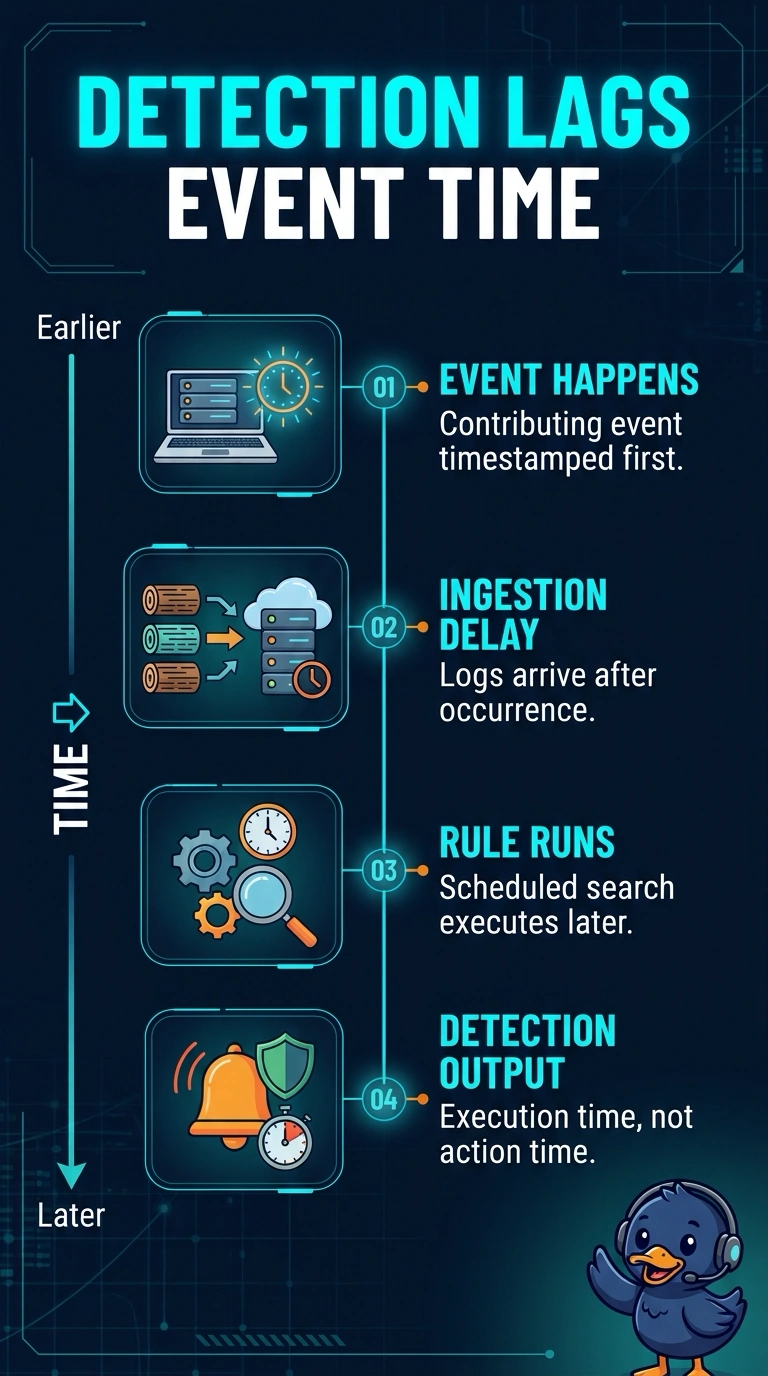
Short Explanation
Think of the alert time as when you get the report, not when the action happened — you need the original event times to see the real start. Compare event and detection times under the configured frequency, lookback and timestamp basis; a detection time is not the first action time. If you anchor to 14:30, you will miss the earlier moves you need to scope.
Full Explanation
The detection records rule execution/output time, which can lag the contributing events because of scheduling, search runtime and ingestion delay. Compare event and detection times under the configured frequency, lookback and timestamp basis; a detection time is not the first action time. Inspecting the contributing events' timestamps reveals the true start and progression of the activity so scoping queries cover the right interval. Claiming Correlation rules always convert contributing event timestamps to the analyst's browser timezone while leaving alert timestamps in UTC is incorrect and confuses timezone display with scheduling and runtime lag. Claiming Contributing event timestamps are only populated for third-party passthrough alerts and never for native correlation rules is false, as correlation-rule metadata links back to the matched events. Claiming The detection timestamp reflects when the endpoint agent was installed rather than when the correlation query ran confuses asset enrollment metadata with detection evaluation timing. Caveat: third-party log ingestion latency can add further delay between when an event occurred and when the correlation rule saw it. As an operational check, open the contributing events in alert metadata and build your CQL scoping window starting before the earliest matched event.
Prefer to study offline? Printable PDF study book + test engine ($7.50, unofficial). These questions stay free here.