
A financial services SOC creates several custom correlation rules, but tier-1 analysts frequently escalate them without context or close them prematurely because the alerts only display generic titles. What should the rule authors add to the correlation-rule alert metadata?
Select an answer to reveal the explanation.
Short Explanation
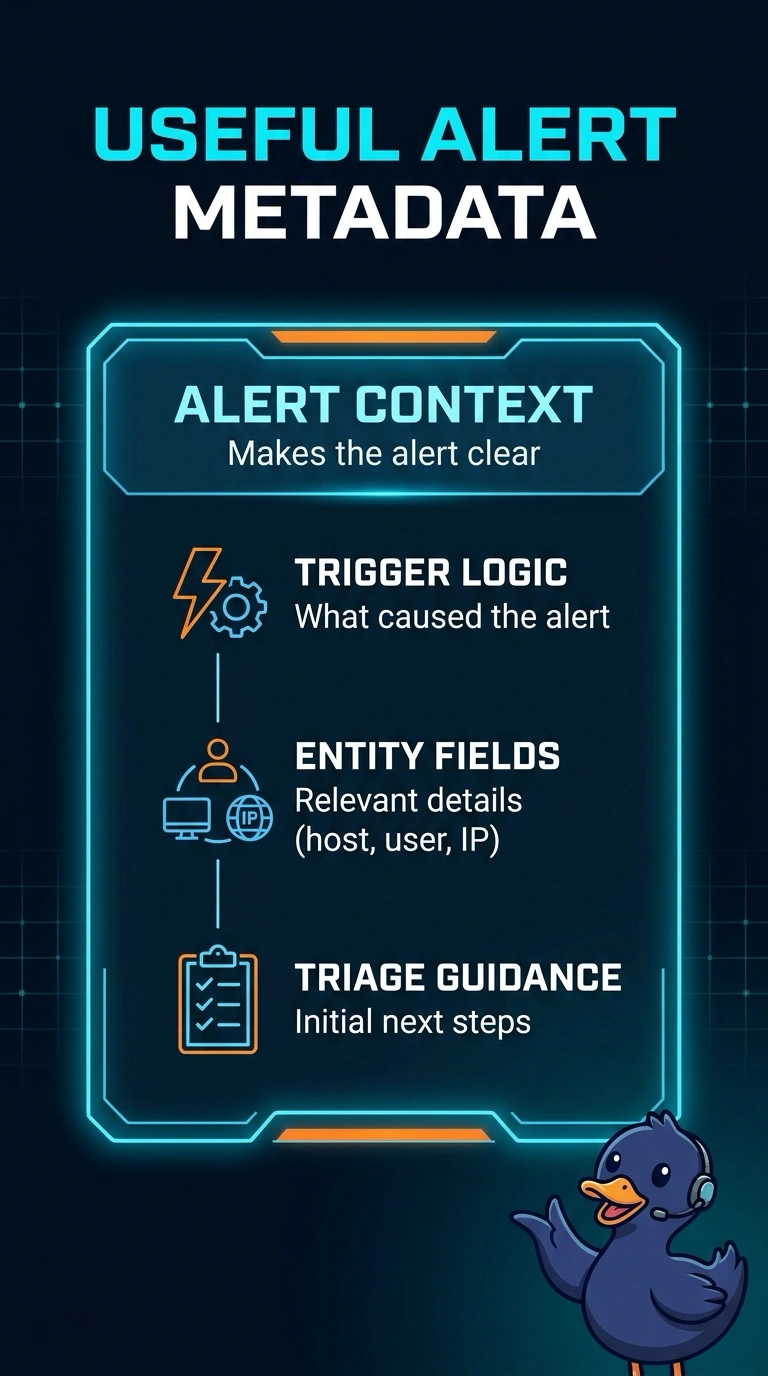
Handing an analyst a generic alert title with no triage notes is like handing someone a wrapped box with no label and asking if it is urgent. You empower consistent triage by adding clear metadata and next steps, and the trap is cranking up severity instead of explaining what fired.
Full Explanation
Effective correlation rules guide the analyst from detection to decision, so rule authors should include "Clear descriptions of the triggering logic, relevant entity fields, and initial triage guidance" in the alert metadata so tier-1 staff know what matched and how to validate it. Adding "Automatic host isolation actions for every rule regardless of asset criticality" risks taking critical financial servers offline on unverified or noisy custom rules. Using "Full raw log exports of the entire SIEM repository attached to each alert" overwhelms analysts with unmanageable data rather than highlighting the specific contributing events. Setting "Higher severity ratings so tier-1 analysts treat every alert as an active breach" creates alert fatigue and misprioritizes low-confidence signals without explaining how to investigate them. Caveat: keep alert metadata synchronized whenever you update the underlying correlation query or thresholds so triage instructions never reference obsolete fields. Operational check: review a newly triggered alert in the queue with a tier-1 analyst to verify that the displayed description, entity fields, and triage steps are sufficient to begin investigation without opening the rule editor.
Prefer to study offline? Printable PDF study book + test engine ($7.50, unofficial). These questions stay free here.