
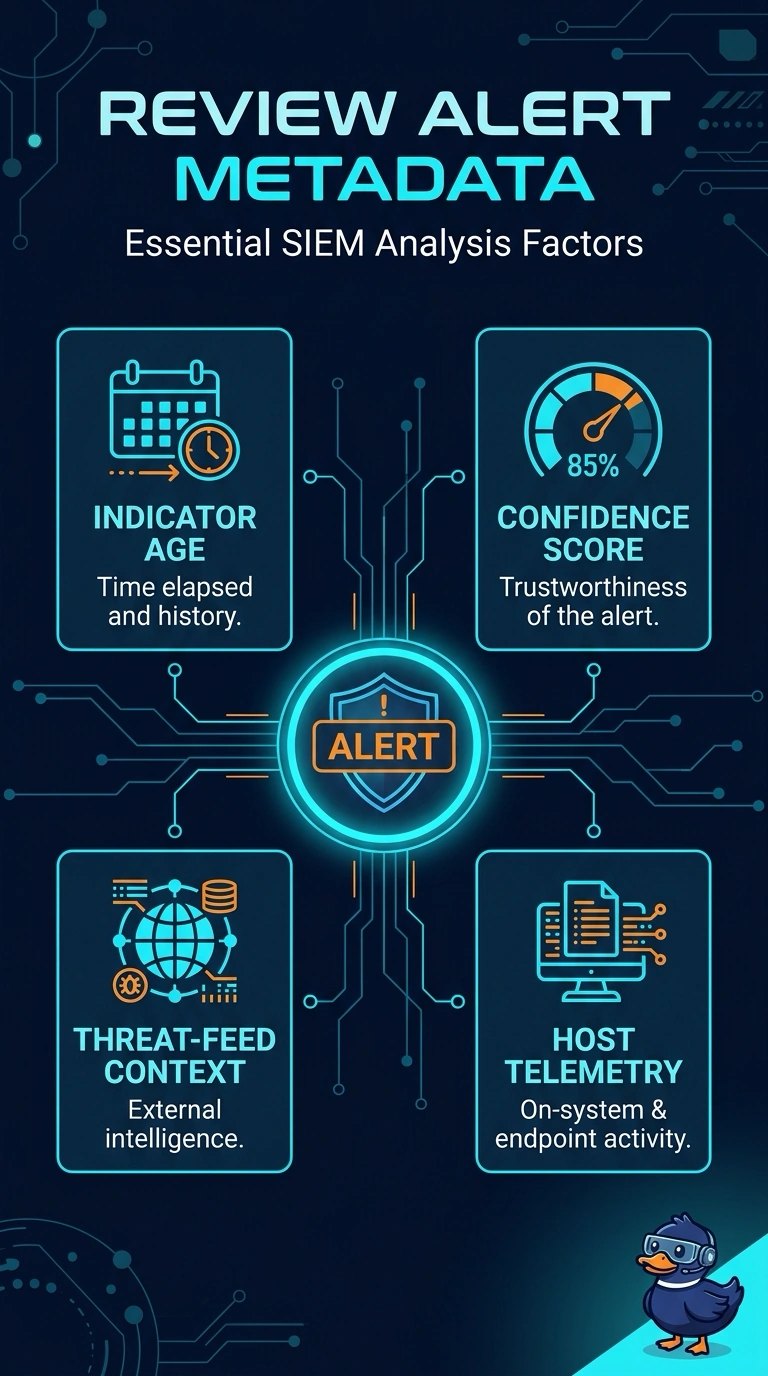
A retail SOC receives a correlation-rule alert enriched with a threat-intelligence match on an external IP address contacted by a store register. Before escalating the register for immediate isolation, what should the analyst inspect in the alert metadata?
Select an answer to reveal the explanation.
Short Explanation
A threat-intel match on an IP address gives you a clue, not an automatic guilty verdict. The trap is escalating straight to register isolation without checking how old, reliable, or specific that indicator actually is.
Full Explanation
IP addresses change ownership frequently, and threat-intelligence feeds vary widely in precision and expiration windows. Inspecting The indicator age, confidence score, and threat-feed context alongside host telemetry helps you determine whether the IP is currently malicious or a stale, low-confidence, or shared-hosting false positive before disrupting a live point-of-sale register. Relying on Only the alert's assigned color badge in the main triage queue treats a visual severity label as proof of compromise without reviewing underlying evidence. Checking Whether the external IP address resolves to a valid DNS PTR record does not distinguish benign cloud infrastructure from attacker-controlled servers. Checking The total number of registers deployed across all retail regions gives inventory scale, not alert fidelity. Caveat: even an older or low-confidence indicator warrants closer review if the endpoint shows suspicious process execution or unusual outbound data volume. Operational check: inspect the indicator's last-seen timestamp and confidence rating in the alert metadata, then pivot to endpoint process and proxy logs for the register.
Prefer to study offline? Printable PDF study book + test engine ($7.50, unofficial). These questions stay free here.