
A financial firm SOC analyst writes a correlation rule to detect an initial suspicious email attachment followed by an outbound connection on the same host within two minutes, but misses a real test where the user waited fifteen minutes before opening the attachment. Which rule parameter should the analyst adjust?
Select an answer to reveal the explanation.
Short Explanation
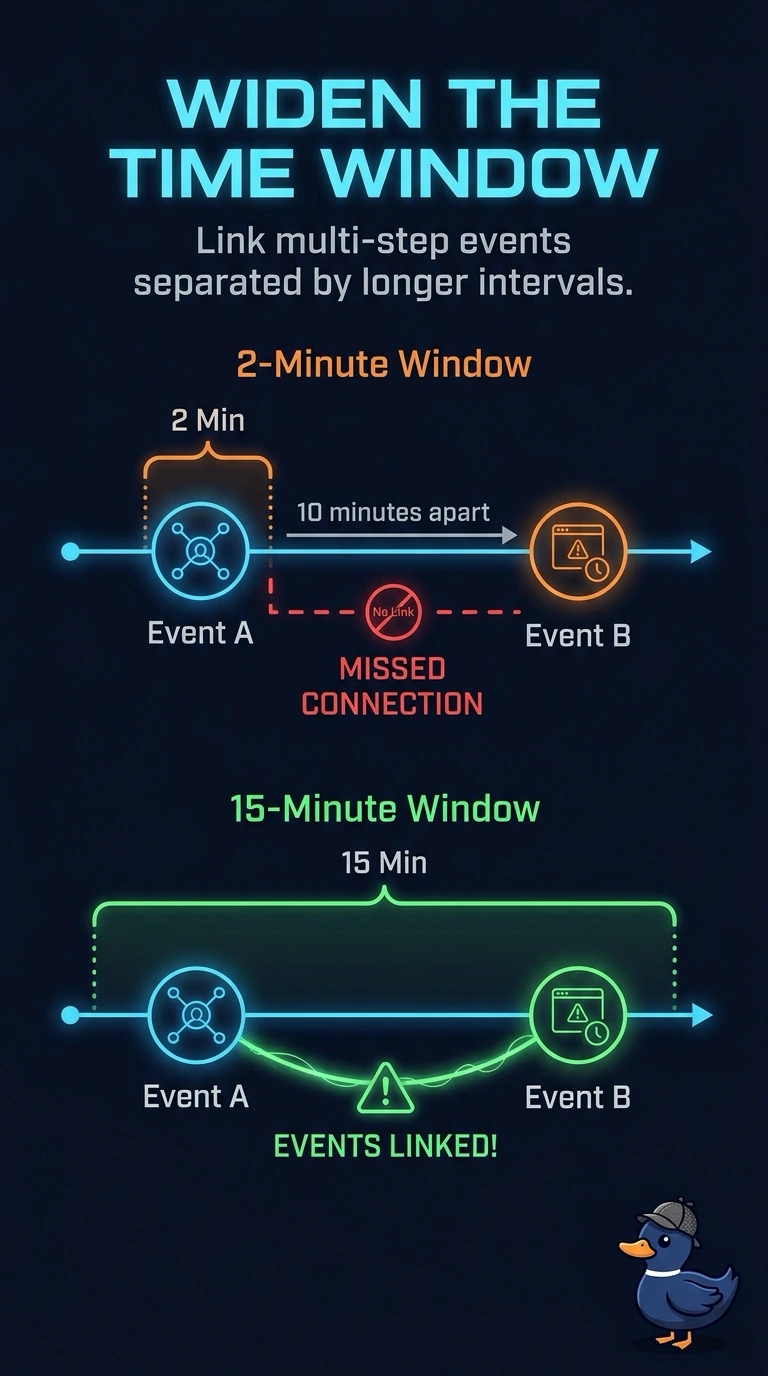
Setting a two-minute correlation window for a phishing attack is like expecting everyone to open their mail the second it hits the inbox. You have to match the lookback window to real human behavior, because attackers and users rarely complete every stage of an intrusion within a narrow two-minute timer.
Full Explanation
To capture delayed multi-stage behavior, adjust The correlation rule's time window so multi-step events separated by longer intervals are still linked. Users frequently open attachments minutes or hours after delivery, so a correlation rule's lookback window must span realistic operational delays between the initial email event and subsequent outbound traffic. Changing The alert severity label from medium to critical so the existing two-minute window captures delayed events only alters triage priority after a rule fires and has no effect on how far back the rule correlates events. Updating The MITRE ATT&CK tactic tag assigned to the rule so the engine waits for user interaction misunderstands ATT&CK metadata, which classifies adversary behavior for analysts rather than controlling query timing. Modifying The third-party passthrough parser so email gateways delay forwarding attachment telemetry would introduce dangerous visibility lag instead of letting the correlation engine evaluate events across a wider interval. As a caveat, widening a correlation window too far can increase false positives by linking unrelated routine user actions on busy hosts. As an operational check, test the adjusted lookback window against historical benign and simulated attack events to balance detection coverage against noise.
Prefer to study offline? Printable PDF study book + test engine ($7.50, unofficial). These questions stay free here.