
A healthcare SOC analyst plans to add an exclusion to a noisy correlation rule that detects unusual service creation so an authorized backup agent no longer triggers alerts. What should the analyst verify before saving the exclusion?
Select an answer to reveal the explanation.
Short Explanation
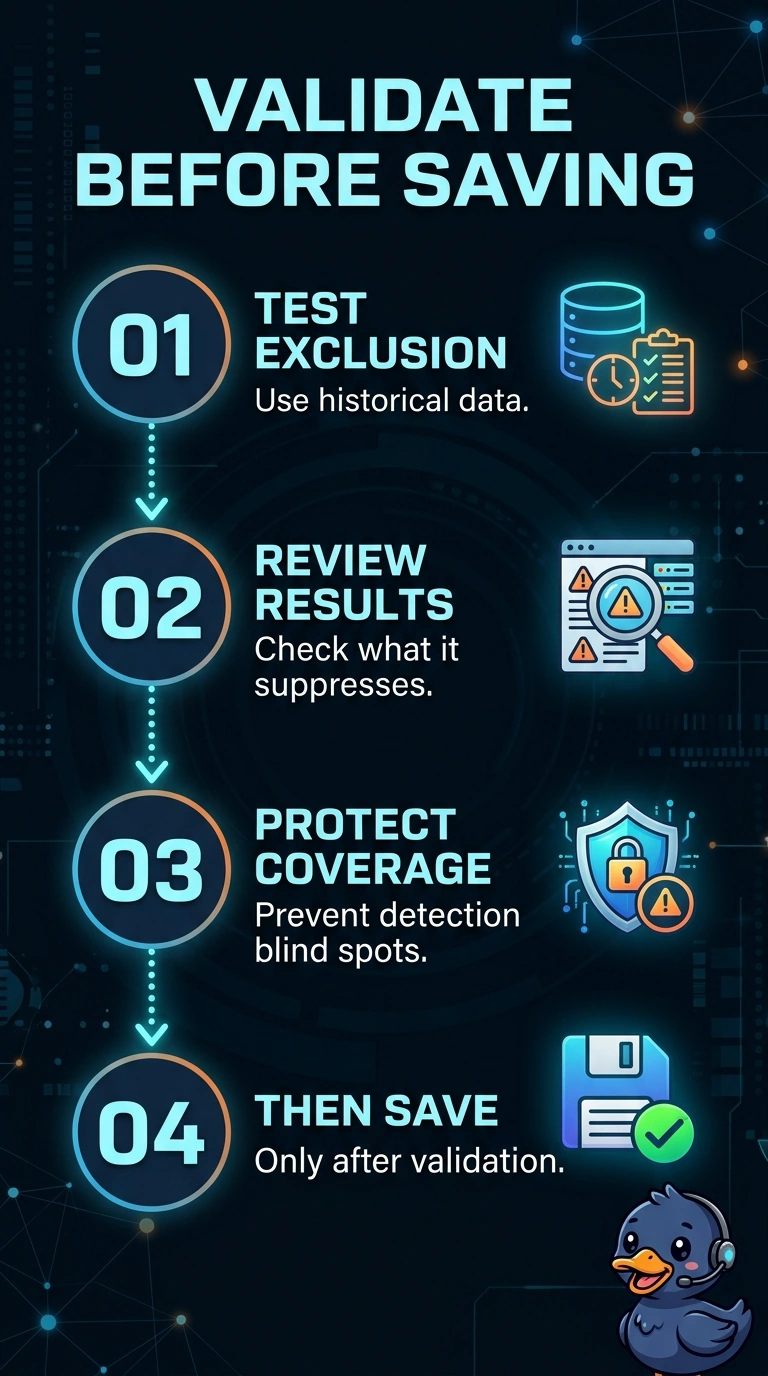
Adding an overly broad exclusion is like taking the batteries out of a smoke detector because it beeped during dinner. Before saving a rule change, you should test it against historical events to make sure real threats still trigger.
Full Explanation
Precision tuning requires balancing noise reduction with detection coverage, which is why Test the exclusion against historical data to prevent detection blind spots is the right step: running the updated logic against past benign and suspicious events confirms the backup agent is filtered without masking real attacker service creation. Choosing Disable the correlation rule permanently so no backup alerts ever appear again removes visibility into malicious persistence across the entire environment. Selecting Exclude the entire server subnet from all SIEM detections across every rule creates a massive blind spot on critical healthcare servers. Choosing Apply the exclusion only to alert titles without changing the underlying query logic does not stop the rule from firing or generating alert fatigue. As a caveat, bind exclusions tightly to verified attributes such as signed binary path, parent process, and expected service account rather than a broad process name alone. For an operational check, review rule hit counts after deployment to confirm noise dropped while other suspicious patterns still surface.
Prefer to study offline? Printable PDF study book + test engine ($7.50, unofficial). These questions stay free here.