
A manufacturing SOC analyst receives dozens of identical false-positive alerts from a perimeter appliance, but cannot find any matching query in Falcon Next-Gen SIEM correlation rules to tune. What should the analyst verify first in the alert metadata?
Select an answer to reveal the explanation.
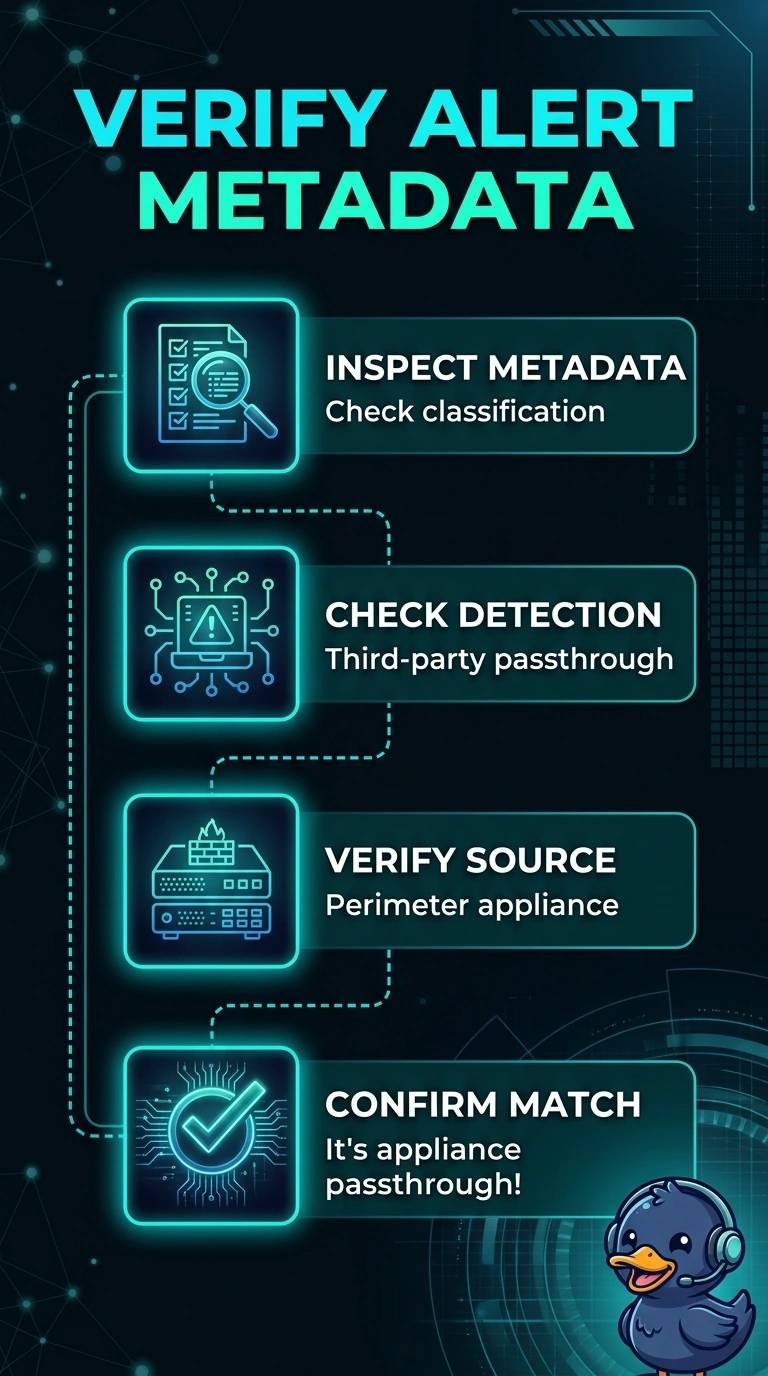
Short Explanation
Looking for a SIEM correlation rule to fix a third-party passthrough alert is like trying to adjust your car radio by turning the AC knob—you are tweaking the wrong control. Always check the detection origin in the alert metadata before hunting for query logic that lives on the external appliance.
Full Explanation
Falcon Next-Gen SIEM surfaces detections from multiple origins, including first-party native detections, custom or template-based correlation rules, and third-party passthrough detections forwarded from external security tools. Checking Whether the alert is a third-party passthrough detection from the appliance explains why no local correlation-rule query exists to edit, because the detection logic runs on the perimeter tool itself rather than inside Next-Gen SIEM. Checking Whether the SIEM parser stripped the MITRE ATT&CK tactic tag during ingestion does not explain why a rule is missing, since ATT&CK metadata describes behavior rather than controlling whether a correlation rule exists. Checking Whether the correlation rule is hidden because it uses a built-in template is misguided because templates still appear as manageable rules once deployed. Checking Whether the Falcon Fusion SOAR workflow suppressed the rule from the search list confuses response automation with detection authoring, as SOAR workflows orchestrate actions after an alert fires. As a caveat, even when tuning must happen on the originating appliance, you can still use SIEM context to document and justify the change. For an operational check, open the alert metadata, confirm the detection origin and source product, and coordinate rule tuning on the perimeter appliance.
Prefer to study offline? Printable PDF study book + test engine ($7.50, unofficial). These questions stay free here.