
A hospital SOC analyst reviews a medium-severity third-party firewall passthrough alert for suspicious outbound traffic from a nursing station. Moments later, a first-party endpoint detection and a custom correlation rule flag the same workstation. How should the analyst interpret these combined signals?
Select an answer to reveal the explanation.
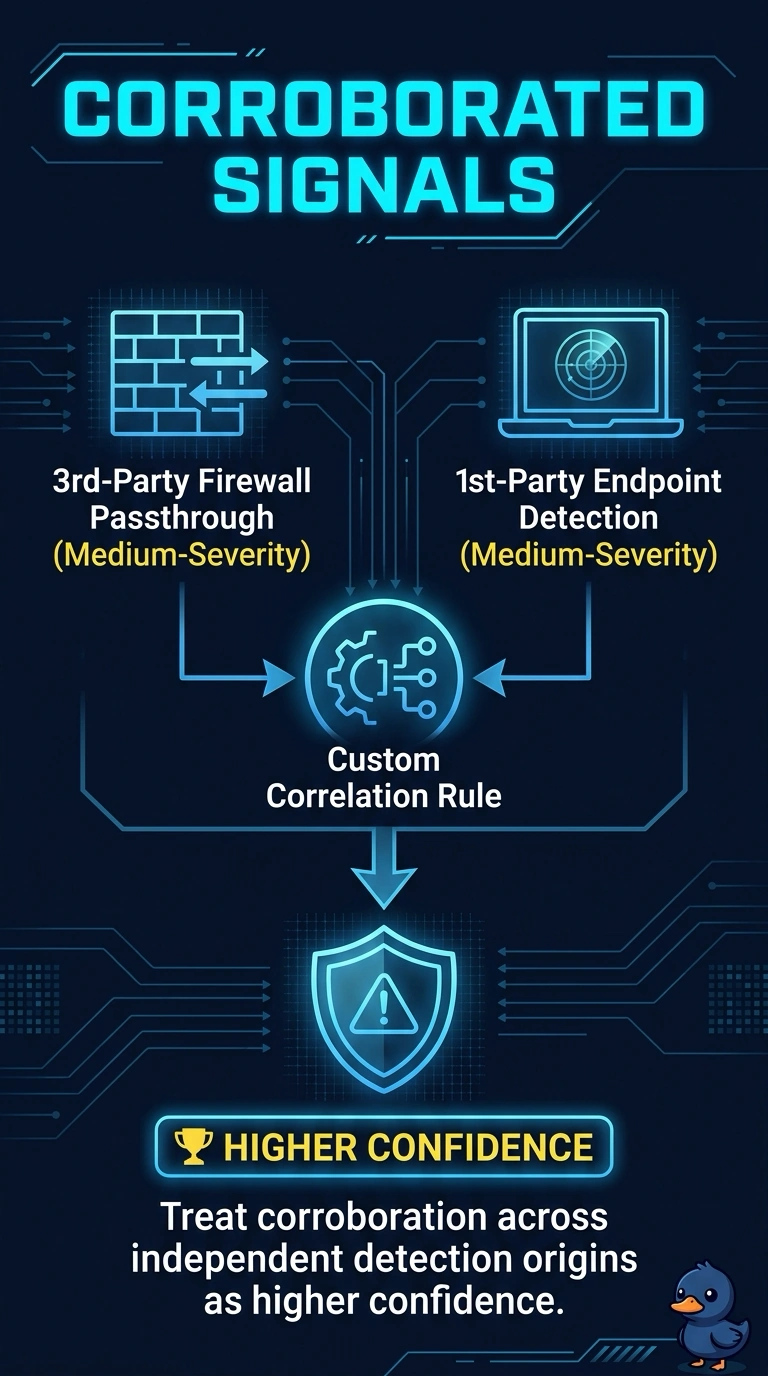
Short Explanation
One smoke detector chirping might be burnt toast, but when three independent sensors go off in the same room, you have a real emergency. The trap is judging a single medium-severity alert in isolation instead of weighing the corroborating signals.
Full Explanation
Falcon Next-Gen SIEM surfaces detections from three distinct origins—first-party endpoint telemetry, third-party passthrough alerts, and correlation rules—and each provides an independent vantage point. Choosing to Treat corroboration across independent detection origins as higher confidence recognizes that overlapping host, network, and behavioral evidence on the same workstation strongly indicates a true-positive threat requiring urgent investigation. Selecting Treat the three alerts as unrelated noise because each has a different origin misses the shared asset and timing that connect the activity across telemetry layers. Opting to Close the endpoint and correlation alerts because the firewall fired first discards rich host-level process and rule context needed to scope the threat. Choosing to Downgrade the incident priority because the initial alert was medium severity overlooks how combined multi-origin evidence elevates overall risk. As a caveat, verify that the three alerts are not simply echoing the exact same single event through duplicate forwarding paths. For an operational check, pivot on the workstation hostname to confirm distinct timestamps and behaviors across the endpoint, firewall, and correlation metadata.
Prefer to study offline? Printable PDF study book + test engine ($7.50, unofficial). These questions stay free here.