
A manufacturing SOC receives dozens of false positives daily from a high-severity correlation rule that alerts on administrative script execution. Why should the analyst avoid treating the high-severity label as proof of high detection confidence?
Select an answer to reveal the explanation.
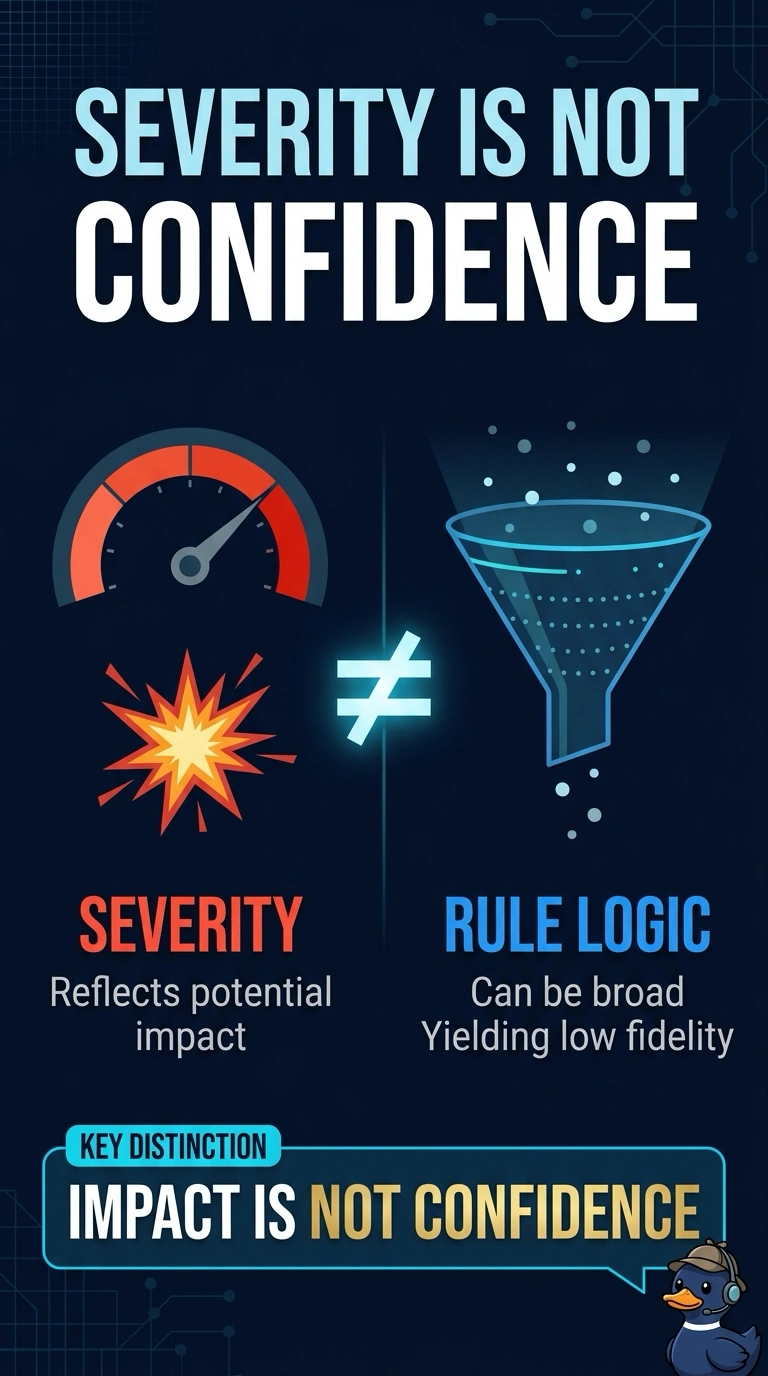
Short Explanation
A fire alarm rated for a skyscraper still goes off if someone burns toast in the breakroom. Severity tells you how bad an issue could be if true, not how accurate the rule is, so do not confuse impact with proof.
Full Explanation
Understanding what alert metadata represents is key to triage, so Severity reflects potential impact, whereas broad rule logic can still yield low fidelity is correct because a rule author sets severity based on the risk of the targeted behavior, while actual signal quality depends on how tightly the query filters benign activity. Selecting High-severity labels are assigned randomly by the SIEM whenever log ingestion volume spikes is incorrect because severity comes from rule or detection definitions rather than ingestion volume. Choosing High-severity correlation rules automatically block endpoints before an analyst reviews them confuses detection severity with automated SOAR containment actions. Choosing High-severity alerts only fire on third-party passthrough detections rather than custom rules is false because correlation rules and first-party detections also carry severity ratings. Keep in mind that high-severity, noisy rules still warrant careful tuning rather than immediate suppression so real threats are not missed. As an operational check, review historical alerts from the rule to measure true-positive rate and add targeted exclusions for verified benign administration.
Prefer to study offline? Printable PDF study book + test engine ($7.50, unofficial). These questions stay free here.