
An e-commerce SOC team drafts a new correlation rule to detect suspicious cloud API key usage across multiple regions. What should the team do before enabling the rule for live alerting?
Select an answer to reveal the explanation.
Short Explanation
Turning on an untested correlation rule in production is like wiring a smoke alarm directly to the sprinklers without checking if steam sets it off—you risk flooding the SOC. The trap is skipping historical validation and either burying alerts or triggering disruptive automation.
Full Explanation
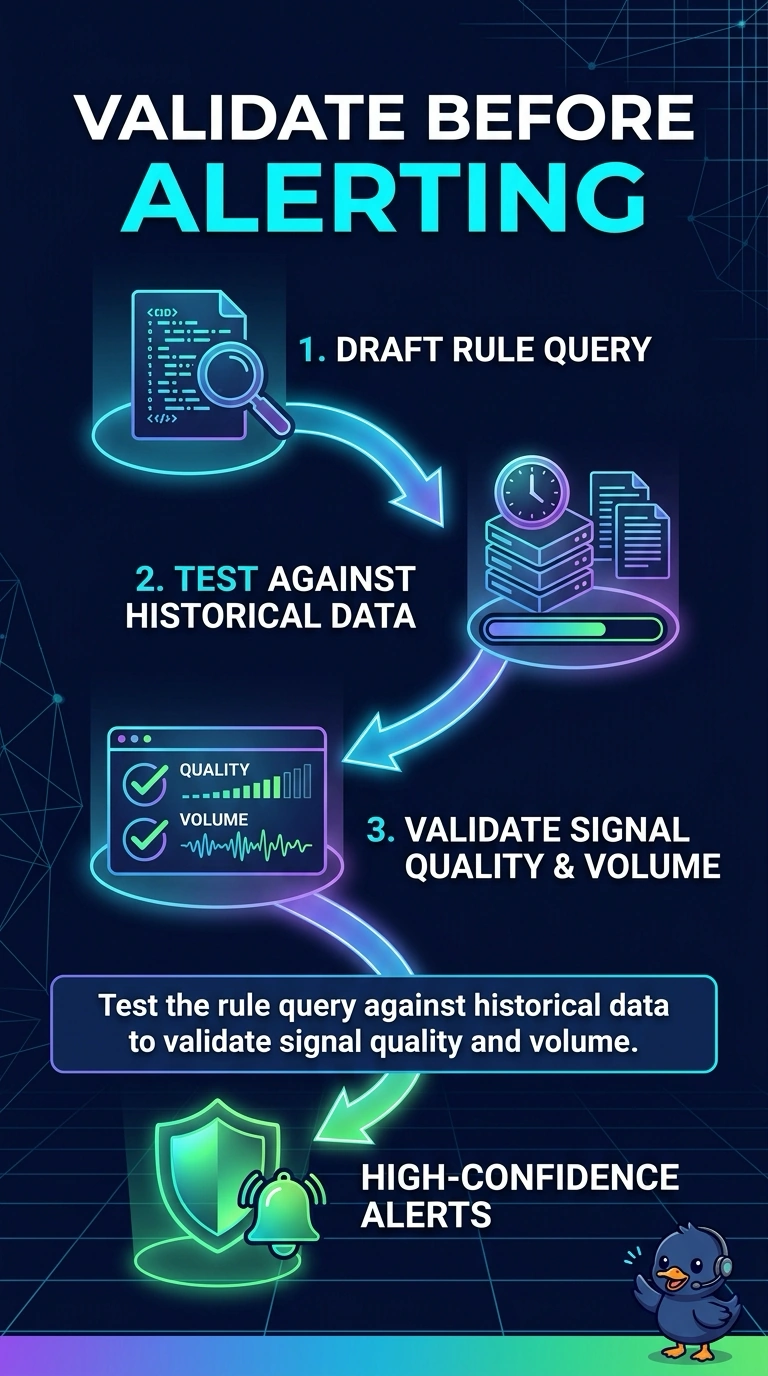
Before promoting any new detection logic to live alerting, analysts need to see how the query behaves against real baseline traffic in their environment. You should Test the rule query against historical data to validate signal quality and volume so you can tune thresholds and exclusions before analysts are paged. Choosing to Set the alert severity to informational permanently so analysts can ignore spikes defeats the purpose of building a detection for suspicious cloud API key usage. Choosing to Create a SOAR workflow that automatically closes every alert from the new rule suppresses potential compromises instead of fixing noisy query logic. Choosing to Deploy the rule immediately with automated account locking enabled for every match risks locking out legitimate services or automated deployments if the rule fires on benign cross-region traffic. As a caveat, historical log retention windows may not cover rare seasonal jobs, so monitor the rule closely even after initial validation. For an operational check, review sample matches from the historical test run with cloud engineers to confirm expected benign patterns are excluded.
Prefer to study offline? Printable PDF study book + test engine ($7.50, unofficial). These questions stay free here.