
A healthcare SOC analyst notices that a correlation rule for administrative account modifications generates 40 separate alerts every time IT runs a scheduled directory sync. How should the analyst reduce this alert volume without losing visibility into unauthorized changes?
Select an answer to reveal the explanation.
Short Explanation
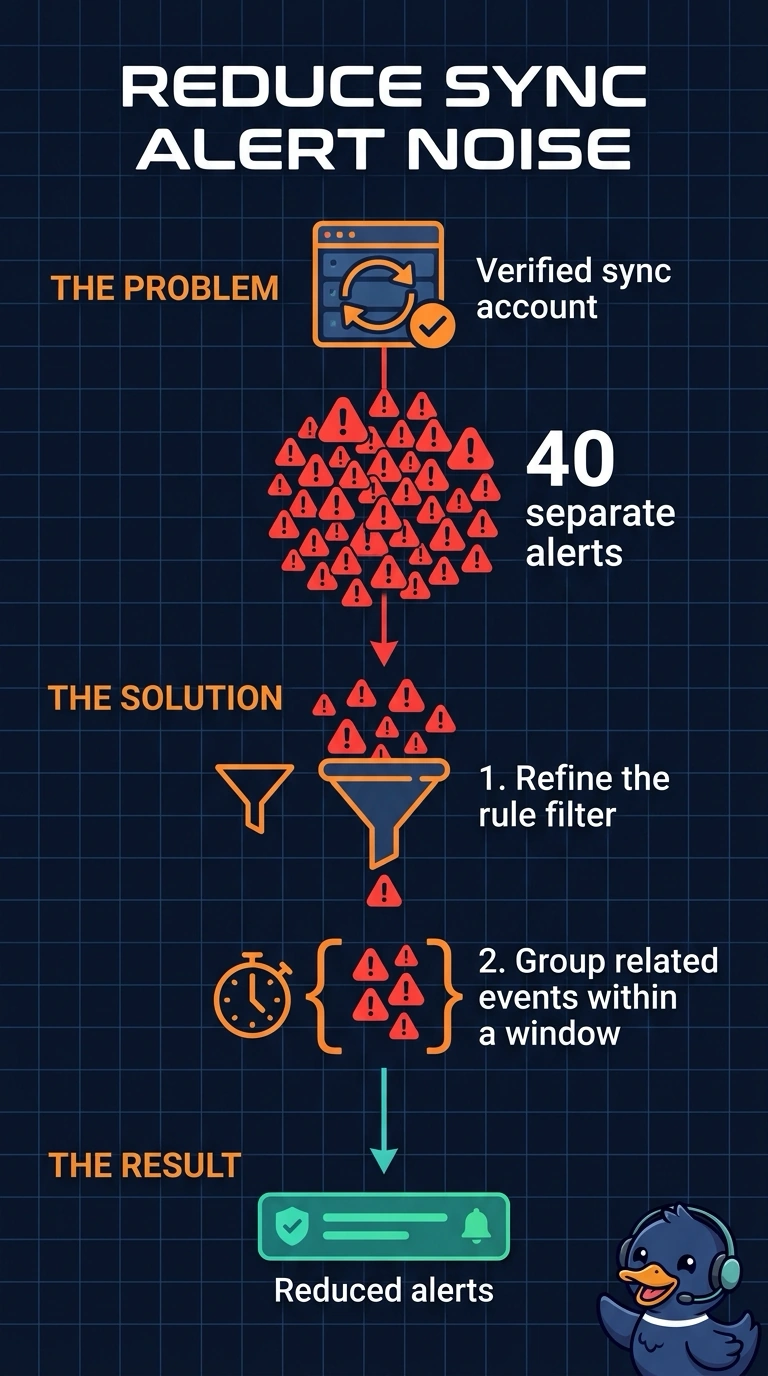
Repetitive alerts from a routine sync job will wear down your triage queue fast. The trap is reaching for a blunt fix like muting the rule or dropping its severity, which leaves you blind when a real attacker modifies an admin group. Instead, scope out the verified sync pattern and group related bursts together.
Full Explanation
Targeted tuning preserves detection coverage while eliminating predictable noise, making it right to refine the rule filter for the verified sync account and group related events within a window. By scoping the exclusion strictly to the confirmed service account, source host, and expected change pattern—and consolidating burst events—Validate that the tuned rule still detects representative unauthorized changes at its configured schedule and lookback. Grouping or adding a window does not guarantee immediate execution or coverage of every unauthorized change. Choosing to disable the correlation rule during business hours and rely on weekly manual CQL searches instead creates dangerous blind spots whenever attackers operate during normal workdays. Deciding to lower the correlation rule severity to informational so the alerts drop out of the main triage queue hides genuine threats alongside the benign sync noise rather than solving the logic issue. Attempting to block the directory sync server in Falcon Fusion SOAR so it stops generating authentication events would break essential healthcare identity operations. As an important caveat, avoid broad exclusions based only on a generic username or subnet, because attackers often abuse legitimate service accounts. As an operational check, test the updated rule logic against historical logs in CQL to confirm the sync noise drops while simulated unauthorized changes still trigger.
Prefer to study offline? Printable PDF study book + test engine ($7.50, unofficial). These questions stay free here.