
A manufacturing SOC receives an alert triggered by a threat-intelligence IP reputation match on outbound traffic from an engineering laptop. What should the analyst do before treating the laptop as compromised?
Select an answer to reveal the explanation.
Short Explanation
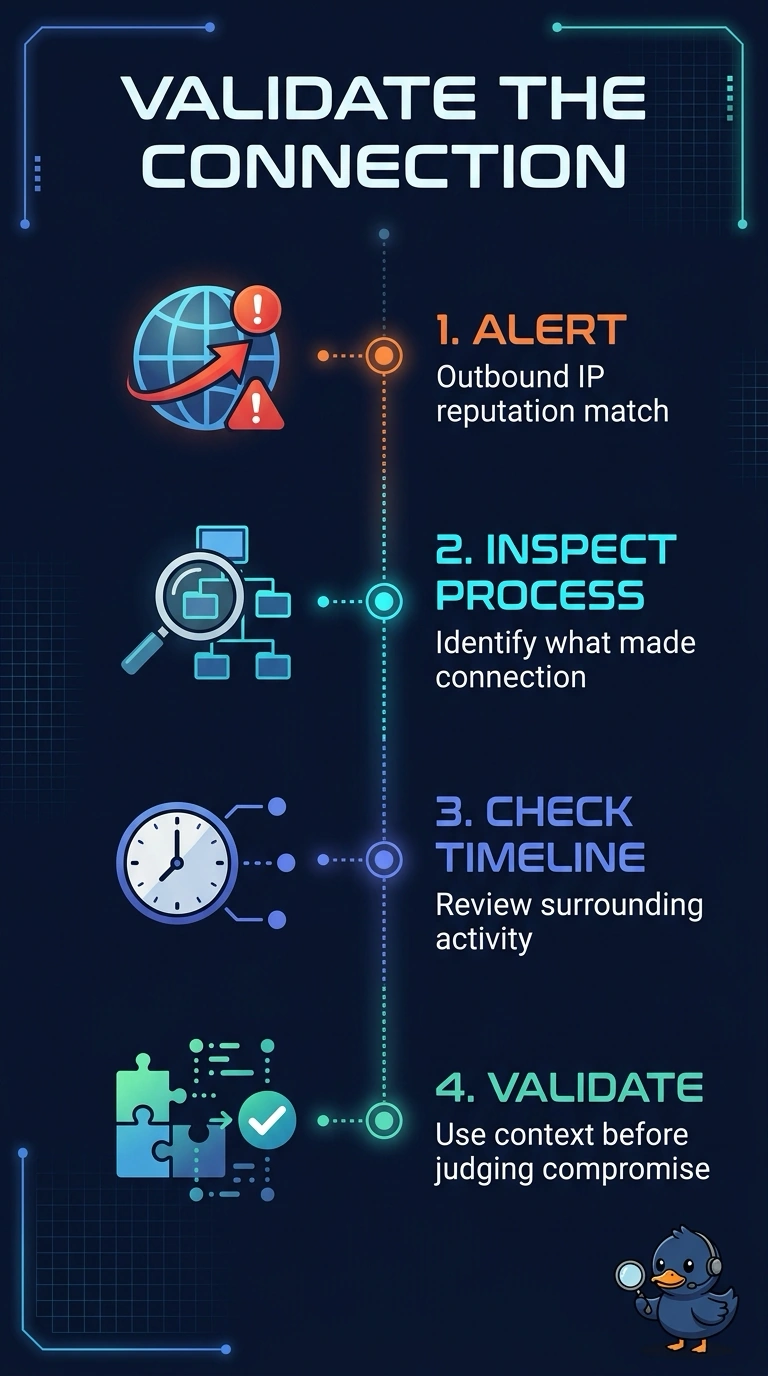
An IP reputation hit is a helpful tip from a neighbor, not a warrant to shut down the whole block. Before you quarantine an entire engineering subnet, inspect the process and timeline context to see what actually made the connection.
Full Explanation
An indicator of compromise or threat-intelligence reputation score is a starting clue, not proof of compromise on its own. Choosing to Inspect process and timeline context to validate the connection allows the analyst to determine whether an authorized engineering tool or a malicious process initiated the outbound traffic before taking disruptive action. Choosing to Quarantine the entire engineering subnet solely on the IP reputation score overreacts to an unverified indicator and risks halting legitimate manufacturing engineering work due to a false positive or shared hosting IP. Choosing to Close the alert automatically because reputation alerts are always benign swings to the opposite extreme and could miss genuine command-and-control traffic. Choosing to Change the detection origin from correlation rule to passthrough is ineffective because Origin identifies the generating mechanism; changing a label cannot convert a query-generated detection into an external vendor alert or validate compromise. As a scope caveat, even high-confidence IOC matches require host and user correlation because legitimate software updates or cloud services can occasionally share flagged infrastructure. Query endpoint process creation and network events around the alert timestamp in CQL to identify the initiating binary and user.
Prefer to study offline? Printable PDF study book + test engine ($7.50, unofficial). These questions stay free here.