
A retail SOC receives a high-severity third-party passthrough detection from a web proxy that includes a mapped ATT&CK technique label. What should the analyst do next?
Select an answer to reveal the explanation.
Short Explanation
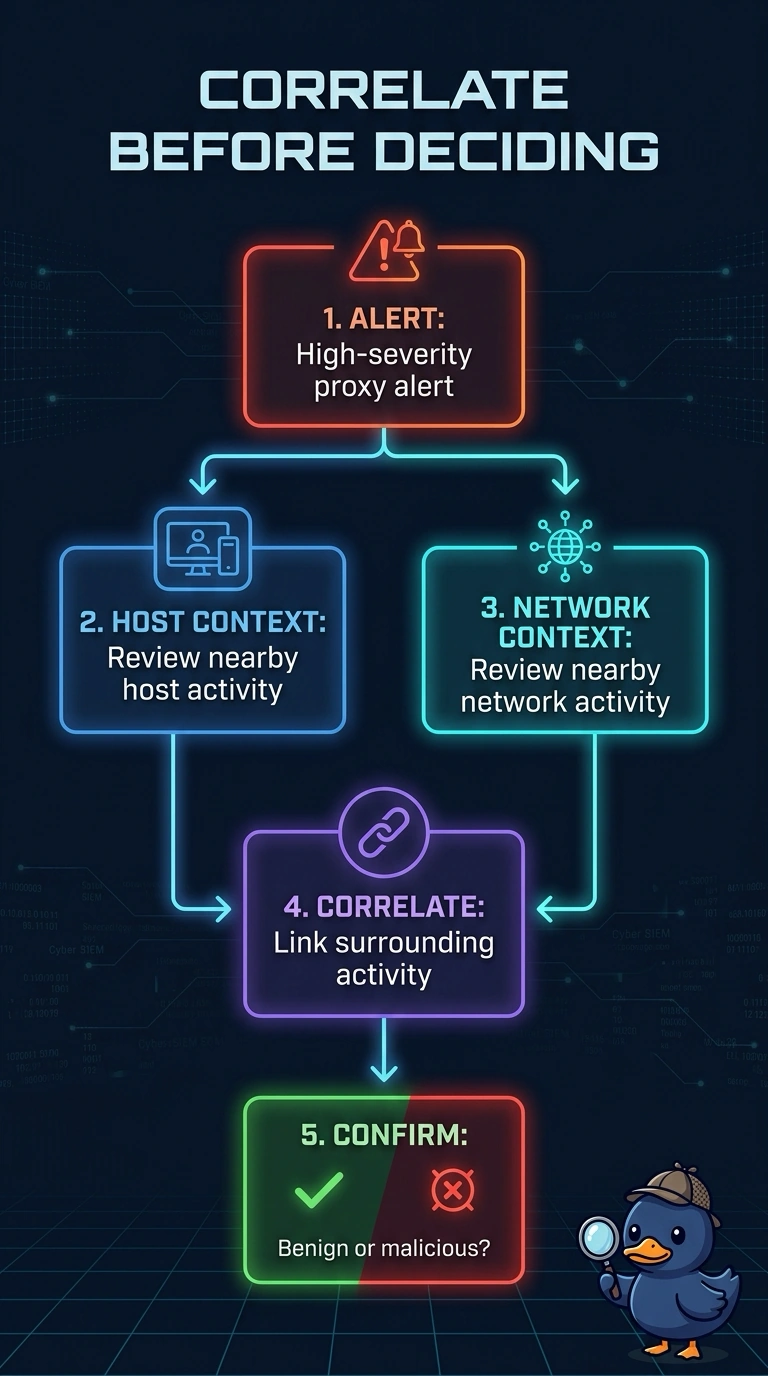
A high-severity passthrough alert with an ATT&CK tag can feel like a fire alarm, but you still need to check for smoke before pulling the sprinklers. Treating the alert origin or severity label as proof of compromise is a classic trap; always check surrounding host and network context first.
Full Explanation
In Falcon Next-Gen SIEM, third-party passthrough detections forward alerts from external tools, and neither a high severity rating nor a mapped ATT&CK technique proves an active host compromise on its own. An analyst must Correlate surrounding host and network context to confirm whether the activity is benign or malicious before taking disruptive action on retail systems. Choosing to Escalate immediately to containment because high severity proves active compromise treats a vendor priority label as definitive proof and risks interrupting legitimate store traffic during a false positive. Choosing to Suppress all third-party passthrough detections from the web proxy sensor creates dangerous blind spots by silencing an entire telemetry feed instead of tuning or validating one alert. Choosing to Assume the ATT&CK label confirms the exact adversary tool used on the host confuses a behavioral framework mapping with verified forensic evidence of malware execution. As a scope caveat, contextual validation should draw on both normalized SIEM events and original vendor alert details when available. Pivot on the source host and user in CQL around the alert timestamp to check process execution and outbound connections.
Prefer to study offline? Printable PDF study book + test engine ($7.50, unofficial). These questions stay free here.