
A retail SOC analyst notices that a custom correlation rule designed to alert on repeated admin group changes failed to fire during a verified test. What should the analyst inspect first to troubleshoot the rule?
Select an answer to reveal the explanation.
Short Explanation
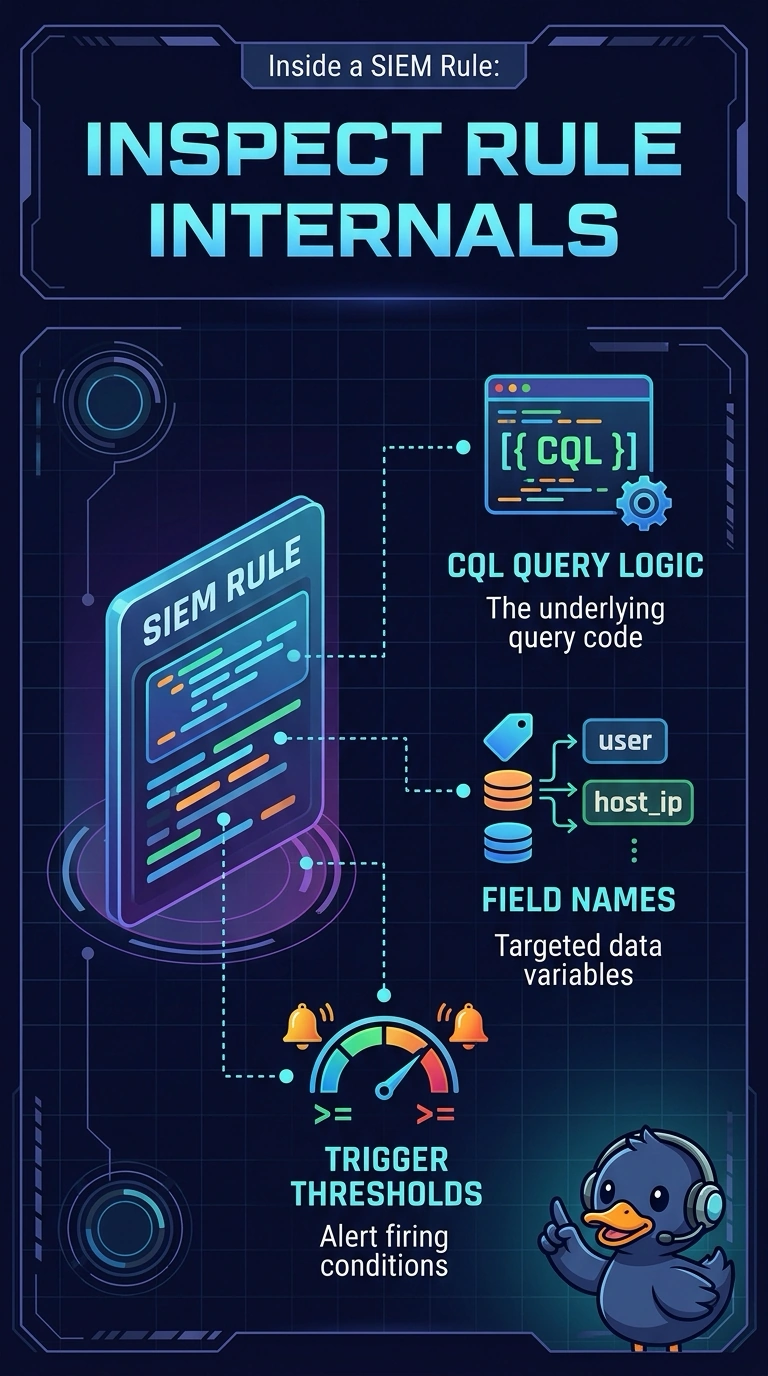
When a smoke detector stays silent during a test, you check the sensor and wiring before blaming the building. Inspect the correlation rule's CQL logic, field names, and thresholds first, avoiding the trap of looking at unrelated SOAR playbooks or old case notes.
Full Explanation
Correlation rules generate detections by evaluating a CQL query against incoming data, so when a rule misses expected test activity you should inspect The rule's underlying CQL query logic, field names, and trigger thresholds. A mismatched normalized field name, overly strict filter, or threshold count higher than the test events will prevent the rule from firing. Checking The MITRE ATT&CK matrix color scheme in the leadership visual summary inspects reporting presentation rather than detection execution. Reviewing The Falcon Fusion SOAR containment playbooks for unrelated malware alerts looks at downstream response automation instead of why the SIEM rule failed to trigger. Reading The case management resolution notes from last quarter's phishing exercises examines historical documentation unrelated to the active rule logic. Caveat: even when the rule logic is sound, missing or delayed log ingestion from the target identity source will also prevent the rule from seeing test events. Operational check: run the correlation rule's CQL query directly in search over the exact test window to confirm whether the expected events match the query criteria.
Prefer to study offline? Printable PDF study book + test engine ($7.50, unofficial). These questions stay free here.