
A manufacturing plant correlation rule triggers an alert for remote script execution from an IT management server to shop-floor workstations. What should the analyst do first to evaluate whether this is a false positive?
Select an answer to reveal the explanation.
Short Explanation
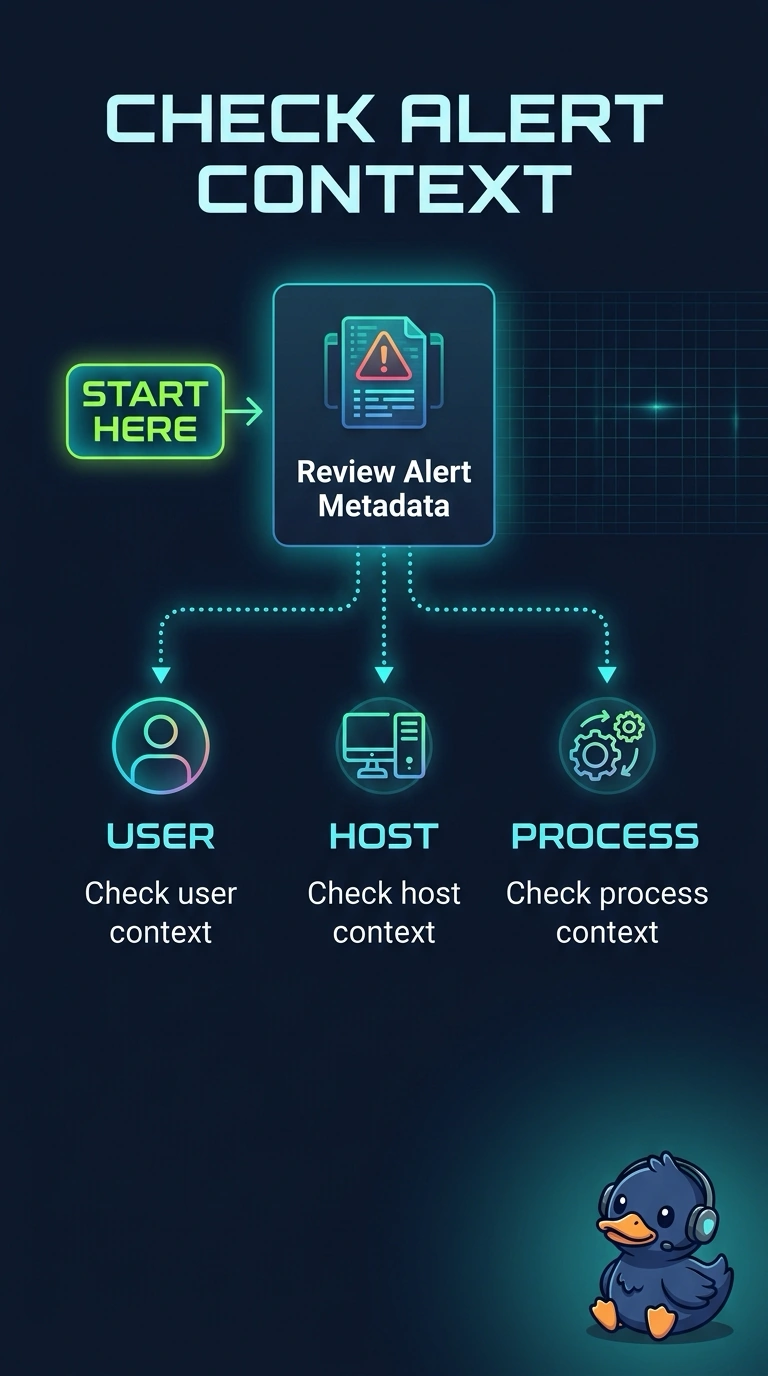
Attackers and admins often use the exact same tools, which is why context is everything in alert triage. The trap is either panicking at a scary label or blindly turning off the rule. Check the alert metadata for who ran the script, from where, and why before you call it benign or malicious.
Full Explanation
To distinguish legitimate IT automation from adversary lateral movement, an analyst should "Review alert metadata including user, host, and process context" before taking containment or tuning actions. Examining the initiating account, parent process, command line, and expected maintenance schedule reveals whether the activity aligns with authorized administration. Choosing to "Disable the correlation rule globally across all plant workstations" creates a blind spot that would allow real remote script attacks to go undetected. Choosing to "Block the IT management server at the perimeter firewall immediately" risks disrupting critical plant operations without confirming unauthorized behavior. Finally, to "Assume the alert is malicious because it maps to an ATT&CK technique" confuses a behavioral description with proof of compromise, since legitimate administrative tools also map to execution techniques. As a caveat, even if the source server is known, verify that the specific account and script hash match authorized change records, because attackers can abuse legitimate management servers. For an operational check, compare the alert's user identity, command arguments, and execution window against approved maintenance tickets.
Prefer to study offline? Printable PDF study book + test engine ($7.50, unofficial). These questions stay free here.