
A distributed office platform team sees host-level process alerts from its Kubernetes worker nodes in Falcon Cloud Security, but the detections lack Kubernetes pod names, namespaces, and cluster labels. What should the team verify?
Select an answer to reveal the explanation.
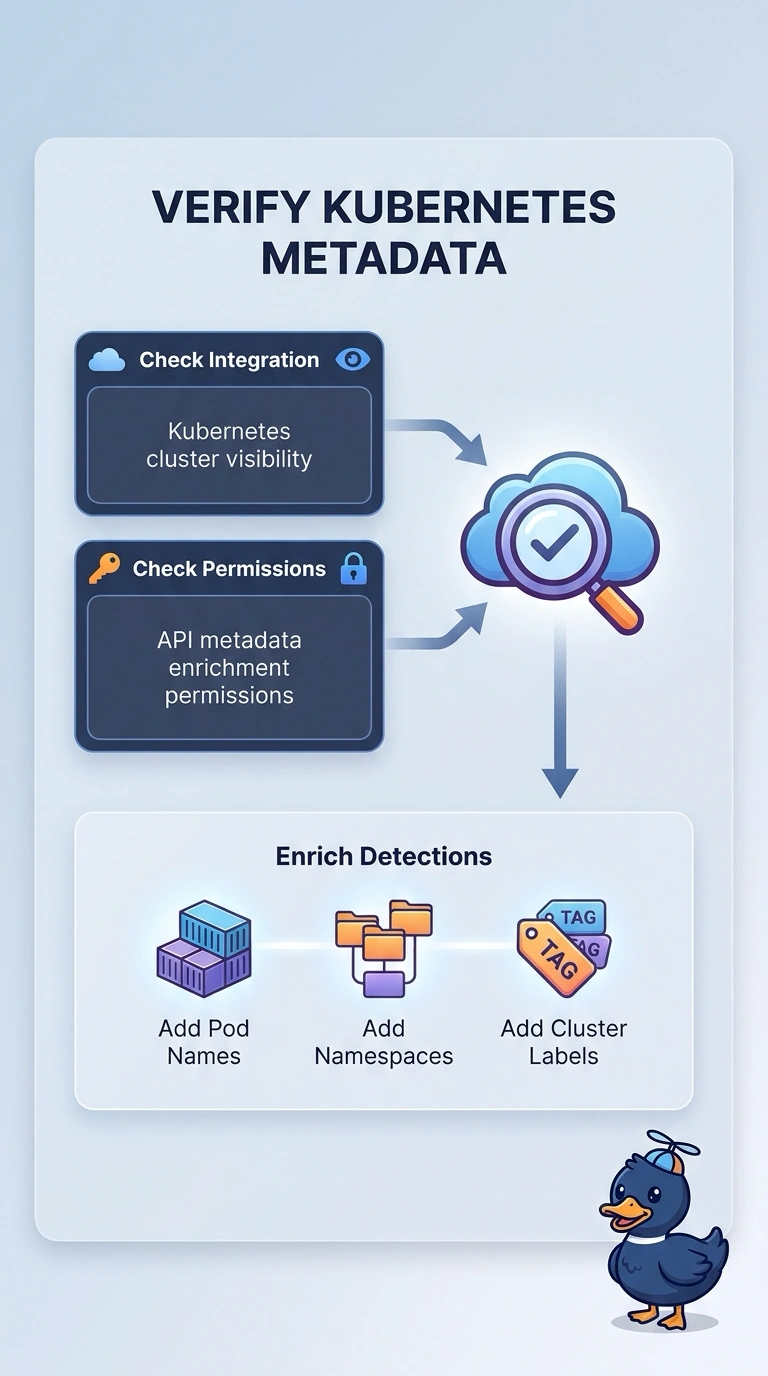
Short Explanation
Seeing raw process alerts without pod or namespace labels is like getting a street address without the apartment number. Verifying cluster visibility and API metadata permissions restores that Kubernetes context for you, while the trap is chasing CI image policies, report formats, or storage exclusions.
Full Explanation
Kubernetes cluster visibility integration and API permissions for metadata enrichment is the right area to verify because node-level Falcon sensors capture host and container process activity, while Kubernetes cluster integration provides the control-plane metadata that maps those events to specific pod names, namespaces, and labels. Whether pre-runtime image assessment policies are blocking container builds in the CI pipeline affects registry and build gates before deployment rather than runtime event enrichment on running nodes. Whether scheduled weekly compliance reports are configured to export in PDF instead of CSV format only changes how periodic posture summaries are delivered to stakeholders, not how live runtime telemetry is tagged. Whether cloud storage scan exclusions are omitting object buckets from posture inventory controls agentless Cloud Security Posture Management scope rather than Kubernetes runtime metadata. As a caveat, missing cluster metadata can also delay scoped routing if SOC workflows filter alerts by namespace. For an operational check, confirm the cluster integration status and verify that the Kubernetes metadata collector has healthy API connectivity and read permissions.
Prefer to study offline? Printable PDF study book + test engine ($7.50, unofficial). These questions stay free here.