
During a manufacturing SOC investigation, an attacker exploits an application flaw inside a running container and uses built-in shell utilities to exfiltrate data without writing any new files to disk. Which runtime signal still exposes this activity?
Select an answer to reveal the explanation.
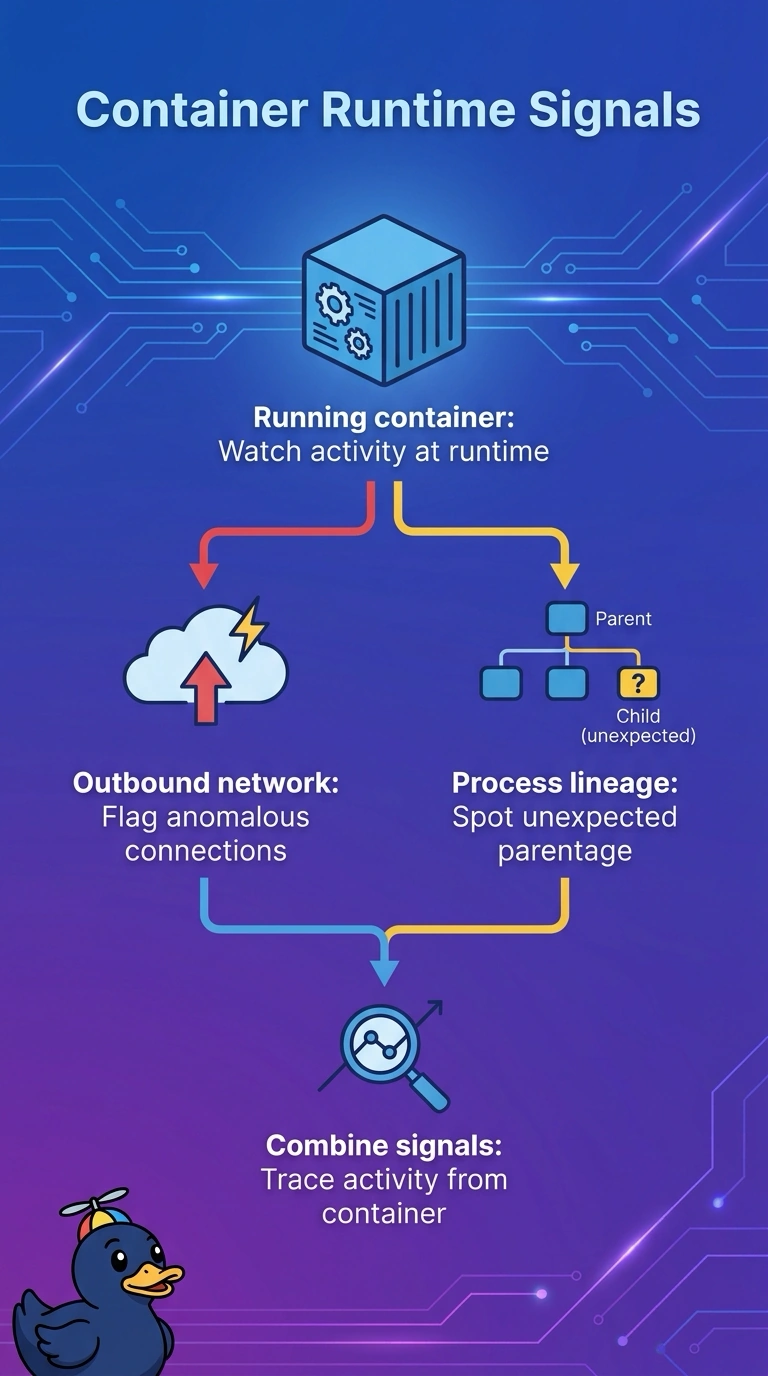
Short Explanation
Living-off-the-land attacks use utilities already in the container, so no new binary or file change is needed. Keep an eye on runtime process lineage and unusual outbound connections: data leaving the container still leaves footprints you can investigate.
Full Explanation
Living-off-the-land techniques abuse utilities already present in the container image, letting an attacker run commands and transfer data without creating new executables on the filesystem. Anomalous outbound network connection telemetry and unexpected process lineage from the container expose this behavior: the node-level Falcon sensor can observe a web or application process spawning unexpected shell commands and initiating unusual external connections. Pre-runtime Software Bill of Materials package inventory comparisons inspect static image contents before deployment, so they cannot reveal live runtime activity. Cloud storage bucket encryption posture rules in the management account assess cloud control-plane settings, not in-container process or network behavior. Weekly scheduled compliance benchmark summaries sent to audit teams provide periodic posture metrics, not real-time threat visibility. Exam caveat: a read-only root filesystem blocks disk writes but does not prevent in-memory or living-off-the-land abuse. Practical check: review runtime detection details for parent-child process trees and outbound destination IPs or ports from the affected pod.
Prefer to study offline? Printable PDF study book + test engine ($7.50, unofficial). These questions stay free here.