
A retail platform team configures its production Kubernetes pods with a read-only root filesystem to prevent container drift and asks whether it can disable runtime Falcon sensor monitoring on those pods. Why is runtime protection still necessary?
Select an answer to reveal the explanation.
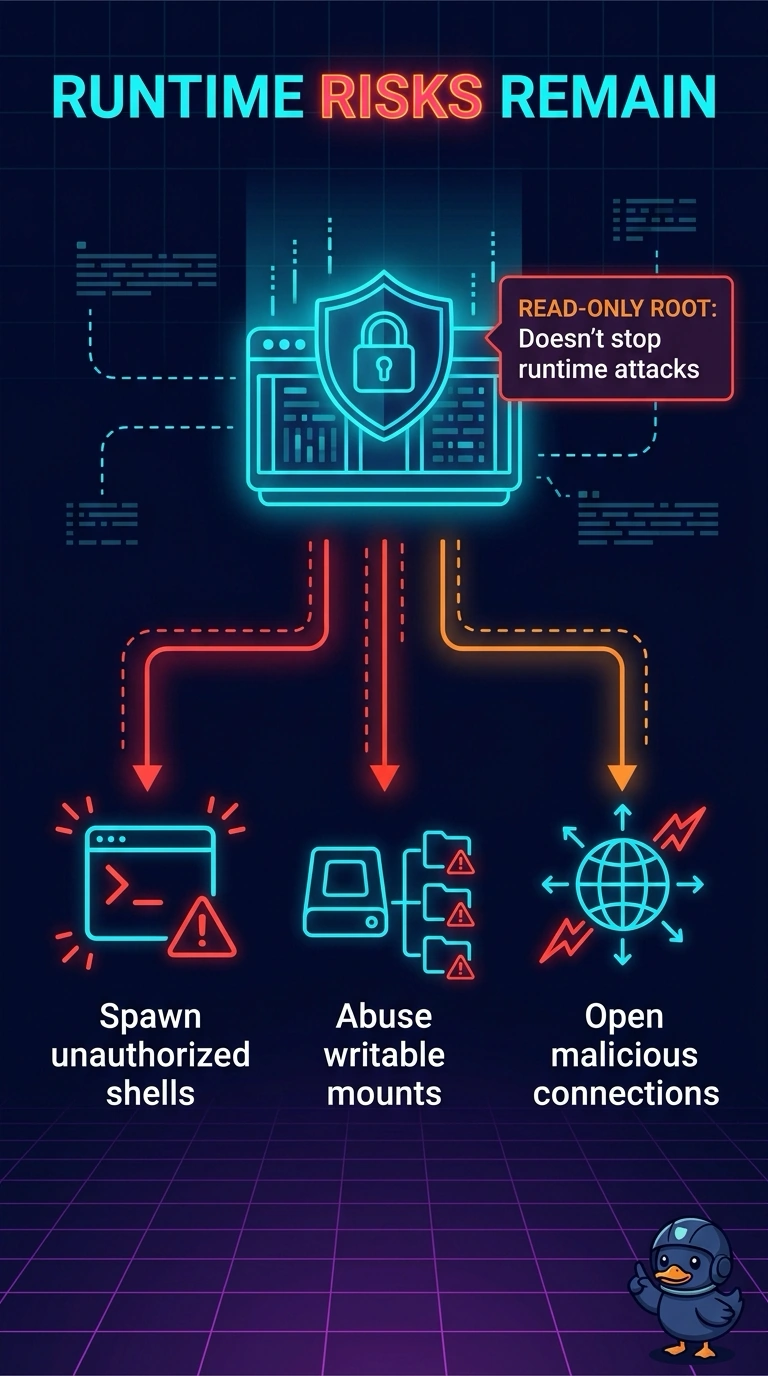
Short Explanation
Locking the filing cabinets reduces tampering, but it does not stop an intruder from picking up the phone or slipping out a side door. Your trap here is treating a read-only root filesystem as complete runtime security.
Full Explanation
Hardening a container filesystem limits certain persistence techniques, but it does not eliminate active runtime threats. Because attackers can still spawn unauthorized shells, abuse writable mounts, or open malicious connections, runtime sensors remain essential to detect Indicators of Attack, in-memory execution, credential harvesting, and unexpected lateral network traffic. Read-only root filesystems automatically disable Kubernetes network policies and expose internal pod ports is incorrect because filesystem mount flags have no effect on cluster network policy enforcement. Read-only root filesystems prevent private container registries from performing pre-runtime package scans is incorrect because registry scanning inspects stored image layers before pods ever launch. Read-only root filesystems force every application container to run with elevated host-level privileges is incorrect because read-only root filesystems actually tighten container security rather than granting host privileges. Caveat: pods often mount temporary writable volumes such as scratch directories for application logs, which attackers can still misuse if runtime monitoring is absent. Operational check: verify that the Falcon sensor DaemonSet is active on all cluster nodes and confirm runtime policies cover your hardened production namespaces.
Prefer to study offline? Printable PDF study book + test engine ($7.50, unofficial). These questions stay free here.