
A manufacturing platform team upgrades the operating system and container runtime across its Kubernetes worker nodes, and Falcon Cloud Security stops receiving runtime container events from the newly upgraded nodes. What should the team verify first?
Select an answer to reveal the explanation.
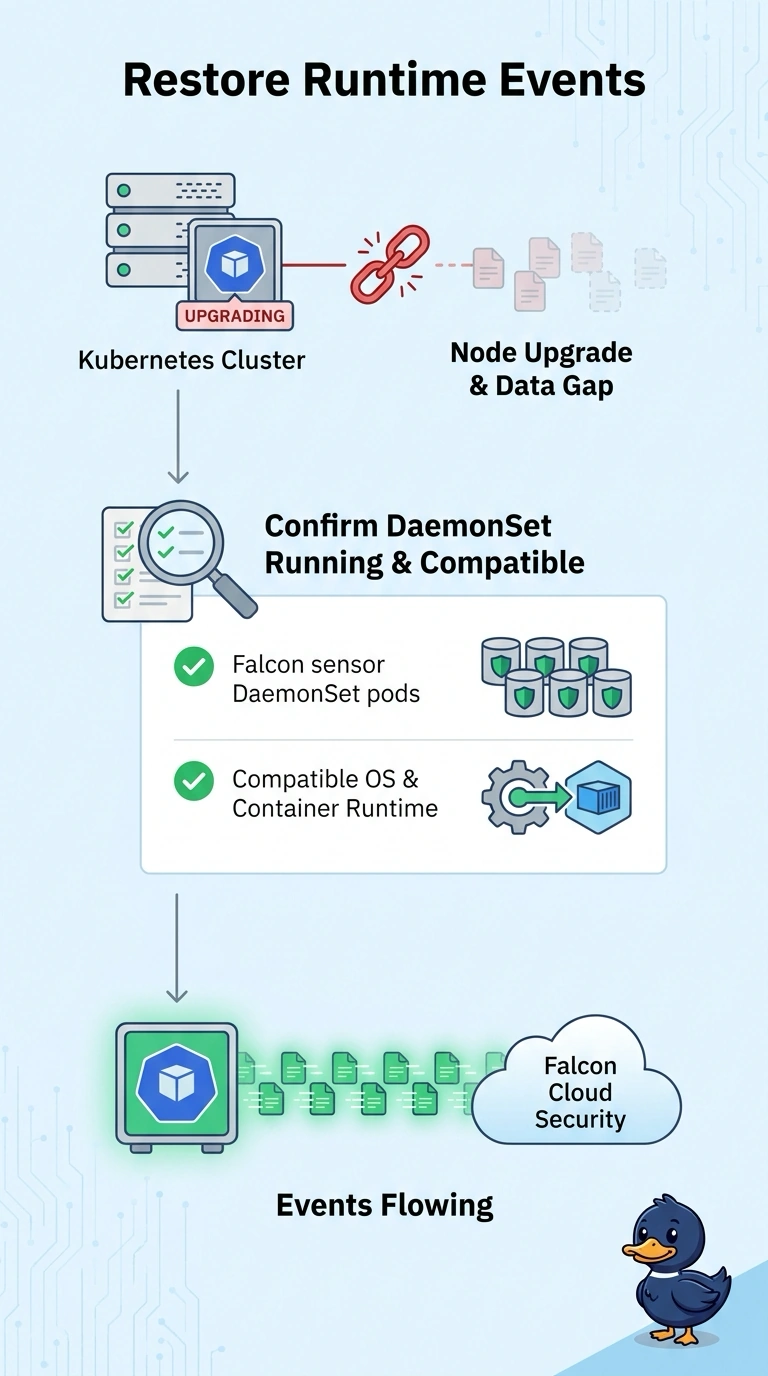
Short Explanation
When traffic reports stop coming from a newly repaved highway, you check the roadside cameras before rebuilding the city's tax system. Your first move is confirming the node sensor DaemonSet is healthy on the upgraded nodes, rather than re-registering cloud accounts.
Full Explanation
Choosing to Confirm the Falcon sensor DaemonSet pods are running and compatible on the upgraded nodes directly addresses the local node-level component responsible for collecting runtime container telemetry. Because node-level sensors depend on the underlying host OS and container runtime integration, an upgrade can leave sensor pods crashing, pending, or incompatible with the updated environment. Attempting to Re-register the entire cloud account organization using a new cross-account IAM trust policy fails because cloud account registration governs agentless control-plane posture discovery rather than node-level sensor telemetry. Deciding to Delete and recreate all container image assessment policies in the Falcon Cloud Security console is ineffective because image assessment policies evaluate pre-runtime image contents, not live node sensor reporting. Choosing to Disable Kubernetes admission control so unassessed pods can schedule onto the upgraded nodes weakens deployment guardrails and does not restore runtime event collection. As a caveat, verify sensor compatibility before rolling node OS upgrades across all production pools. Operationally, inspect DaemonSet pod status and sensor health on the upgraded nodes to confirm active telemetry.
Prefer to study offline? Printable PDF study book + test engine ($7.50, unofficial). These questions stay free here.