
During a hospital SOC investigation, an analyst sees a runtime detection indicating that a public-facing web container opened an unexpected connection to an internal patient-billing database pod. Which runtime capability provides evidence of this lateral movement?
Select an answer to reveal the explanation.
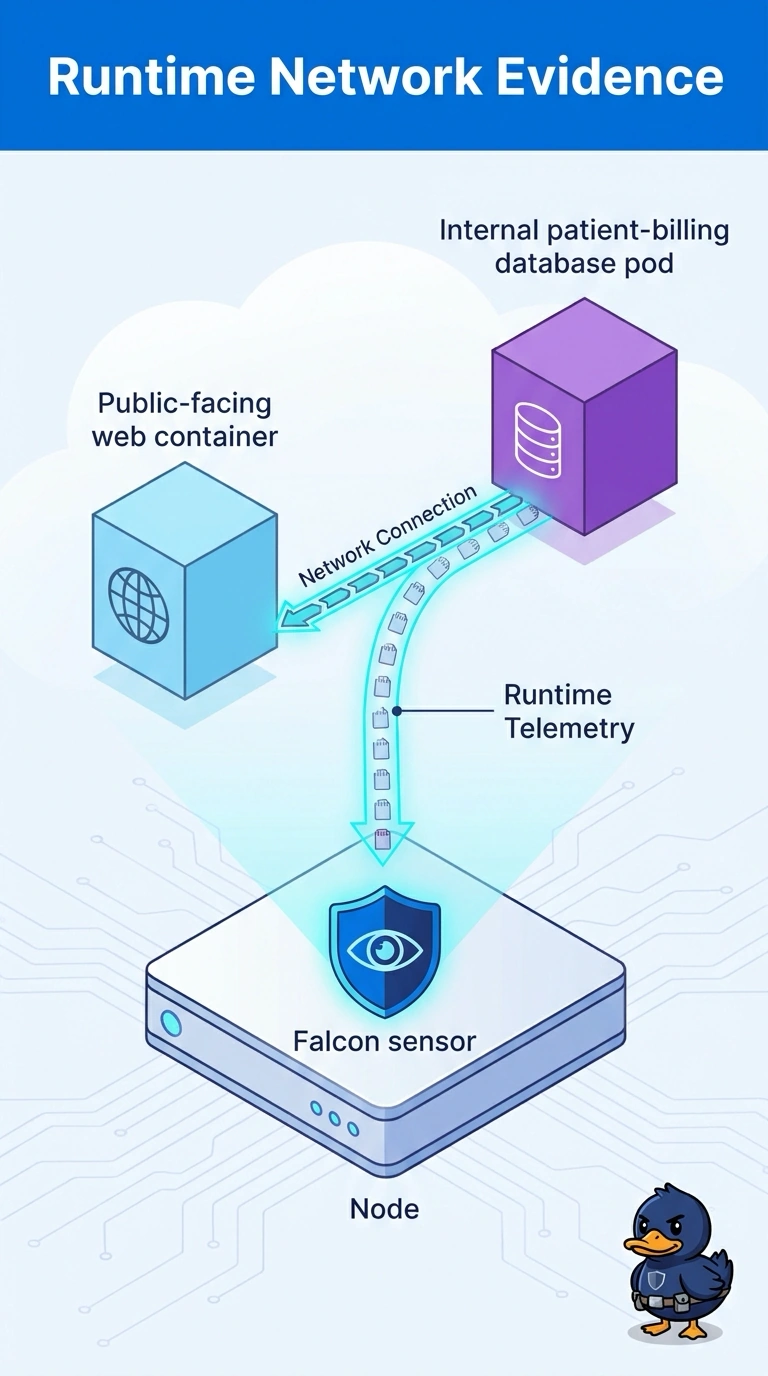
Short Explanation
Catching an intruder slipping from a web pod into an internal database requires watching live traffic inside the cluster, not reviewing yesterday's blueprints. The trap is looking at pre-deployment templates or static reports when you need live runtime network telemetry.
Full Explanation
Runtime container network connection telemetry from the node Falcon sensor captures active socket connections initiated by running containers, giving analysts direct evidence of unexpected lateral communication between workloads. When a compromised web container reaches out to an internal database pod, the node-level sensor observes the live process and destination details in real time. Pre-runtime Infrastructure-as-Code template scanning executed during pull requests evaluates provisioning files before deployment and cannot observe live post-deployment network sessions. Scheduled weekly compliance benchmark reports delivered to auditors summarize historical configuration posture rather than capturing active east-west container traffic. Cloud account group exclusions configured during account onboarding omit specified resources from posture scans and provide no runtime network visibility. Note as a caveat that runtime network telemetry requires healthy sensor coverage on the worker nodes hosting the communicating workloads. As an operational check, pivot from the runtime network event to the originating container's process tree to confirm which binary initiated the internal database connection.
Prefer to study offline? Printable PDF study book + test engine ($7.50, unofficial). These questions stay free here.