
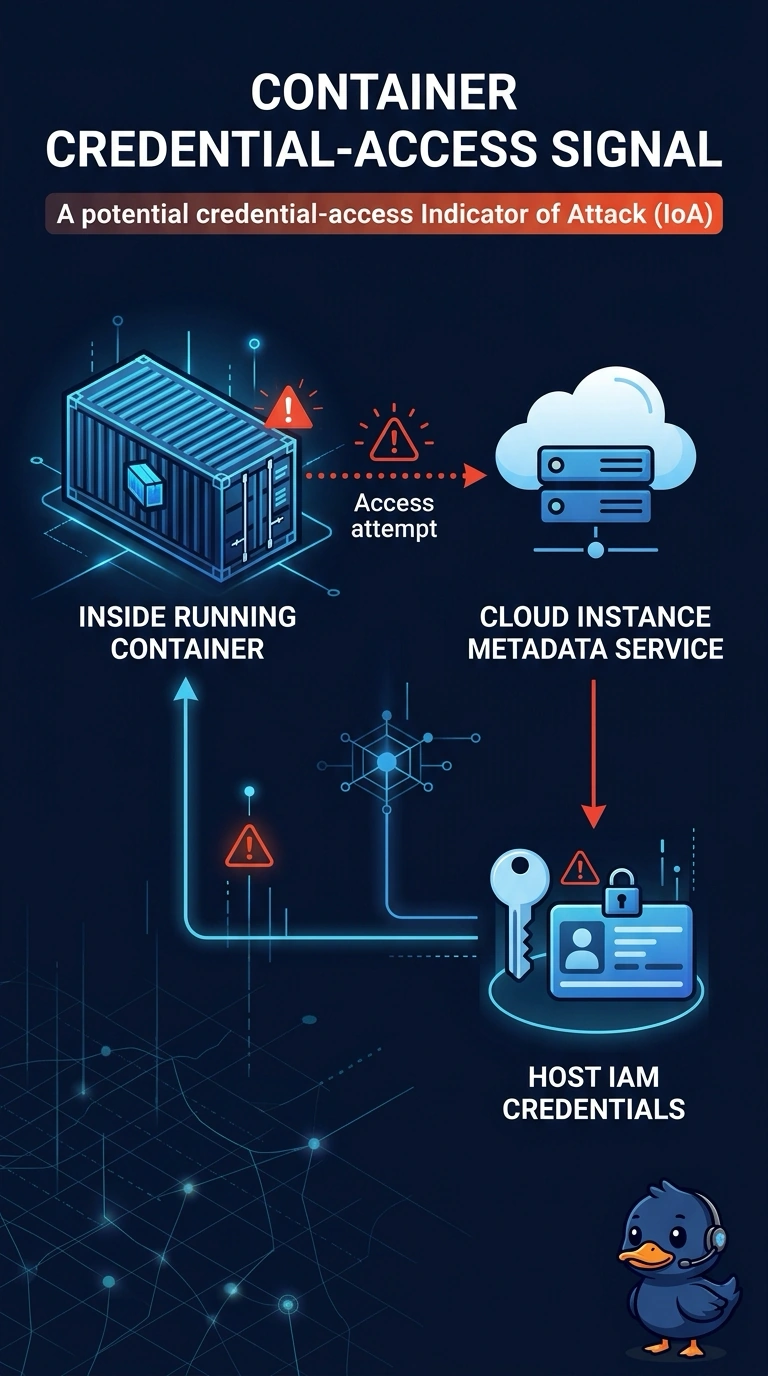
During a manufacturing SOC investigation, a runtime alert shows a web application container attempting to query the cloud instance metadata service to retrieve host IAM credentials. What does this runtime behavior indicate?
Select an answer to reveal the explanation.
Short Explanation
When a web container reaches out to the cloud metadata service for host credentials, that is a classic sign someone is probing for a bigger foothold. You want to flag that immediately—the trap is dismissing runtime credential-access attempts as routine scanning.
Full Explanation
Choosing A potential credential-access Indicator of Attack from inside the running container accurately classifies suspicious runtime behavior aimed at stealing host IAM credentials from the cloud metadata endpoint. Attackers who compromise an application container frequently target instance metadata services to pivot from container-level access into broader cloud control-plane permissions. Choosing A routine pre-runtime image assessment scan inspecting OS packages is incorrect because pre-runtime scanning evaluates static image layers before deployment rather than live container network requests. Choosing A normal Kubernetes admission control check validating pod labels occurs at pod scheduling time inside the control plane, not from an active web process inside a container. Choosing A scheduled cloud posture benchmark evaluating storage encryption inspects cloud configuration state agentlessly and does not originate from a workload container. As a caveat, some legitimate cloud-native agents query metadata endpoints, so verify the initiating process lineage before escalating. For an operational check, inspect the runtime process tree and network telemetry for that pod and review the host IAM role's effective permissions to bound potential blast radius.
Prefer to study offline? Printable PDF study book + test engine ($7.50, unofficial). These questions stay free here.