
A school district security team patches a critical library in its student-portal container image and pushes the updated build to its registry, clearing the new registry scan. However, Falcon Cloud Security still reports vulnerable running containers in production. What should the team do to resolve the runtime exposure?
Select an answer to reveal the explanation.
Short Explanation
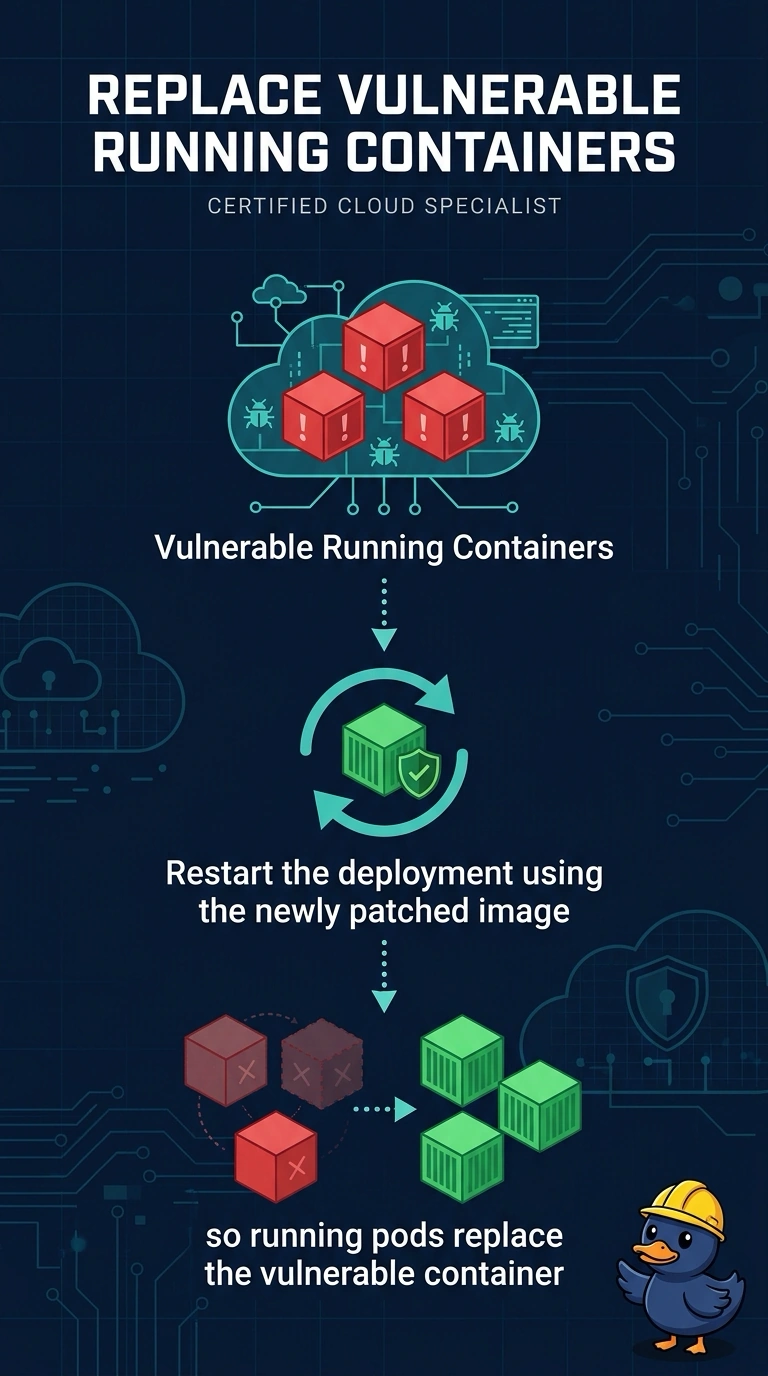
Pushing a clean image to the registry is like stocking fresh parts in a warehouse—your running fleet still uses the old parts until you swap them out. The trap is assuming a clean registry scan automatically updates already-running pods.
Full Explanation
Choosing to Restart the deployment using the newly patched image so running pods replace the vulnerable container ensures Kubernetes pulls the updated image digest and terminates pods still executing the older vulnerable build. Runtime image coverage tracks the exact image digests currently running on worker nodes, so pushing a fix to the registry alone does not alter live containers. Choosing to Wait for the next scheduled cloud posture scan to refresh container layers misunderstands posture scanning, which evaluates cloud control-plane configurations rather than replacing running container workloads. Choosing to Delete the registry scan history so older running images are ignored only hides visibility while leaving the vulnerable code executing in production. Choosing to Disable runtime drift detection on the affected Kubernetes worker nodes turns off runtime behavioral protection without updating the running image. As a caveat, if deployments reference a mutable tag without a rollout or pull policy update, nodes may reuse a cached older layer. For an operational check, inspect the running pod image digests in the cluster and confirm Falcon Cloud Security runtime coverage reflects only the patched digest.
Prefer to study offline? Printable PDF study book + test engine ($7.50, unofficial). These questions stay free here.