
During a SOC investigation, an analyst sees a runtime alert from Falcon Cloud Security showing a web application container process attempting to elevate its Linux capabilities and escape its namespace boundary. How should the analyst classify this event?
Select an answer to reveal the explanation.
Short Explanation
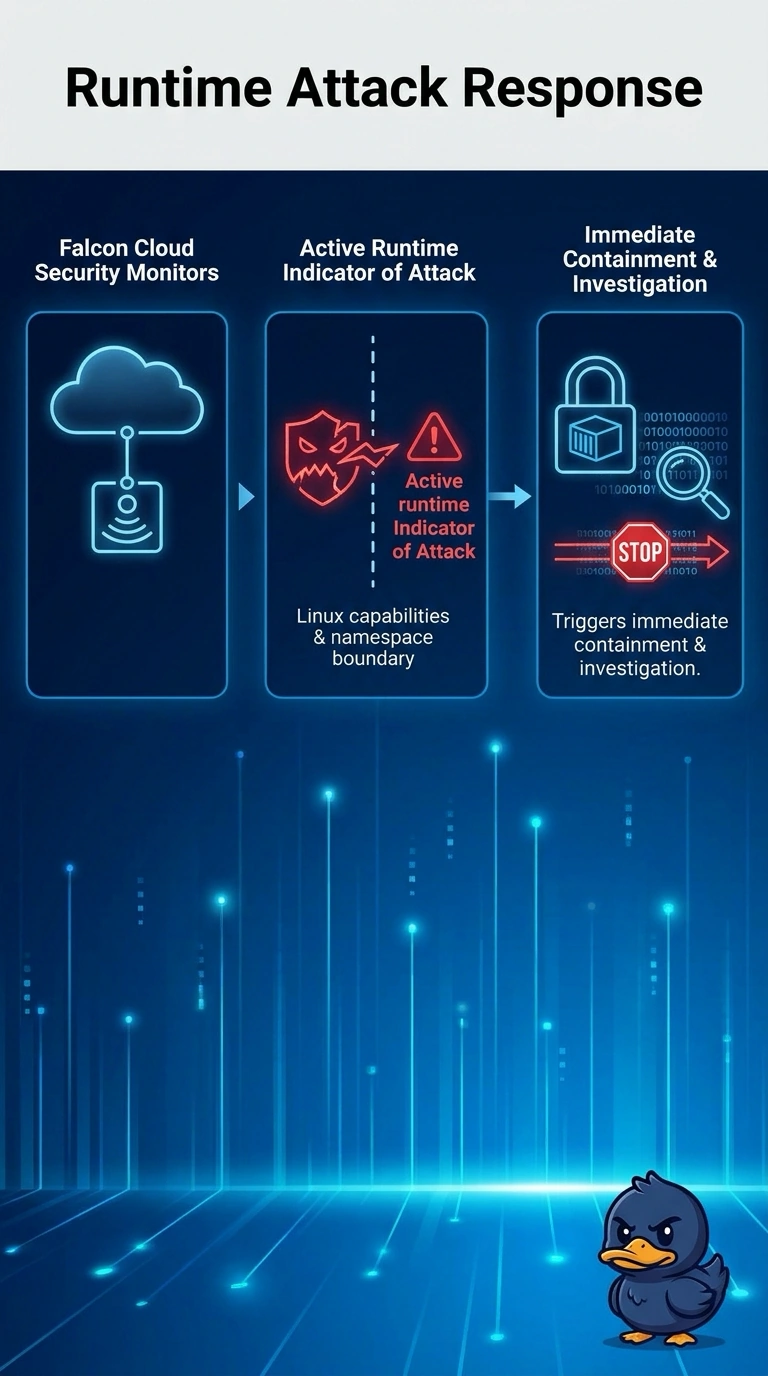
Think of a container trying to break out of its namespace like a guest trying to pick the lock on the staff-only door—it is active malicious behavior, not a dusty blueprint flaw. You should treat this as an active threat rather than a routine posture or package issue. The trap is confusing live exploitation attempts with static configuration or vulnerability findings.
Full Explanation
An active runtime Indicator of Attack requiring immediate containment and investigation is the accurate classification because the Falcon sensor observed live process behavior attempting to escalate privileges and cross container isolation boundaries. Runtime protection monitors system calls and process execution inside running workloads to catch active threats as they happen. A pre-runtime image assessment finding caused by an outdated package in the base image layer is incorrect because package vulnerabilities are static software flaws discovered before or outside execution, whereas this alert reflects active behavioral exploitation. An Indicator of Misconfiguration triggered solely by an unencrypted cloud storage bucket is incorrect because storage encryption is a cloud control-plane posture issue rather than in-container process activity. A scheduled compliance benchmark failure reported during a routine cloud posture audit is incorrect because benchmark checks evaluate static adherence to frameworks like CIS rather than real-time container breakout attempts. As a caveat, privilege-escalation alerts can occasionally stem from misconfigured administrative utilities, so validate the workload's expected behavior before terminating production pods. As an operational check, inspect the runtime process lineage, container ID, and host node details in Falcon Cloud Security to isolate the affected pod and trace how the process started.
Prefer to study offline? Printable PDF study book + test engine ($7.50, unofficial). These questions stay free here.