
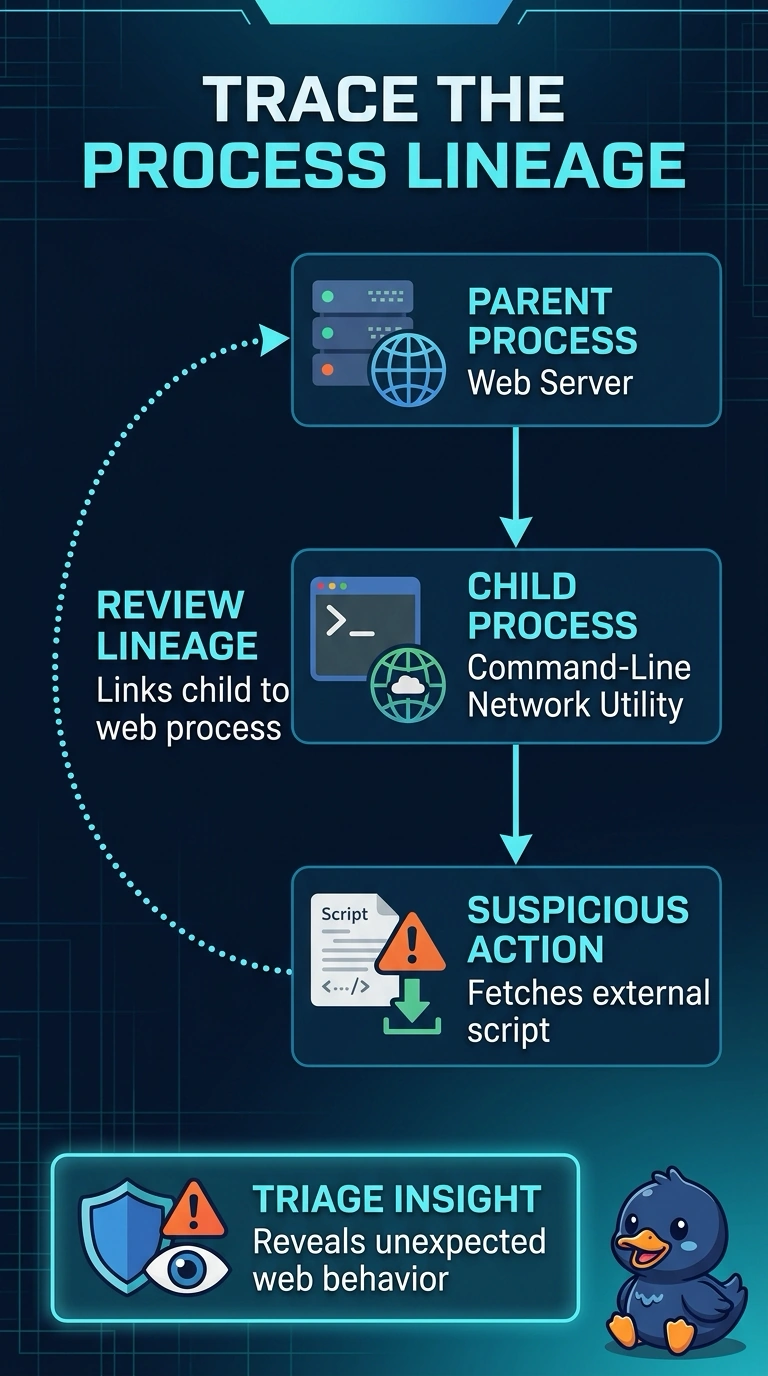
During a SOC investigation at a school district, an analyst reviews a runtime detection from a student-portal container where a web server process spawned a command-line network utility to fetch an external script. Why is reviewing the parent-child process lineage critical for triage?
Select an answer to reveal the explanation.
Short Explanation
Seeing a network tool run inside a container is one clue, but seeing the web server spawn it tells you how the attacker got a foothold. The trap is thinking runtime lineage fixes the root vulnerability or replaces pre-runtime scanning.
Full Explanation
Reviewing process lineage matters because It links the suspicious child command to the unexpected behavior of the web process, helping the analyst confirm post-exploitation activity such as command injection or remote script staging. Knowing which parent process launched the utility distinguishes legitimate administrative tasks from a compromised application service. However, It automatically patches the underlying OS package in the registry is false because runtime telemetry is diagnostic and does not modify stored container images or build definitions. Similarly, It proves the cloud storage bucket lacks server-side encryption confuses in-container process execution with cloud control-plane posture checks. Claiming It replaces the need for pre-runtime image assessment in CI/CD is also wrong because runtime detection observes live attacks after deployment rather than preventing known vulnerable packages from shipping. As a caveat, some legitimate application frameworks invoke helper binaries, so analysts should compare the lineage against expected workload behavior. For an operational check, inspect the full command-line arguments, parent process, and outbound network destination in the runtime detection before isolating the pod.
Prefer to study offline? Printable PDF study book + test engine ($7.50, unofficial). These questions stay free here.