
A manufacturing company runs legacy inventory applications directly on cloud virtual machines without Kubernetes or containers. Agentless posture scanning already reports cloud configuration findings, but the SOC needs runtime process and attack visibility on those hosts. What should the team deploy?
Select an answer to reveal the explanation.
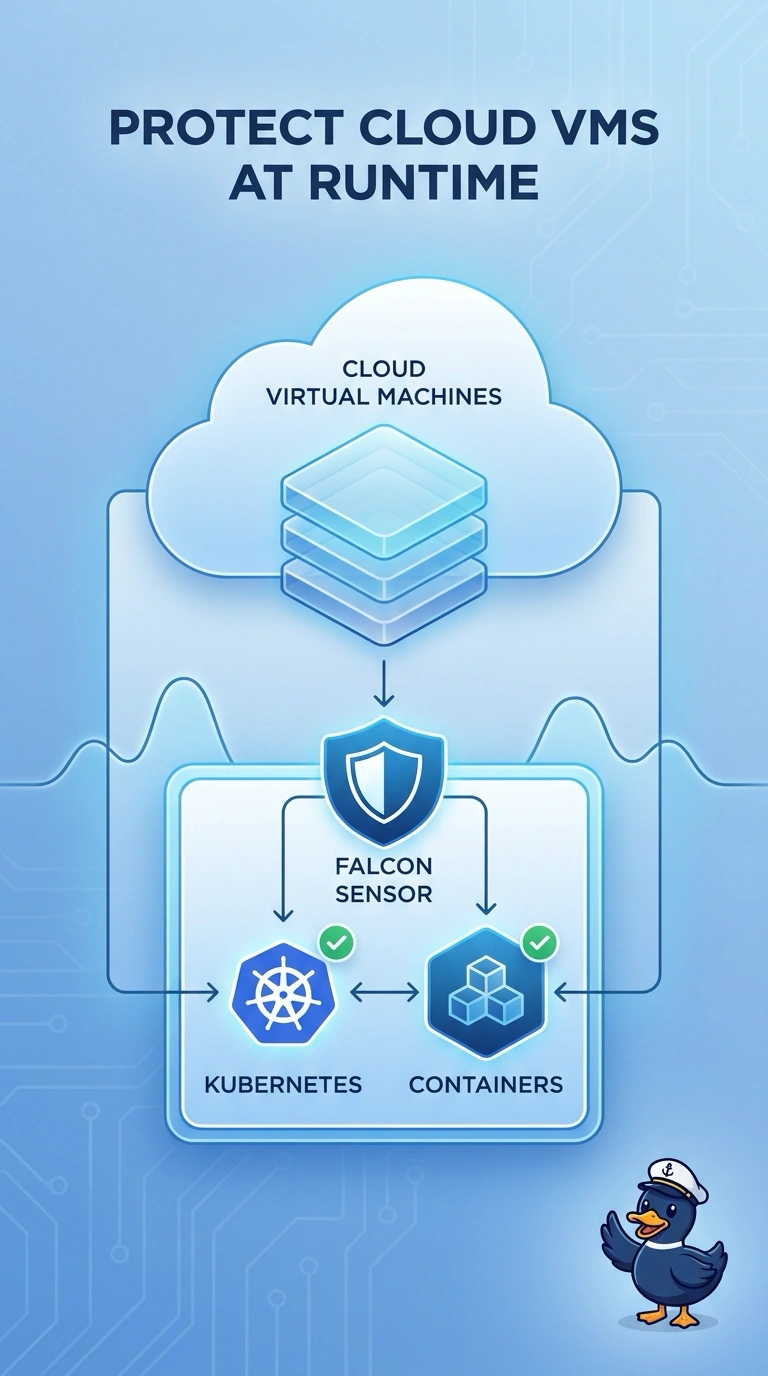
Short Explanation
Agentless posture scanning gives you a great view of the outside of your cloud building, but it cannot see what processes are running inside a virtual machine. Don't reach for Kubernetes tools when there's no cluster—install the sensor directly on those hosts.
Full Explanation
Agentless Cloud Security Posture Management inspects cloud control-plane metadata and configurations, whereas Cloud Workload Protection requires host telemetry to observe live process execution, credential access, and suspicious behavior. Installing The Falcon sensor installed directly on each cloud virtual machine provides runtime detection and workload visibility for non-containerized compute hosts. Deploying A Kubernetes admission controller webhook on the cloud provider network cannot protect standalone virtual machines because admission control only governs Kubernetes API pod scheduling requests. Configuring A container registry integration pointing to the virtual machine snapshots is invalid because registry integrations assess container images rather than live virtual machine operating systems. Scheduling A scheduled compliance report emailed weekly to the manufacturing operations team only summarizes existing findings for stakeholders and provides no runtime telemetry. Keep in mind that virtual machine sensors require supported operating systems and outbound connectivity to the Falcon cloud. Verify coverage by confirming each virtual machine appears as an active host in the sensor management inventory.
Prefer to study offline? Printable PDF study book + test engine ($7.50, unofficial). These questions stay free here.