
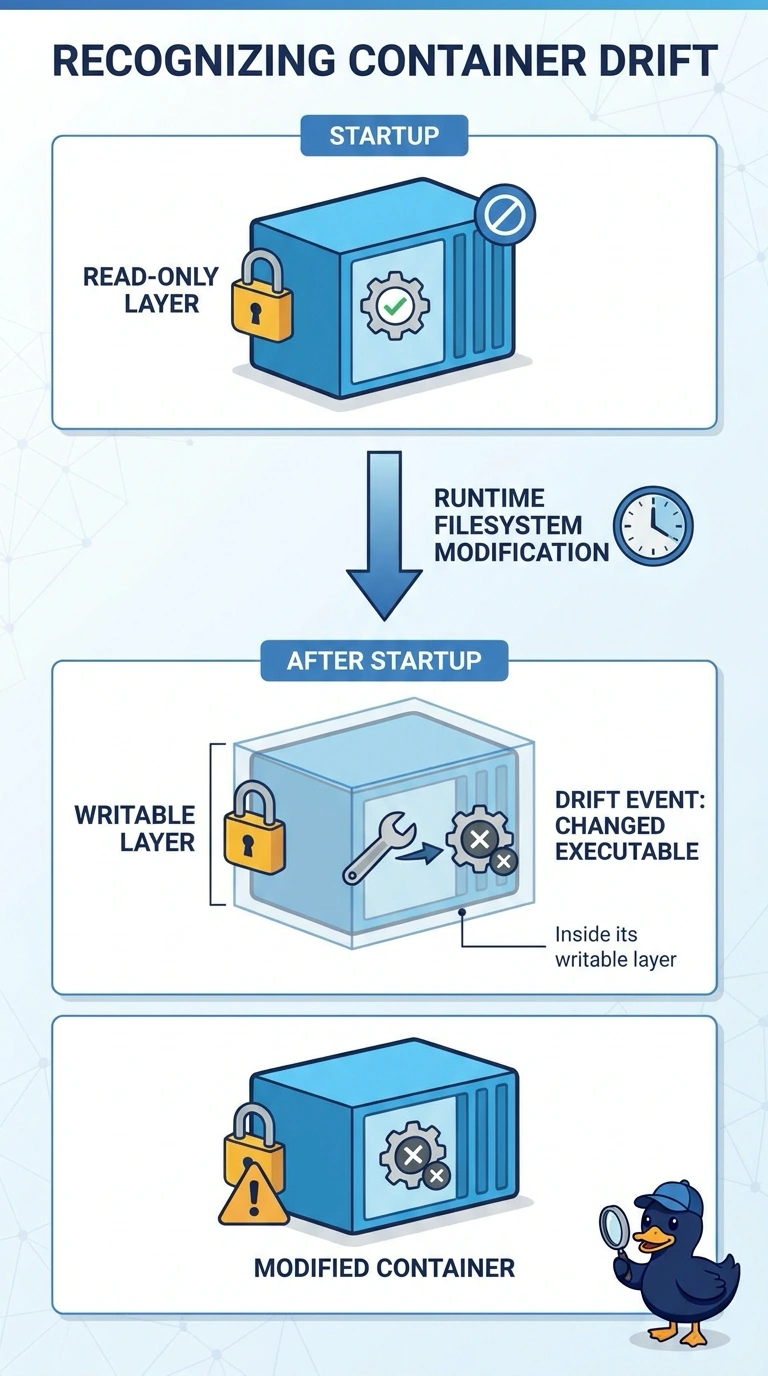
During a retail SOC shift handoff, an analyst compares two events: one pod was replaced with a newer container image through the deployment pipeline, while another running container modified an executable inside its writable filesystem layer after startup. Which event represents container drift?
Select an answer to reveal the explanation.
Short Explanation
Think of container drift like someone repainting a car while it is speeding down the highway instead of ordering a new model from the factory. You need to separate planned image replacements from unexpected changes happening inside a live container.
Full Explanation
Container drift occurs when a running container diverges from the immutable image it was launched from, which is why The running container modifying an executable inside its writable layer after startup represents drift. Falcon documents drift detection for new binaries created and executed inside containers; a filesystem change alone does not establish that this detection fired. In contrast, The deployment pipeline replacing an older pod with a newly built container image version describes standard immutable replacement, where a new container starts from an updated image rather than mutating a live one. Similarly, The container registry storing two different image digests under the same application tag reflects tag overwriting in a registry before runtime, not live container modification. Finally, The Kubernetes scheduler placing a newly built pod onto a different autoscaled worker node is normal cluster scheduling behavior and does not alter the container's runtime filesystem. Caveat: not every drift event is malicious—emergency manual troubleshooting inside a container can also trigger drift alerts—so context still matters. Correlate any drift detection with the affected executable, execution lineage and change authorization.
Prefer to study offline? Printable PDF study book + test engine ($7.50, unofficial). These questions stay free here.