
A software team's microservice container image passed pre-runtime assessment with zero known package vulnerabilities, yet Falcon Cloud Security triggers a runtime alert for suspicious process execution inside the container. Why can a clean image still generate runtime attack detections?
Select an answer to reveal the explanation.
Short Explanation
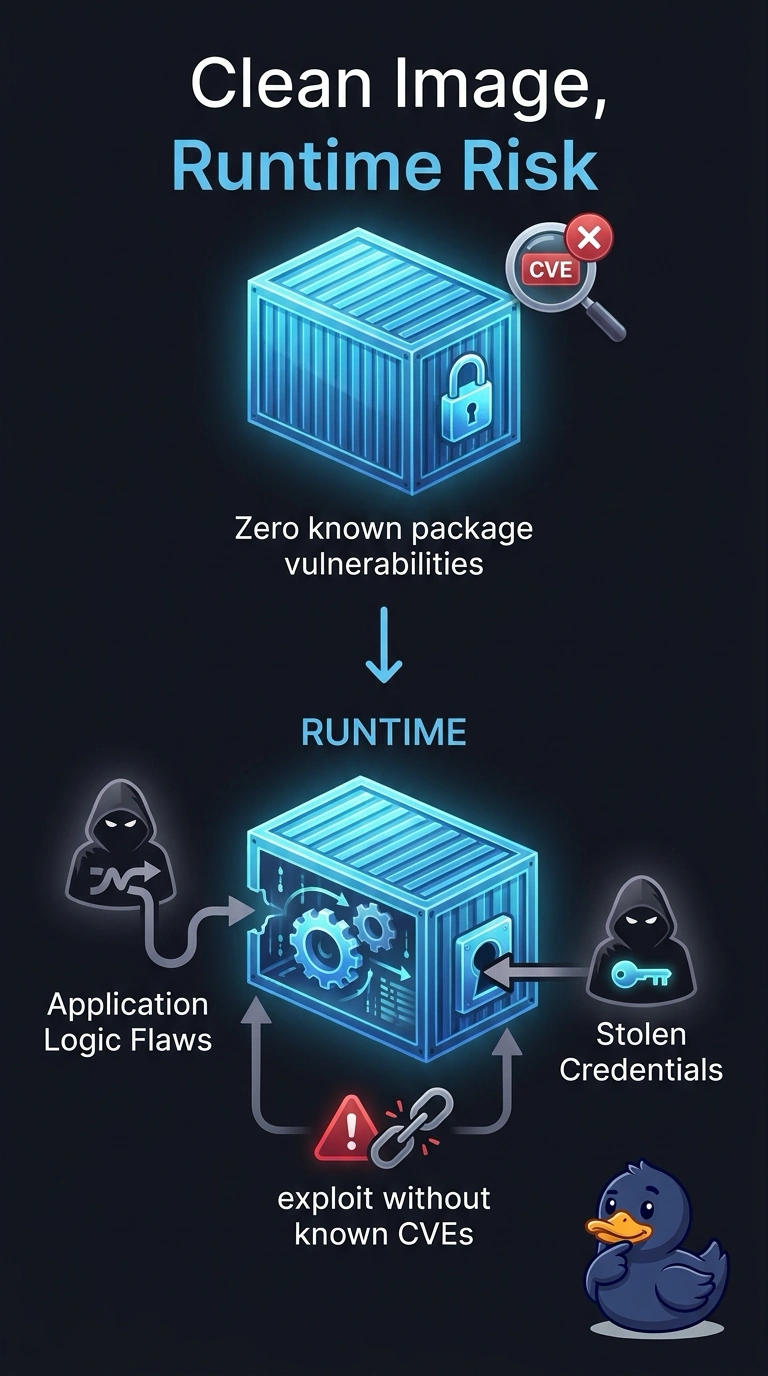
A zero-CVE image is like a brand-new bank vault with no manufacturing defects—it still needs an alarm if someone walks in with a stolen key. The trap is treating a clean pre-runtime scan as proof that nothing bad can happen after deployment. Your runtime sensor watches live behavior to catch active attacks that never needed a known package flaw.
Full Explanation
Pre-runtime image assessment checks static packages, libraries, and embedded secrets, whereas runtime protection observes live execution, making "Runtime threats can exploit application logic flaws or stolen credentials without relying on known image CVEs" the correct explanation. Attackers frequently abuse misconfigured endpoints, command-injection bugs in custom code, or leaked tokens to spawn shells or download tools inside an otherwise patched container. The remaining options are inaccurate. Claiming "Pre-runtime image assessment ignores all operating system packages whenever an image is pushed to a private registry" is false because image assessment inspects both OS packages and application dependencies in integrated registries. Saying "Runtime sensors automatically flag every newly started container as a drift event during normal startup" misunderstands container drift, which triggers on unexpected binaries or post-start modifications rather than normal entrypoint startup. Stating "Cloud posture policies convert low-severity IAM warnings into container runtime attack alerts" confuses control-plane posture checks with host-level runtime detections. As a caveat, not every anomalous process alert is malicious; legitimate debugging tools can also trigger reviews. For an operational check, inspect the process lineage and network connections in the runtime detection before deciding whether to contain the pod.
Prefer to study offline? Printable PDF study book + test engine ($7.50, unofficial). These questions stay free here.