
During a manufacturing SOC investigation, an analyst sees a runtime alert showing that a running container downloaded and executed a new binary not present in its original image. Which runtime protection concept does this activity represent?
Select an answer to reveal the explanation.
Short Explanation
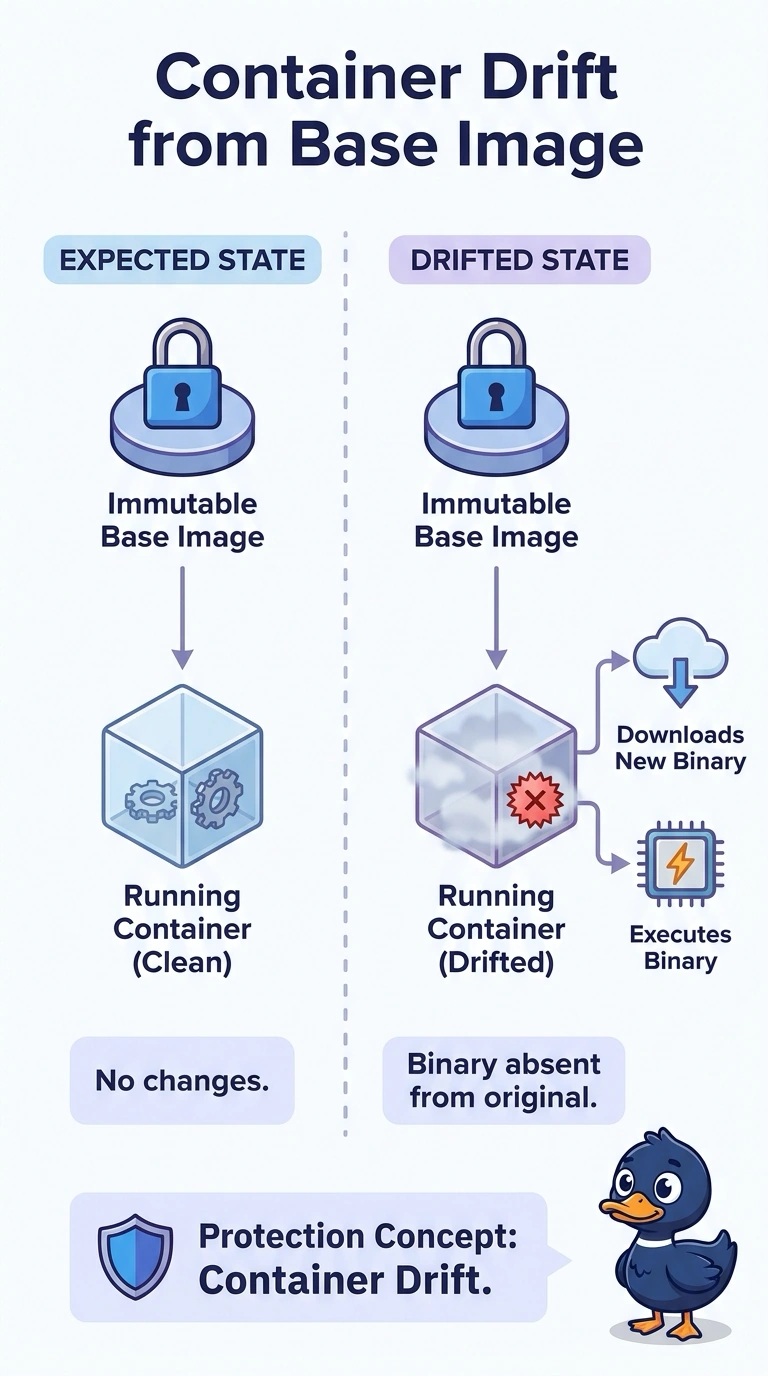
Containers are supposed to stay immutable, like a sealed shipping crate. When you see a new binary appear and execute inside a running container, that is classic container drift—not a registry or posture glitch.
Full Explanation
Container drift from the immutable base image occurs when a running container's filesystem or executing binaries diverge from the original image layers built and deployed. In an immutable container architecture, an application should only run the binaries packaged at build time, so downloading and executing a new binary at runtime is a strong indicator of unauthorized modification or compromise. Cloud account group misconfiguration relates to how Cloud Groups organize resource scope, ownership and risk views; group configuration does not explain an in-container execution event. Pre-runtime registry polling failure prevents new images from being scanned in a registry before deployment, whereas this incident occurs inside an already running workload. Scheduled posture benchmark timeout refers to an evaluation delay in cloud configuration checks rather than process-level runtime activity. As a scope caveat, drift detection requires an active runtime sensor on the host or node and cannot be observed by agentless posture scans alone. For an operational check, inspect the runtime detection details for the affected container ID to review the process tree, parent process, and dropped file path.
Prefer to study offline? Printable PDF study book + test engine ($7.50, unofficial). These questions stay free here.