
A hospital compliance officer wants to demonstrate quarter-over-quarter improvement in cloud security posture to external auditors using Falcon Cloud Security scheduled reports. Which reporting practice ensures an accurate trend comparison across periods?
Select an answer to reveal the explanation.
Short Explanation
If you move the goalposts every quarter, nobody can tell whether the team actually scored more goals. The trap is changing report filters or account scopes between audit cycles and mistaking a narrower filter for real security improvement.
Full Explanation
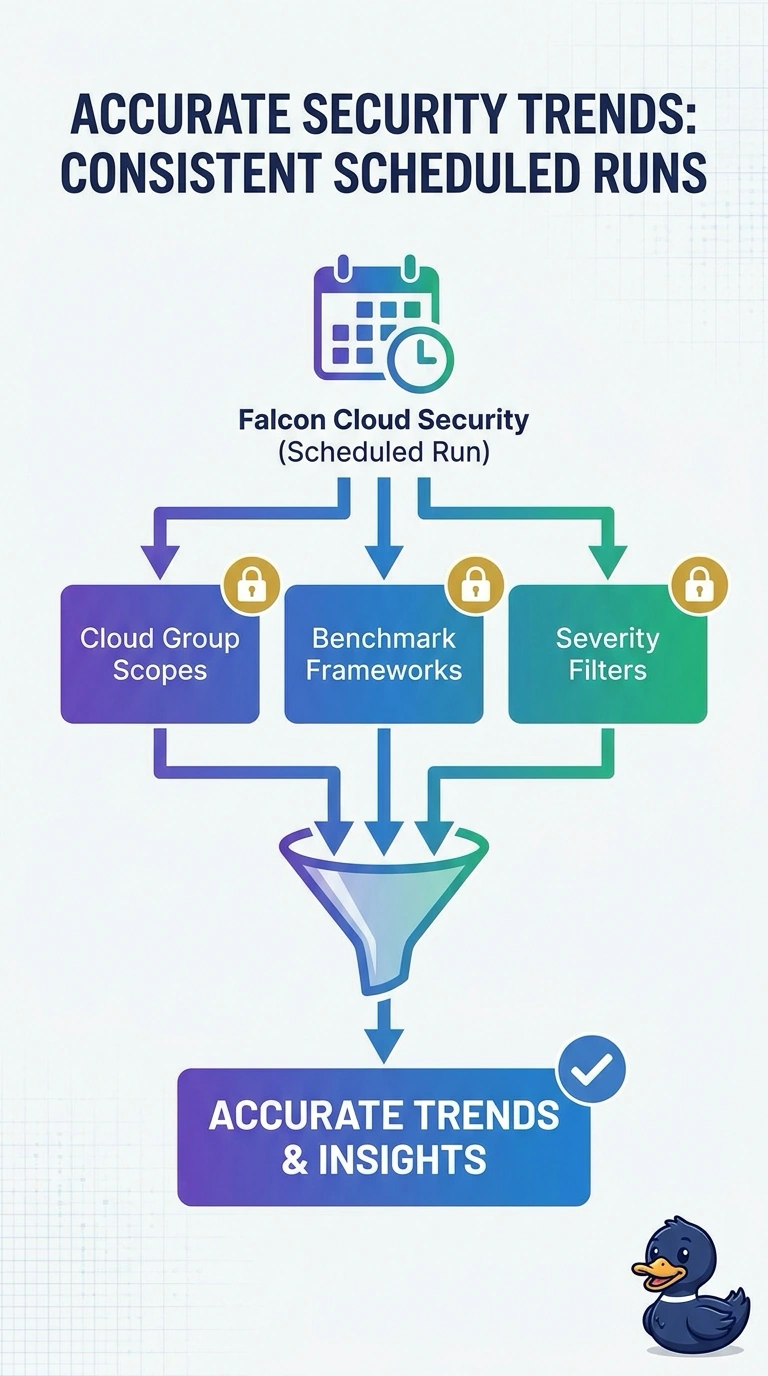
Reliable compliance trend tracking requires an apples-to-apples baseline across reporting intervals, so the team should Keep cloud group scopes, benchmark frameworks, and severity filters consistent across scheduled runs. When the same accounts, benchmark controls, and severity thresholds are evaluated each cycle, reductions in failed checks genuinely reflect completed remediation rather than reporting drift. Choosing to Switch between different compliance benchmarks each month so every regulation is sampled in turn prevents longitudinal comparison because each framework measures different control sets. Likewise, deciding to Exclude accounts with active critical findings from later reports to highlight remediated workloads distorts the compliance posture and misleads auditors by hiding unresolved risk. Finally, choosing to Replace scheduled posture reports with raw runtime process alerts before presenting to external auditors substitutes live threat telemetry for structured control-plane compliance evidence. As a caveat, if new production accounts are added to the audited cloud group, document that scope growth alongside the trend numbers. For an operational check, review the scheduled report definition in Falcon Cloud Security to confirm its cloud group, framework, and severity filters match prior quarters.
Prefer to study offline? Printable PDF study book + test engine ($7.50, unofficial). These questions stay free here.