
A retail SOC team wants critical cloud runtime detections to immediately page the on-call responder through Fusion SOAR, while medium-severity posture misconfigurations should only create a standard backlog ticket without waking on-call staff. How should the team structure its Fusion SOAR automation?
Select an answer to reveal the explanation.
Short Explanation
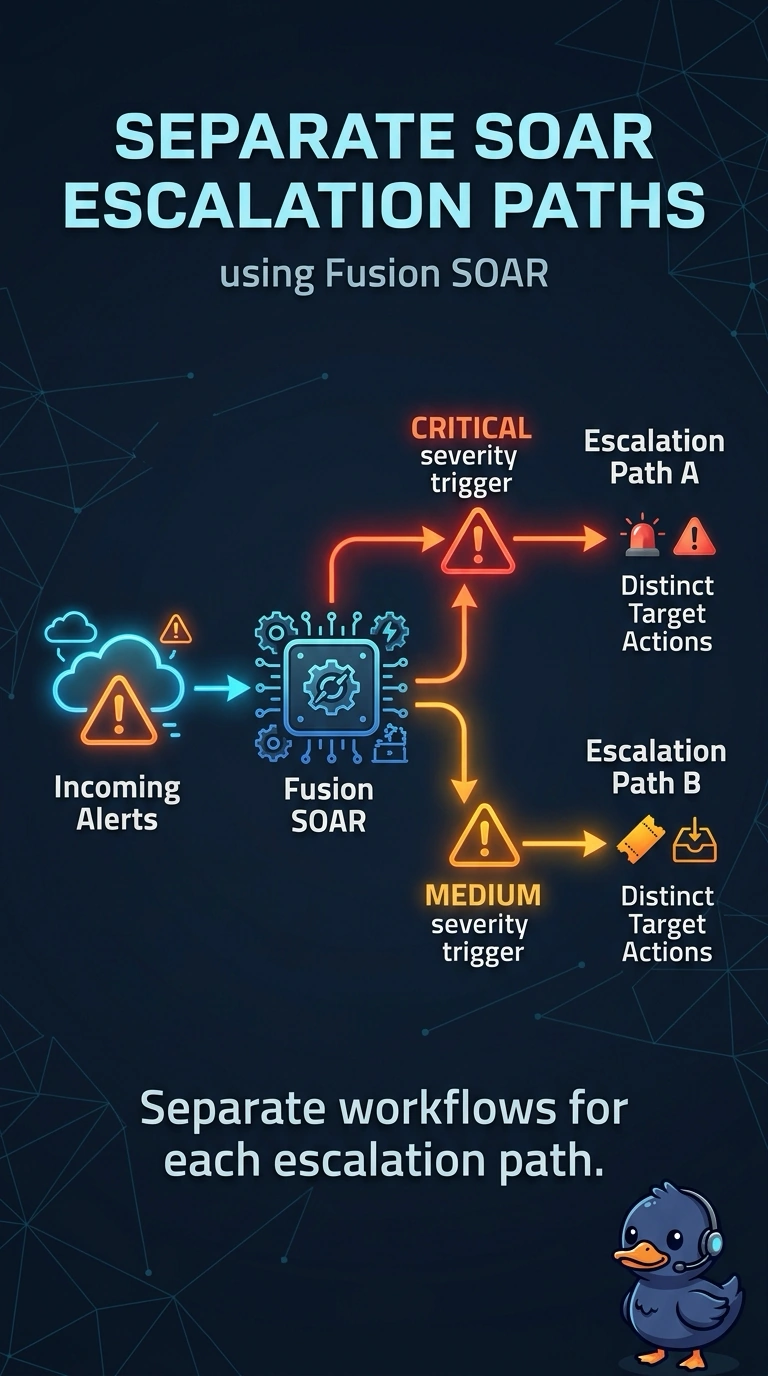
You can keep urgent runtime detections moving fast without waking responders for every posture issue. Separate workflows let you page on-call staff for critical findings and send medium-severity misconfigurations to the standard backlog.
Full Explanation
Fusion SOAR workflows let security teams match response urgency to finding severity without blinding visibility. Create separate workflows with distinct severity triggers and target actions for each escalation path: critical runtime detections can immediately reach paging tools, while medium-severity posture findings flow into engineering ticket queues. Disabling all posture policies during off-hours so only runtime detections are evaluated is a poor fit because turning off posture checks hides real misconfigurations introduced outside business hours. Combining every severity level into a single scheduled CSV report delivered once a week delays urgent runtime response far beyond acceptable SOC timelines. Setting all cloud accounts to read-only registration so medium findings never generate alerts is also unsuitable: read-only registration still discovers and reports posture findings; it only restricts automated cloud changes. Exam caveat: verify that workflow trigger conditions do not overlap, or critical findings could trigger duplicate notifications across multiple integrations. Practical check: review each workflow’s execution history after triggering test conditions to confirm that critical events page responders and medium events open tickets.
Prefer to study offline? Printable PDF study book + test engine ($7.50, unofficial). These questions stay free here.