
A retail DevSecOps team receives hundreds of pre-runtime package vulnerability findings across development and production container registries. Which triage criterion best helps the team prioritize immediate remediation?
Select an answer to reveal the explanation.
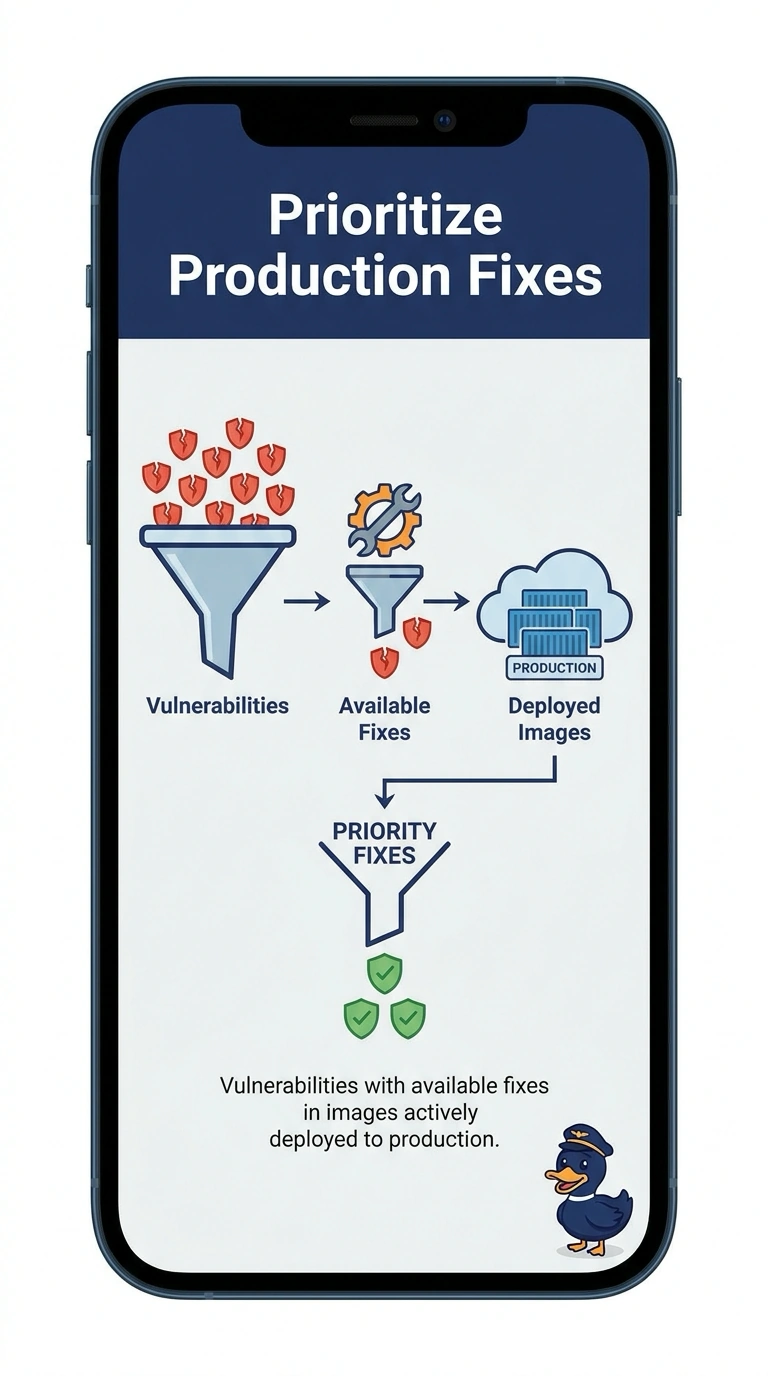
Short Explanation
Trying to patch every CVE in every forgotten dev image is a fast track to burnout. When you triage hundreds of pre-runtime findings, focus first on actionable vulnerabilities that have a real fix in images actually running in production.
Full Explanation
Effective vulnerability triage balances risk exposure against actionability so engineering teams fix the highest-impact issues first. Prioritizing "Vulnerabilities with available fixes in images actively deployed to production" targets real, actionable risk because those packages are exposed in live environments and developers can immediately upgrade to a patched version. "Informational findings in archived development images that have no fixed package version" wastes engineering time on low-impact issues that cannot yet be patched and pose no production risk. "Alphabetical ordering of operating system package names across all repositories" ignores severity, fix status, and deployment context entirely. "Findings in build-only test images that are never pushed to production clusters" represent minimal operational exposure compared to active production workloads. Caveat: unpatched critical vulnerabilities without a vendor fix still require compensating controls such as network isolation or runtime monitoring rather than being ignored indefinitely. Operational check: filter pre-runtime image findings by severity, fix availability, and active cluster deployment to build the immediate remediation queue.
Prefer to study offline? Printable PDF study book + test engine ($7.50, unofficial). These questions stay free here.