
A software company acquires a subsidiary whose engineering team stores all microservice images in a separate private container registry, and none of those images show pre-runtime vulnerability findings in Falcon Cloud Security. What should the security team do first to gain pre-runtime visibility into the subsidiary's images?
Select an answer to reveal the explanation.
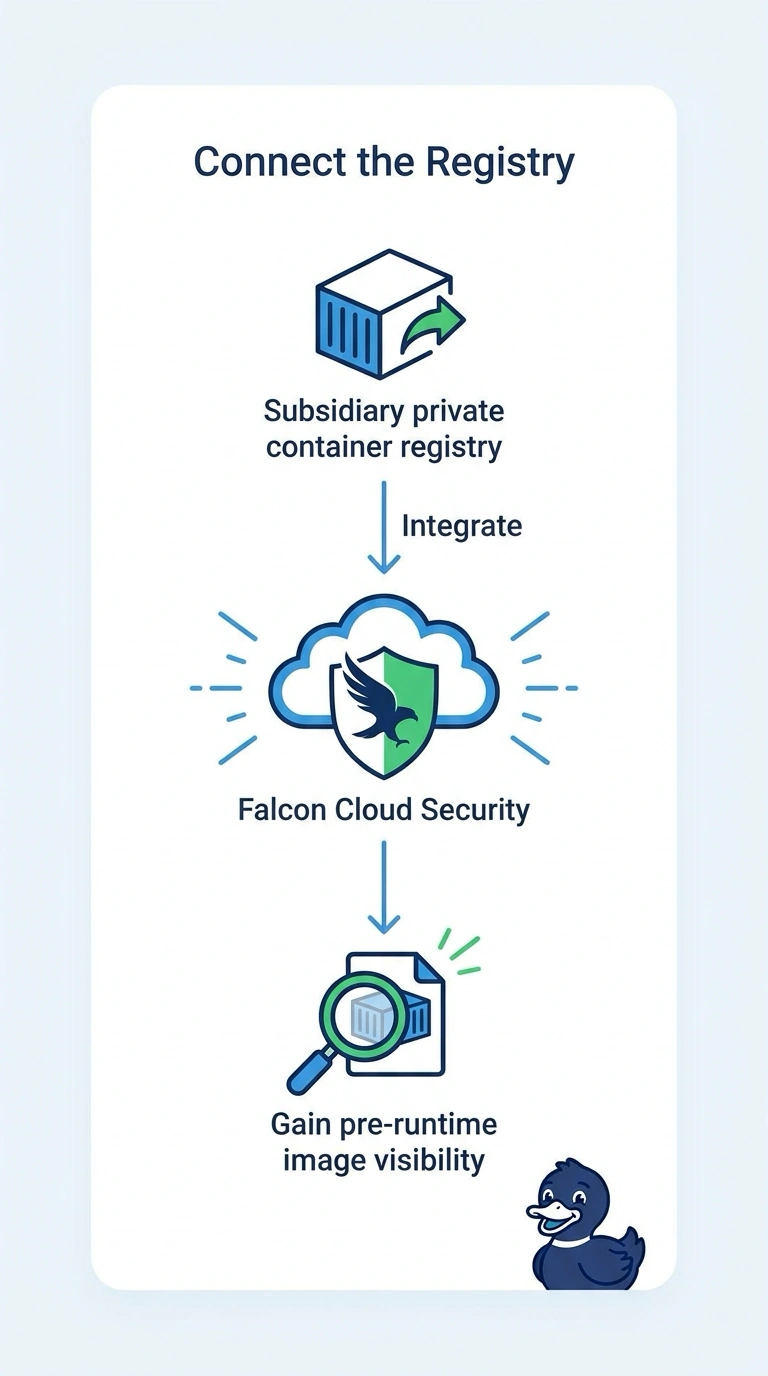
Short Explanation
Pre-runtime image assessment is like inspecting cargo at the warehouse before it ever ships—if Falcon Cloud Security isn't connected to the warehouse, it can't check the manifest. Watch out for assuming runtime sensors or cloud posture scans will inspect stored registry images; you need to integrate the registry itself.
Full Explanation
Integrate the subsidiary's private container registry with Falcon Cloud Security is the right action because pre-runtime image assessment requires an authenticated integration with each registry to discover repositories, pull image manifests, and evaluate OS packages, application libraries, and embedded secrets before deployment. Deploy Falcon sensors onto every Kubernetes worker node in the subsidiary's production cluster fails to solve the gap because runtime sensors monitor running workloads and host activity rather than scanning stored images sitting in a private registry. Register the subsidiary's cloud accounts for agentless cloud posture assessment scans is incorrect because cloud posture assessment audits control-plane configurations such as storage buckets and IAM roles, not container image contents inside a registry. Create a Kubernetes admission policy blocking pods launched in unapproved namespaces also misses the mark because admission policies govern pod deployment requests in a cluster and do not inventory or scan images stored in an unintegrated registry. As a caveat, registry integration grants read/pull visibility into stored images and must be paired with consistent image assessment policies to flag critical CVEs. As an operational check, verify the registry connection status and confirm that newly discovered repositories appear with vulnerability profiles.
Prefer to study offline? Printable PDF study book + test engine ($7.50, unofficial). These questions stay free here.