
A school district software team sees a critical pre-runtime vulnerability finding on a container image tagged for staging in its integrated registry. A developer applies a new production tag to the exact same image without rebuilding it, and Falcon Cloud Security still flags the production tag with the identical critical finding. Why must the team rebuild the image?
Select an answer to reveal the explanation.
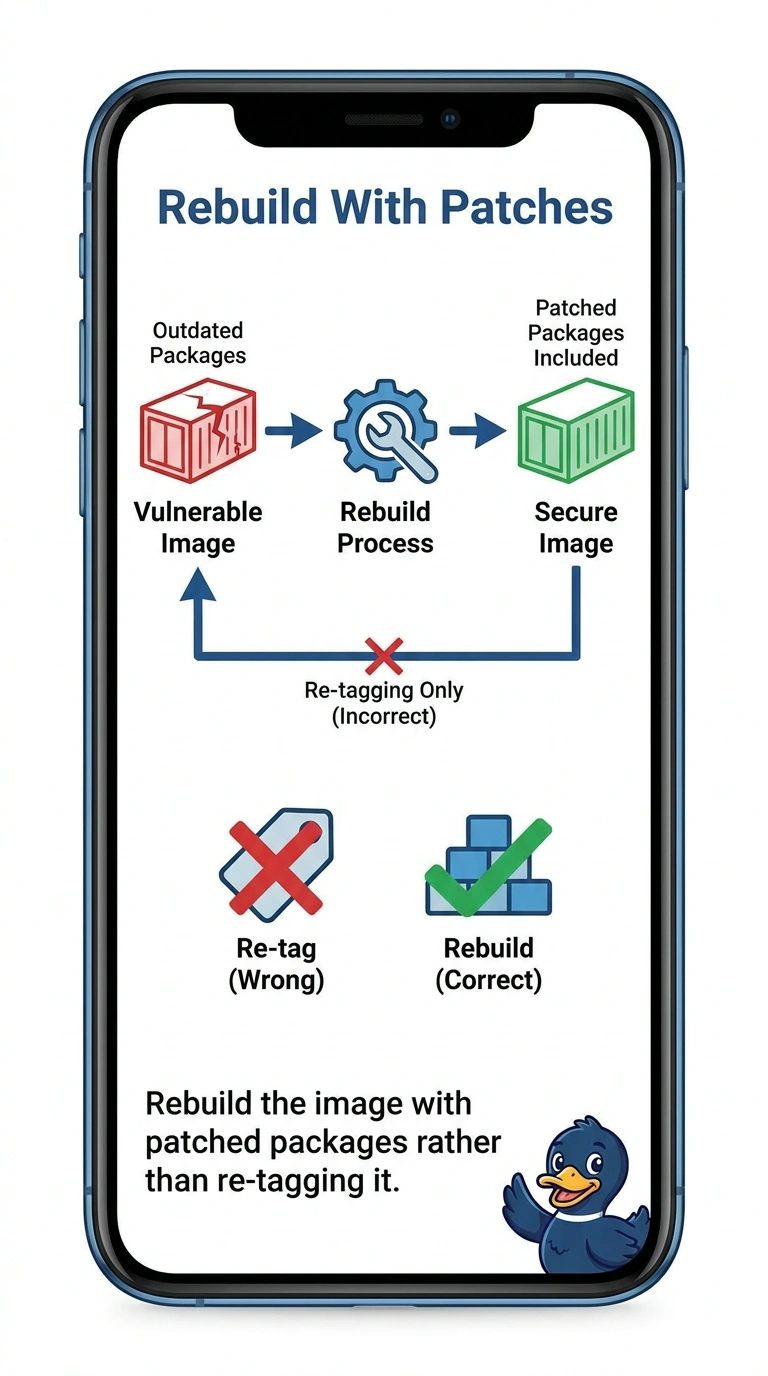
Short Explanation
Slapping a fresh label on an expired carton of milk does not make it safe to drink. The trap is thinking a new tag changes what is inside the container image, or trying to patch a live container by hand. You have to rebuild the image with updated packages so the underlying layers actually change.
Full Explanation
Selecting Rebuild the image with patched packages rather than re-tagging it addresses the root cause because container tags are only mutable pointers to immutable image layers and digests. Re-tagging an existing image leaves the vulnerable operating system or application packages untouched, so pre-runtime image assessment evaluates the same contents and reports the same findings. By contrast, Run an interactive shell inside a staging container to delete the package only modifies an ephemeral running container and never updates the stored registry image. Choosing Add a Kubernetes admission exclusion for every container in that registry suppresses deployment controls across the entire repository rather than fixing the vulnerable software. Choosing Switch the registry integration from scheduled scans to manual CSV exports does not remediate any package flaw and only alters how findings are reviewed. As a caveat, after rebuilding and pushing the patched image, existing running pods continue using the older digest until workloads are redeployed. As an operational check, trigger a new build from an updated base image or package manifest, push it to the registry, and verify that the resulting digest passes image assessment.
Prefer to study offline? Printable PDF study book + test engine ($7.50, unofficial). These questions stay free here.